


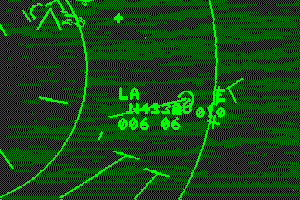
Meanwhile, Martin said the FAA plans to install a direct feed from the ATC system to the NCRCC to try and avoid this kind of confusion. He said the “raw radar” feed now received by NCRCC via the Internet isn’t able to show all the information portrayed on the core system. While that might solve some problems around Washington, the Los Angeles Times is reporting that serious security breaches and lapses plague the system and that ongoing communications problems between the FAA, other agencies and the military are to blame. “All of these communications involve humans and everyone wants the system to operate perfectly,” FAA spokesman Laura Brown told the Times. “Most of the time it operates extremely well … What gets the attention is the one error.” According to the Times, more than 1,500 airplanes have been intercepted by military jets since 9/11. The majority have been harmless navigation (or communications) errors by light aircraft flying where they shouldn’t be. But a few have been more serious. For instance, on May 3, a Singapore Airlines flight carrying 144 passengers and crew was escorted to LAX by an F-16 and taken to a remote area of the airport where armed FBI agents boarded and questioned those on board. SWAT teams waited on the tarmac. The cause — a faulty transponder issuing the hijack code. As AVweb reported last week, an FAA-sanctioned aerial photo shoot sent workers fleeing from the 23rd floor of the Prudential building fearing some sort of attack was under way.
…Command Post To Get ATC Monitor…

Key Takeaways:
- The FAA plans to upgrade the ATC system with a direct feed to the NCRCC to improve information accuracy and reduce confusion, particularly around Washington.
- Despite efforts, the system is reportedly plagued by serious security breaches, lapses, and ongoing communication problems among the FAA, other agencies, and the military.
- Since 9/11, over 1,500 airplanes have been intercepted by military jets, predominantly due to harmless navigation or communication errors, though serious incidents like a faulty transponder triggering a hijack alert have also occurred.
See a mistake? Contact us.

