















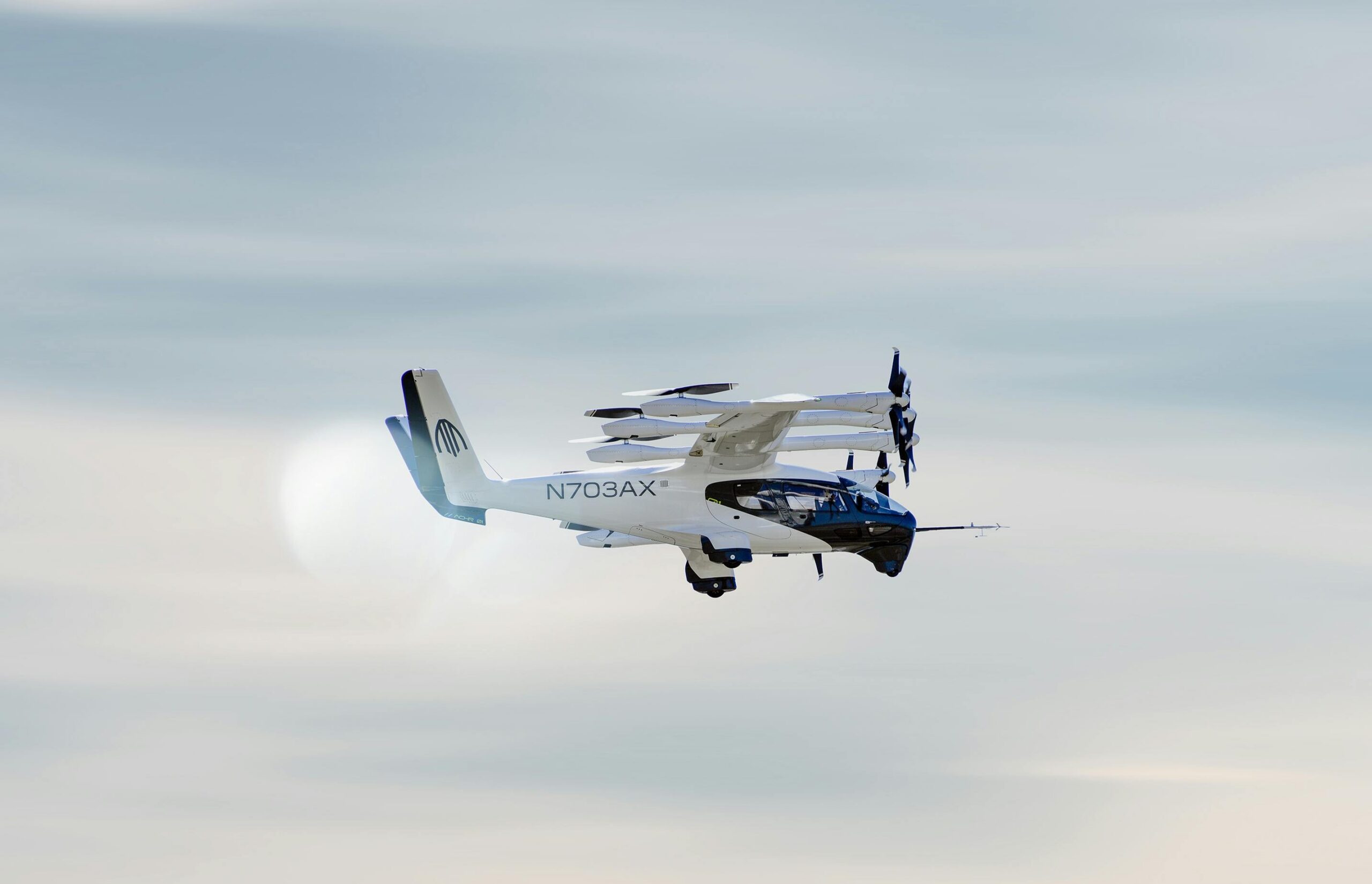

The Federal Aviation Administration announced earlier this week that it had selected eight projects across 26 states to begin real-world testing of electric vertical takeoff and landing aircraft, among other advanced air mobility concepts, under the new eVTOL Integration Pilot Program, known as eIPP. The projects range from passenger air taxi trials and regional transport concepts to cargo, medical logistics and autonomous operations.
In New York, multiple aircraft developers will explore passenger operations from a Manhattan heliport. Texas plans regional air taxi connections among Dallas, Austin, San Antonio and Houston. Louisiana will test cargo and personnel flights serving offshore energy operations.
Other eIPP projects will examine emergency medical logistics, autonomous operations and regional transportation concepts across several states.
We are clearing the path for next-generation aircraft! This first-of-its-kind program is a step forward in safely accelerating advanced air mobility operations into the national airspace. Learn more at https://t.co/yTdbctTGBl https://t.co/qjDLYrU3kA
— The FAA ✈️ (@FAANews) March 9, 2026
The Department of Transportation described eIPP as a major step toward integrating next-generation aircraft into the national airspace system. Transportation Secretary Sean Duffy said the program will help “ensure America leads the way in safely leveraging next-gen aircraft to radically redefine personal travel, regional transportation, cargo logistics, emergency medicine and so much more.”
For pilots watching the program launch, the significance is less about the aircraft themselves than about what the program represents: a large-scale operational test of how new aircraft types might fit into an airspace system built around traditional aviation.
From concept aircraft to operational experiments
eIPP was born from a 2025 executive order that directed federal agencies to speed up the integration of emerging aviation technologies, naming things like drones and electric aircraft. The FAA’s role in the program is not to certify aircraft through the pilot program itself, but more importantly, to gather operational experience to inform future regulations and procedures.
According to the agency, the projects were selected partly for their ability to generate real-world data across a range of environments and operational concepts. Deputy FAA Administrator Chris Rocheleau said the program will help the agency “better understand how to safely and efficiently integrate these aircraft into the National Airspace System.”
Industry groups have mostly welcomed the program as a step toward turning prototypes into operations.
Michael Robbins, president and CEO of the Association for Uncrewed Vehicle Systems International, for instance, said the pilot effort will produce “real operations, real data, and clear performance standards.”
Aircraft manufacturers will have a significant hand in shaping those standards, since they are participating directly.
Electric aircraft developer BETA Technologies, for instance, said it will take part in seven of the eight selected eIPP projects, using both its conventional takeoff ALIA aircraft and its vertical takeoff variant for missions ranging from cargo logistics to passenger transport.
Company founder Kyle Clark described the initiative as “a bold signal of America’s commitment to maintaining our leadership position in aerospace.”
Yet for all the enthusiasm surrounding the announcement, the program’s real importance lies in the questions it is meant to answer rather than the aircraft it will fly.
The regulatory path remains unfinished
The pilot program arrives while the regulatory framework for advanced air mobility remains under construction.
At a December congressional hearing on the state of the industry, Aviation Subcommittee Chair Troy Nehls said the United States faces a strategic choice about how quickly to move. The country can “embrace and unleash American innovation,” he said, or “carry on with the status quo and watch as other nations surpass us in new and emerging technology.”
Industry executives told lawmakers that progress toward certification and operations depends on predictable regulatory pathways. Beta’s Clark told the committee that uncertainty around how policy and guidance will develop could slow progress, while Wisk Aero’s Tyler Painter emphasized that autonomy will likely play a major role in the sector’s future.
Wisk and the @TxDOT have been selected by the @usdot and @faanews for the eVTOL Integration Pilot Program (eIPP). This is a key bridge to execute the AAM National Strategy and safely bring autonomous flight to the U.S. ✈️https://t.co/zgXf0IGDdW#WiskAero #Autonomy #AAM #EIPP pic.twitter.com/YByPqQaUzo
— Wisk (@WiskAero) March 9, 2026
Painter said increasing levels of automation represent “an evolution of what exists today,” noting that autonomous air taxi concepts would initially operate along predetermined routes and be supervised by remote crews communicating with air traffic control.
Even supporters of advanced air mobility acknowledge that much of the regulatory framework still needs to be written. Indeed, even the autonomous operation of small drones is still in the process of being regulated in a standardized way via Part 108, and government watchdogs have warned that the NAS as it stands contains a multitude of safety gaps for such operations.
The eIPP projects are intended to help fill that regulatory gap for the world of advanced air mobility by generating operational data, identifying integration challenges and testing infrastructure concepts before broader deployment.
Infrastructure and communities become part of the equation
Many of the practical questions surrounding advanced air mobility that eIPP looks to explore exist on the ground.
State aviation agencies and local governments are responsible for much of the infrastructure that would support early operations.
Greg Pecoraro, president of the National Association of State Aviation Officials, told lawmakers that the success of advanced air mobility will depend heavily on existing aviation facilities.
“General aviation airports are well positioned to support near term AAM operations,” Pecoraro said, although he added that additional investments in communications, navigation and safety systems may be needed.
A new pilot project for the future of aircraft is coming to Texas, helping lead the way in aviation innovation. Read more about how @USDOT and @FAANews selected Texas for this Electric Vertical Takeoff and Landing Integration Pilot Program: https://t.co/ibkABjwQbx #TxDOTNewsroom pic.twitter.com/TFf4JSWw7F
— TxDOT (@TxDOT) March 10, 2026
The eIPP program reflects that assumption. Several projects rely on established airports, heliports or existing aviation corridors rather than purpose-built vertiports. In Texas, for example, the initial phase of the state’s project includes testing routes using helicopters and fixed-wing aircraft before electric aircraft are introduced.
Local governments will also play a role in decisions about infrastructure placement and land use. Aviation law centralizes authority over airspace with the FAA, but municipalities retain control over zoning and development decisions that determine where vertiports or other facilities can be built.
Those early infrastructure decisions can shape how operations develop over time, particularly if facilities are located near existing airports or transportation hubs.
Data, expectations and the unknowns ahead
A lot of the biggest questions still up in the air involve community impacts and operational patterns that cannot be fully predicted before real-world operations begin.
Noise is one example. Electric aircraft developers frequently emphasize that their designs are quieter than helicopters. But NASA research suggests community response to aircraft noise depends on factors beyond decibel levels alone.
A recent NASA study surveying participants in New York, Los Angeles and the Dallas-Fort Worth area found that residents in high-noise urban environments reported greater annoyance with simulated air taxi sounds than participants in quieter locations. Lead researcher Sidd Krishnamurthy said the study was intended to understand “how people will react to a variety of future aircraft sounds.”
The results do not establish how communities will respond to large-scale operations, but they illustrate the type of questions regulators expect to explore through pilot programs like eIPP.
For the moment, the eIPP projects are an early attempt to answer those sorts of questions with operational data rather than projections. Whether those lessons lead to routine electric air taxi flights or simply inform future rulemaking remains an open question.
What eIPP will provide, starting later this year, is something aviation has traditionally relied on when confronting new aircraft types: time in the air and experience in the system.


What a great way to repurpose defunct shopping malls. Good roads in and out, lots of parking, location, location, location already figured out. Often close to highways and Park-and-Rides. Wide open space helps keep noise away from people. Adequate lighting and power and plumbing resources. Few wires in the core areas. What else can we think of?