














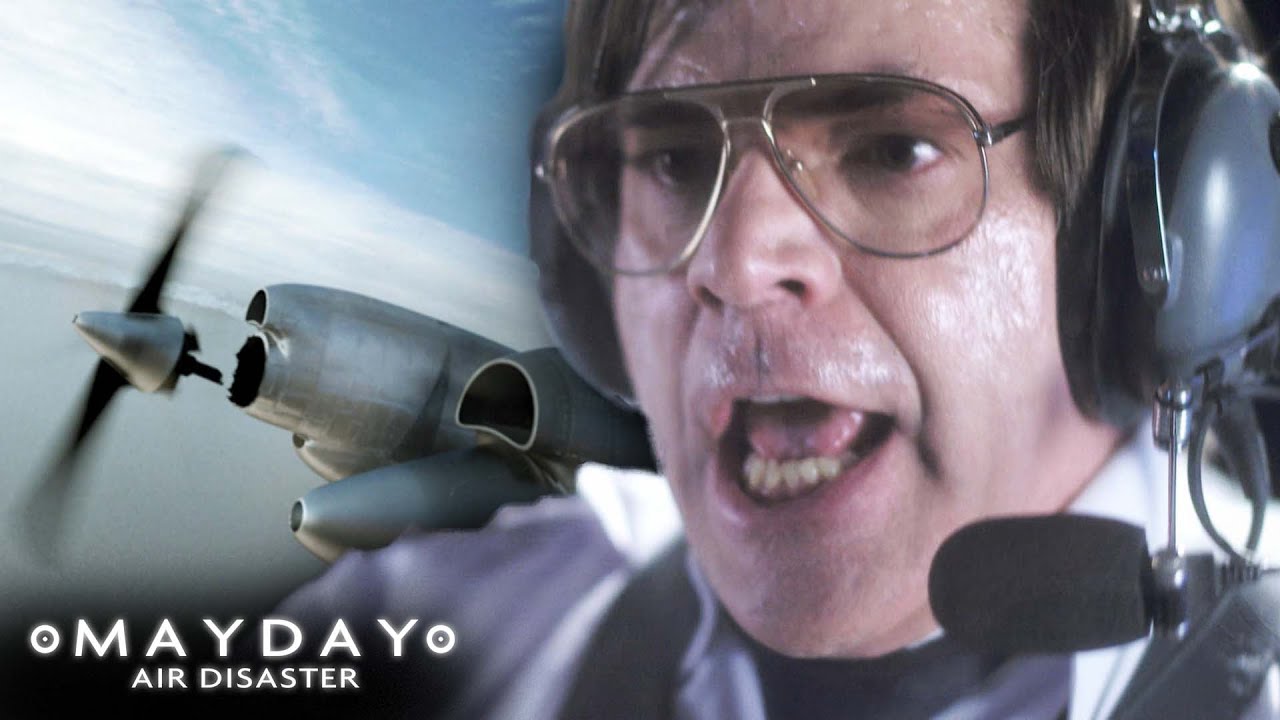

The sands of time have all but buried one of the great aircraft saves of all time: Reeve Aleutian Flight 8. This week’s Best of the Web video by Mayday: Air Disaster reprises the accident, which one NTSB investigator described as one of the greatest feats of airmanship he had ever seen.
Reeve 8 was a Lockheed Electra flown by famed Reeve Aleutian Airways, which served Alaska with passenger and freight service for more than 60 years before being dissolved in 2000. The flight was enroute on June 8, 1983, with 15 passengers from Cold Bay in the Aleutians to Seattle. Shortly after takeoff, the number 4 propeller departed the airplane and sliced through part of the wing and the belly, causing an explosive decompression that severely inhibited aircraft control.
Although the errant prop didn’t cut control cables, the decompression caused the floor to collapse, impinging elevator and aileron control. Worse, the engines remained at full power and the pilots had no means of modulating thrust short of shutting down engines. After ruling out a return to Cold Bay, they flew to Anchorage to land on the longest runway available in the region.
The video details the airmanship of Captain James Gibson, his first officer Gary Linter and flight engineer Gerald Laurin. After one approach ended in a go-around, the pilots put the airplane down safely in Anchorage, with no injuries. The NTSB never determined why the prop failed, although the Electra had a history of such mishaps. And early in its production history, the model’s reputation was tarnished by a design process that failed to account for whirl mode flutter. Two Electras were lost before it was corrected.
Although seriously damaged, the airplane was repaired and re-registered in Canada, where it is believed to be still in use by Air Spray as a firefighting aircraft. As detailed in this video by Alex Praglowski, Air Spray is among a handful of operators still flying the Electra.
