















I got my introduction to how slick a rubber-contaminated runway can be at New York’s JFK airport one misty Saturday morning. I was based in Connecticut then and used to fly periodic charters for passengers catching flights out of the three New York airports. We usually used a Saratoga for this.
The flight in was routine until I touched down. It had been raining lightly, but not enough to pool water on the runway. On the rollout, at low speed, the airplane skidded sideways gently. It wasn’t enough to lose control but I couldn’t correct it before we rolled to a stop. It was more startling than scary.
Before that, I’d never paid any attention to those black streaks on the runway. But after I dropped my passengers, I got a close-up look at the runway surface. From a light aircraft cockpit, you’re just a few feet away from the surface. The rubber almost looked like a solid mat had been laid on the runway, like the sort of thing used on flat commercial building roofs. It had beaded water on it and was probably as slick as it looked.
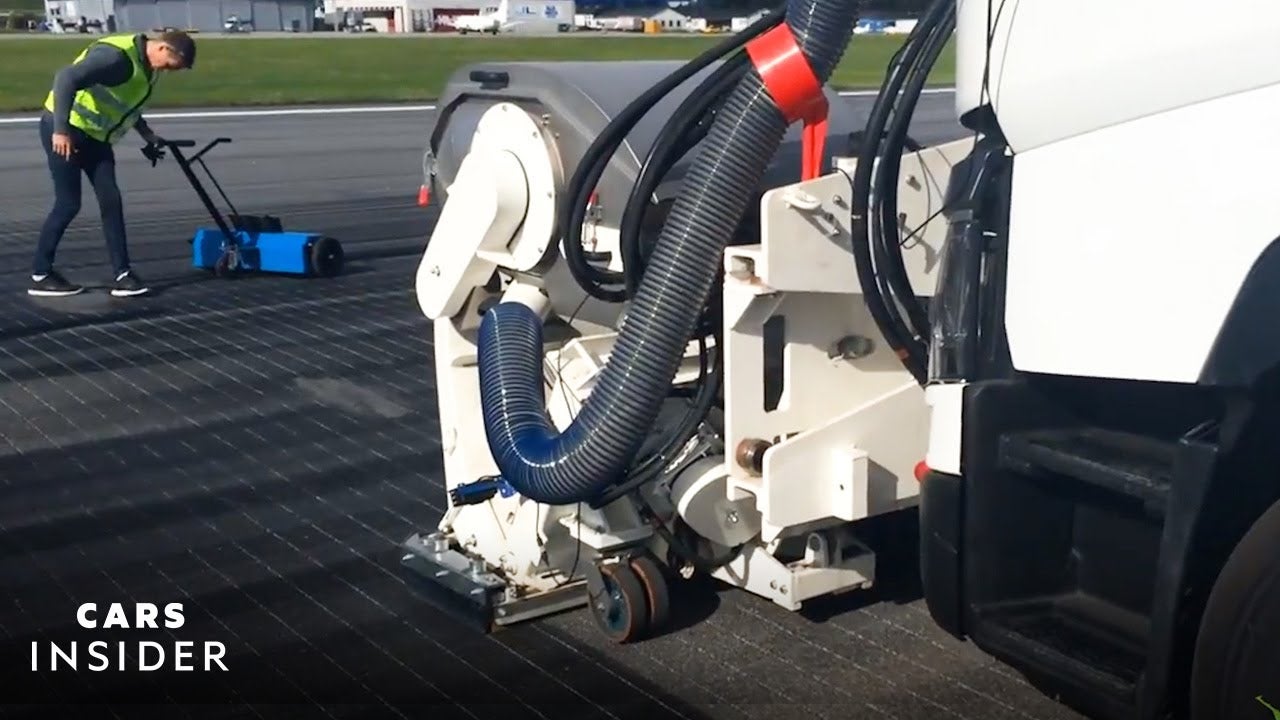
This week’s video, produced by Insider Cars, explains the hazard and how major airports deal with it, and deal with it they must, because airplanes leave a lot of rubber on the runway surface. If the claim of a pound and half per landing of a 10-wheel aircraft is accurate, that could be a half a ton a day at busy airports. (The video says 10,000 pounds of rubber daily, but the math doesn’t add up for that. That would require 6600 flights.) Not all of the rubber is deposited, of course. Some just balls up and blows to the side of the runway. Centerline lights also get trashed and have to be cleaned with dry soda or removed every few days, cleaned and replaced.
There are specs on when rubber has to removed or, more accurately, specs on measured surface friction requirements that, if not maintained, have to be restored by removing the rubber. And, of course, there’s an AC on this. It’s 150/5320-12C. Yes, regulations too. Part 139 covers this in 139.305. Most airports that have airline service adhere to this regulation.
