
















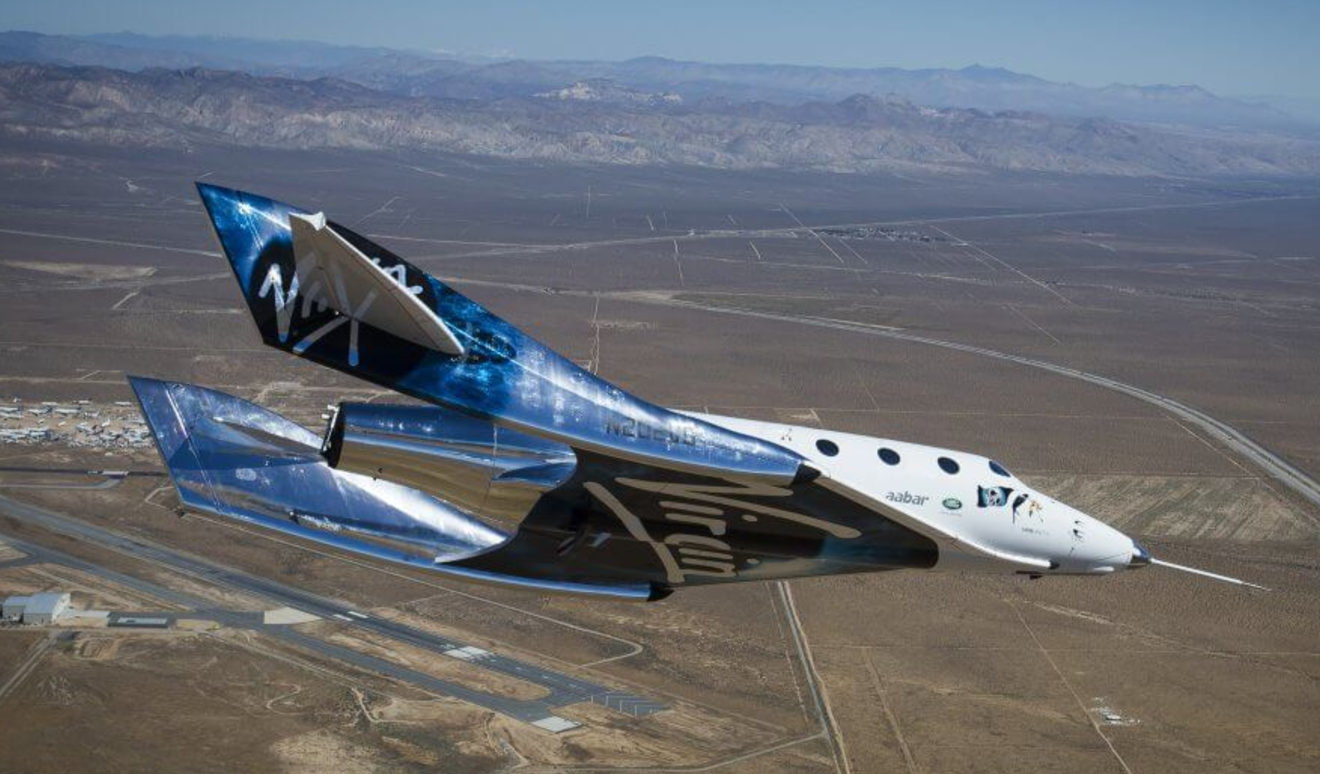
Virgin Galactic has successfully tested its feather re-entry system in flight for the first time, the company said this week. The system, which is designed to enable VSS Unity to safely return to Earth after carrying tourists to the edge of space, reconfigures the vehicle by folding up its twin tail booms. The structure acts as a brake, allowing supersonic speeds to be safely dissipated so the vehicle can descend to a slow and safe runway landing. The flight test followed extensive testing of the feather system on the ground. In upcoming flight tests, VSS Unity will activate its feather system shortly after release from the carrier aircraft,VMS Eve, to test how the feather system functions under flight conditions and to evaluate the flying qualities of VSS Unity while the feather is raised.
During tests, the feather will be raised at lower altitudes, where the atmosphere is thicker, than would be the case during a full mission to space, Virgin Galactic said, to provide a rigorous test of the feather in the air. The feather system was a key innovation in Burt Rutan’s original spaceship design. A Virgin Galactic test pilot was killed in a 2014 crash, in an earlier version of the spaceship, when the feather mechanism was engaged too early. The latest version of the spaceship, VSS Unity, includes an automated lock mechanism for the tail.

