
















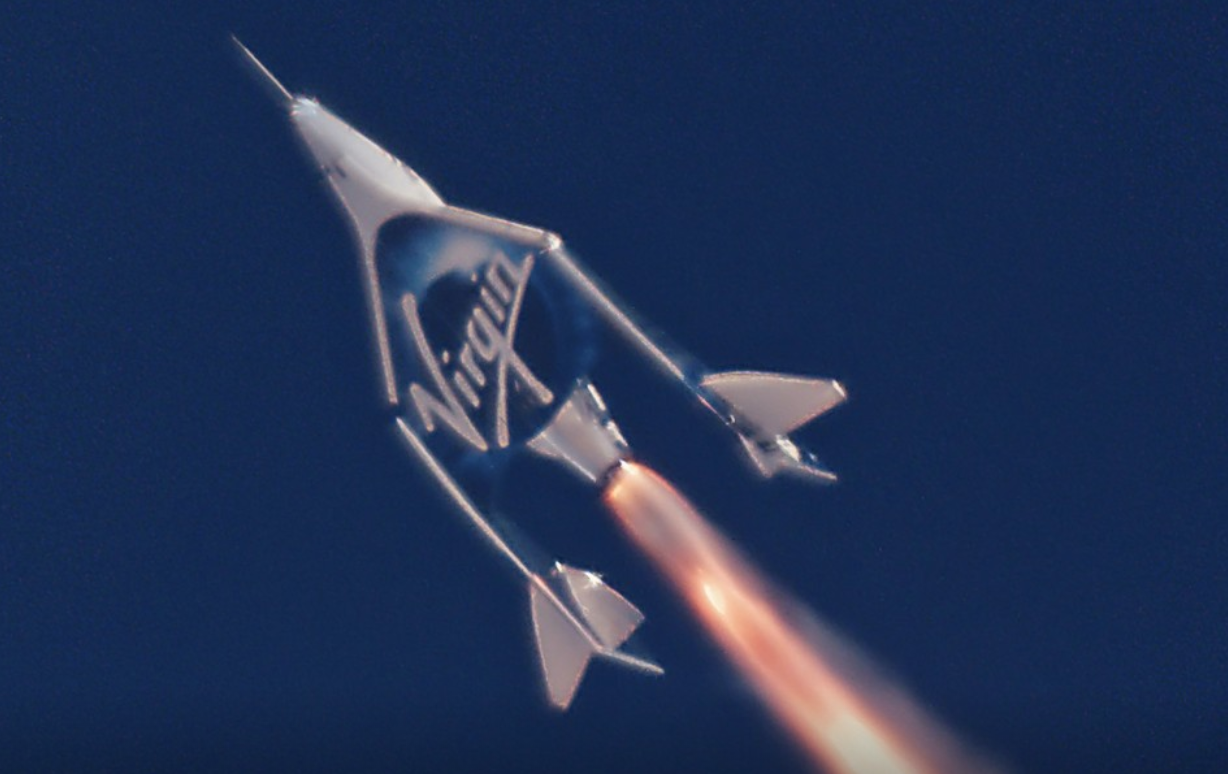
VSS Unity, the aircraft that Virgin Galactic plans to use later this year to carry tourists into space, completed a successful supersonic test flight on Tuesday, the company has announced. The rocket motor burned for 31 seconds, as planned, and propelled Unity to a speed of Mach 1.9 and an altitude of 114,500 feet. “Seeing Unity soar upwards at supersonic speeds is inspiring and absolutely breathtaking,” said Galactic CEO Richard Branson, in a news release. “We are getting ever closer to realizing our goals.” Branson told BBC Radio he’s only “months away” from making his first trip into space. He said he’s now training to be physically fit to help his body cope with the stresses of the trip.
The focus of Tuesday’s flight was to expand the engineers’ understanding of the spaceship’s supersonic handling characteristics, according to the Virgin website. The control system’s performance was also tested under parameters close to the ultimate commercial configuration. The vehicle’s center of gravity was shifted rearward, with the addition of passenger seats and related equipment. Unity’s re-entryfeathering system was deployed for the initial descent before the final glide home to a smooth runway landing. The last test flight was two months ago. The company said they aim to be able to turn around the spacecraft and fly it a higher frequency than has traditionally been the case for human spaceflight. “The flight today brought that vision a little closer,” according to the news update.

