Flight Safety

AVweb’s Flight Safety section offers in-depth coverage of aviation safety topics, including accident analyses, risk management strategies, regulatory updates, and pilot training insights. Designed for pilots, instructors, and aviation professionals, this section provides timely information to enhance situational awareness and promote best practices in flight operations.

One Dead, Two Safe In Midair

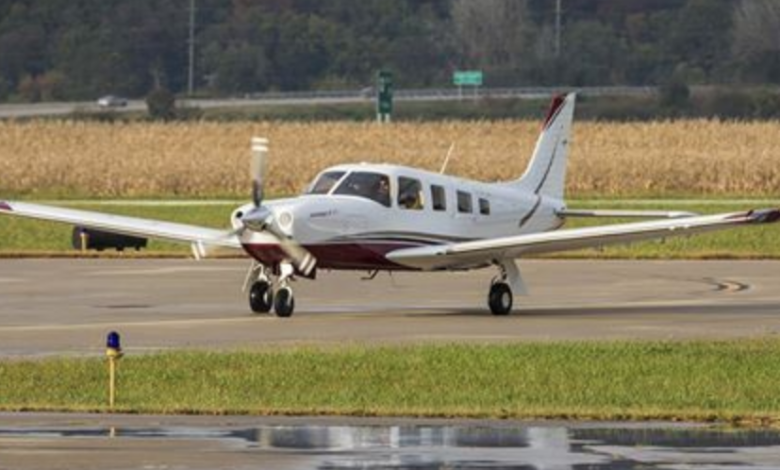
One person died but two others were uninjured in a midair collision between a Piper Cheyenne and another unidentified aircraft near Canada’s capital city of Ottawa on Sunday. The Cheyenne pilot reported the touch to ATC and did not declare an emergency. “Somebody hit the bottom side of my aircraft,” the unidentified pilot told the […]

Read More »

Terrorism By Homebuilt?

Canadian prosecutors want the book thrown at a Quebec pilot whose beef against a utility company turned into what some suggested was an act of domestic terrorism using an Aerocruiser homebuilt, a kit aircraft he designed. Government lawyers have asked for the full 10-year maximum sentence on “mischief” charges against Normand Dub, who came close […]

Read More »

Vulcanair’s V1.0-Skyhawk Killer?

The Italian company Vulcanair is touring with the V1.0, a four-place single they hope to market to the training segment. It’s more than $100,000 cheaper that a Cessna Skyhawk and that might make it attractive to schools. In this video, AVweb’s Paul Bertorelli takes an in-depth look at the V1.0. CORRECTION: The Skyhawk wingspan is […]

Read More »

Why Do We Stall?

Fixed-wing pilots start learning stall recognition and avoidance during pre-solo training. The private and sport pilot checkrides require recovering from developed stalls with minimal loss of altitude, and stall and spin awareness are (or at least should be) refreshed during flight reviews for the duration of one’s flying career. But unintended stalls still put dozens […]

Read More »

Game Time Decisions

Many VFR, and inexperienced IFR, pilots mistakenly believe that an instrument rating allows you to launch into “weather.” After all, instrument pilots have been trained to fly on the gages, so making the decision to fly into the clouds shouldn’t be difficult. Veteran IFR pilots understand the complexity of the go/no-go decision. There are weather […]

Read More »

FAA Relaxes Examiner Restrictions

The FAA has issued a notice removing several regulatory restrictions identified as major contributors to increasingly long wait times for pilot practical exams. FAA Notice N 8900.485 (PDF) gives designated pilot examiners (DPEs) the ability to conduct up to three tests and an unlimited number of retests per day and lets flight instructor applicants schedule […]

Read More »

Short Final: Capital Idea!

Toward the end of my flight, I had the following exchange with air traffic control: Approach Control: “N1234, expect visual approach Runway 32.” Me: “Any chance we can get the ILS 32?” Approach Control: “Well, there’s always a chance …” Me: “Well, capitalizing on that chance, we’d like to request the ILS 32.” Approach Control: […]

Read More »

Industry Round-up, November 2, 2018

This week, AVweb‘s news roundup found reports of a new simulator for a Florida flight school, a scholarship for aspiring pilots, the launch of a STEM working group in the U.K., an AML expansion for fuel quantity senders and international garbage handling authority earned by a Washington FBO. ALSIM has announced the sale of an […]

Read More »

Top Letters And Comments, November 2, 2018

The Trouble With Trainers Interesting, Paul’s correlation of lack of trainer sales to the alleged “pilot shortage”. The lack of interest by producers (or former) of trainers just another indication to me how overblown the “pilot shortage” is. As far as Cessna building piston powered planes, I agree that I think they want to eventually […]

Read More »

Abnormal Booster Separation At Fault For Soyuz Launch Failure

The failure of a Soyuz-FG launch vehicle on Oct. 11 was caused by abnormal separation of one of the rocket’s boosters, according to Russian space agency Roscosmos. The committee investigating the incident says the malfunctioning booster hit the vehicle’s core stage in the fuel tank area, resulting in its decompression and a loss of attitude […]

Read More »
Sign-up for newsletters & special offers!

Get the latest stories & special offers delivered directly to your inbox

SUBSCRIBE

Please support AVweb.

It looks like you’re using an ad blocker. Ads keep AVweb free and fund our reporting.
Please whitelist AVweb or continue with ads enabled.