
















Vice President Mike Pence upended NASA’s self-imposed 2028 schedule for a return to the moon on Tuesday when he directed NASA to accomplish the task within the next five years. “We’re actually being told the earliest we can get back to the moon is 18 years after the Space Launch System (SLS) was started, and eleven years after the president of the United States directed NASA to return American astronauts to the moon. That’s just not good enough,” Pence said.
The SLS will be the biggest rocket NASA has ever created and is designed for deep-space journeys to Mars and beyond. It is years behind schedule and over budget. Pence issued the call to action for a 2024 moon landing at a Huntsville, Alabama, conclave of the National Space Council, and follows President Donald Trump’s Space Policy Directive No. 1 issued in December of 2017.
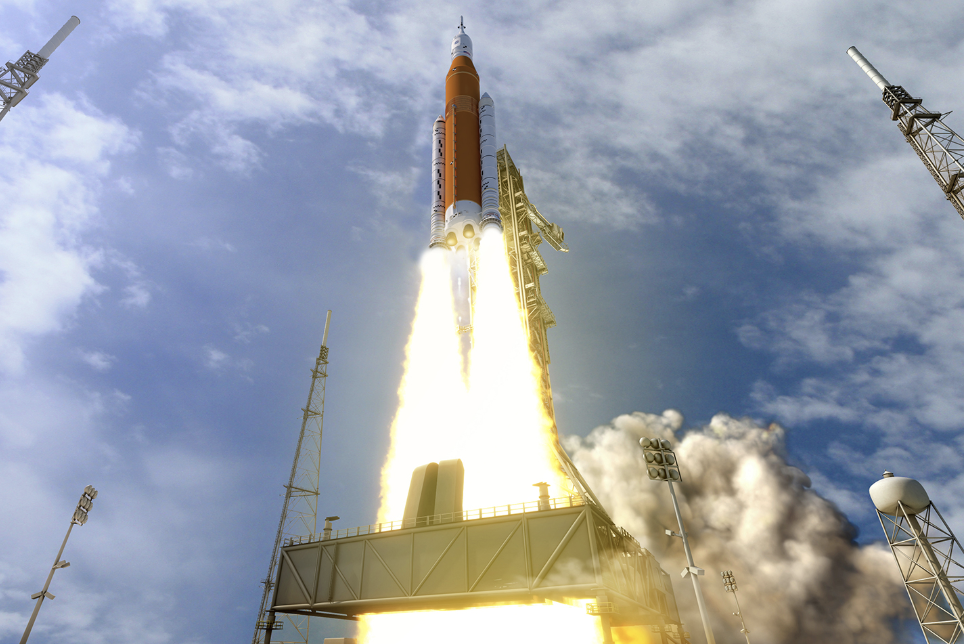
nasa.gov
Pence cited frustrations with SLS delays, and declared a willingness to turn to private sector initiatives to field a suitable rocket if Boeing’s SLS isn’t ready.
Interest in a moon return was revived in January when China successfully landed their Chang’e 4 rover on the far side of the moon, a feat of technical proficiency that appears to have revived interest in accelerating an American return to the lunar surface.
Space policy experts are calling the Pence plan ambitious and expensive. According to John Logsdon, a space policy expert from George Washington University: “Presidential support is a necessary ingredient for this endeavor. We will see if it is sufficient. Congress is an equal partner in making these decisions.”

