















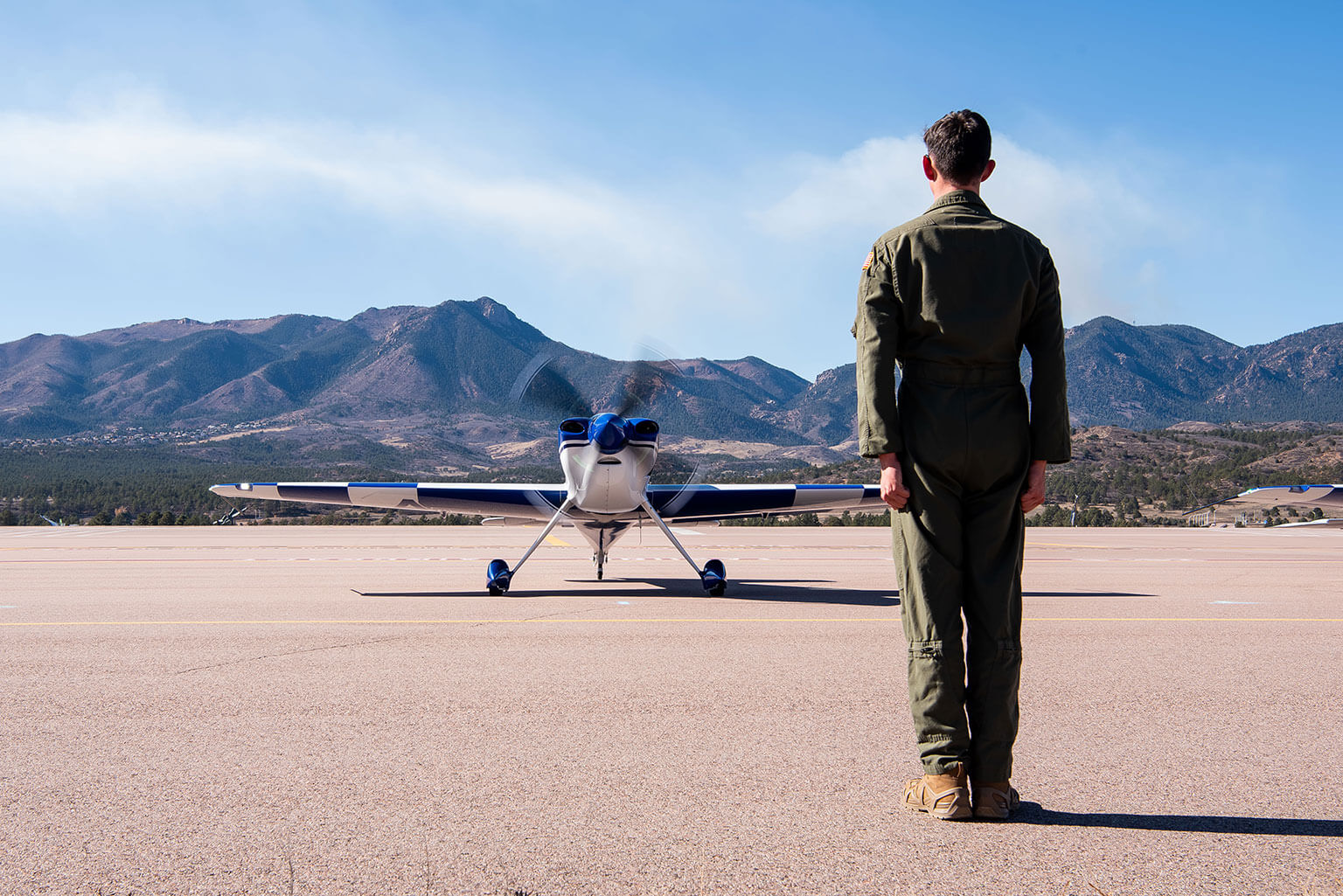

The U.S. Air Force Academy officially introduced four T-19A Kestrel aircraft Thursday, marking the arrival of its first airplanes dedicated to powered aerobatic training. Air Force Chief of Staff Gen. Ken Wilsbach and three other military leaders piloted the aircraft over the academy’s noon formation before landing at Davis Airfield for a ceremony, according to an academy announcement.
The Kestrel is a military-designated version of the GameBird GB1, a two-seat, single-engine aircraft designed for aerobatic flight. The four aircraft were donated to the Air Force through a privately funded effort led by businessman and philanthropist Andrew McKenna, according to The Gazette. McKenna helped raise funding for the aircraft and arranged their purchase after Wilsbach proposed bringing powered aerobatic training to the academy.
Expanding Cadet Flight Training
“The arrival of the T-19A marks an exciting new chapter in airmanship training here at the Academy,” said academy Superintendent Lt. Gen. Paul Moga. “This aircraft will provide an opportunity to train our cadets in ways that were previously not possible. We will strengthen their aviation skills and develop the confidence, discipline and leadership required of future Air Force officers.”
Six active-duty military pilots from the academy’s staff and the 306th Flying Training Group have been selected to develop and administer the new aerobatic curriculum. According to the academy’s program overview, participating cadets will progress through a multiyear training program emphasizing precision aircraft control, spatial orientation and decision-making before advancing to more complex aerobatic maneuvers.
Future Aerobatic Team
The academy plans to eventually establish a nationally competitive aerobatic and demonstration team composed of cadets who complete the training program. The team would participate in aviation competitions, airshows and recruiting events. The academy has not announced a timetable for the first cadet training flights or the formation of the demonstration team.
“Learn how to master this machine, do it safely, manage your risk along the way,” Wilsbach said during Thursday’s ceremony. “You take it on the road and bring back trophies.”


0 replies