















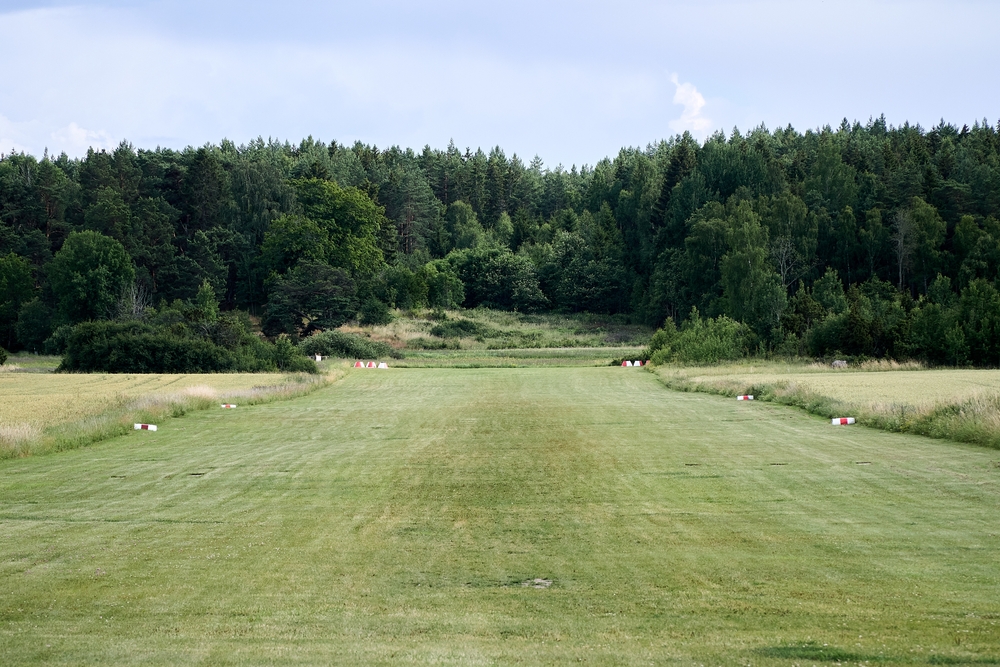

Residents in Lincoln, Vermont, renewed their opposition Monday to a proposed 900-foot private airstrip at the home of eVTOL company BETA Technologies CEO Kyle Clark. About 75 people attended a community meeting on the project, according to local WCAX.
The strip is not a BETA Technologies project and is intended for the Clarks’ personal use, including recreation and commuting, according to earlier reporting and court records. Opponents of the strip have raised concerns about aircraft operating near homes and trees in the mountainous area, along with potential effects on the town’s rural character.
Permit Fight
Clark first sought local approval for the personal landing area as an accessory use in 2022, which was granted by the zoning administrator. Opponents appealed to the Zoning Board of Adjustment, which subsequently denied the application and Clark and his wife Katie appealed. A following request for conditional use approval was denied by the town Development Review Board. Clark also appealed that determination.
“We have concerns about public safety, aircraft operating in and around a 900-foot runway down a hill in a valley in a mountainous region with unpredictable winds and weather,” Lincoln resident Michael O’Connor told WCAX.
Neighbors hired an aviation safety consultant this summer and have sought a public hearing before the FAA, state transportation officials and the Vermont Transportation Board.
State Decision Pending
“The FAA has deemed the landing area safe and permissible,” the Clark family said in a statement released Monday. “And, the Vermont Agency of Transportation completed a site inspection and deemed it safe, and recommended approval to the Transportation Board.”
The Clarks said they have followed the required permitting and safety-review process for more than four years. Vermont Transportation Secretary Joe Flynn told WCAX that the application has completed the applicable reviews and appeals and now rests with the Transportation Board. The board is expected to issue its final decision in the coming weeks.


Here in Canada, we often look south to the United States with some envy at the strength and vitality of its general aviation sector. However, stories like this remind me why I am grateful for Canada’s approach to aeronautics regulation.
In Canada, aeronautics, including the establishment and operation of private aerodromes and airstrips, falls under exclusive federal jurisdiction. Municipalities and provinces have challenged this principle numerous times, particularly when local opposition arose to proposed aerodromes, but the courts have consistently affirmed that decisions regarding aviation infrastructure are a federal responsibility.
That does not mean communities are ignored. There are consultation requirements and opportunities for local input. However, the process is ultimately focused on safety, air navigation, and the national aviation system rather than local political considerations. As a result, projects are generally less vulnerable to NIMBY-driven opposition once they have been found to meet the applicable regulatory and safety standards.
Reading this article, it is striking that a private grass airstrip that has reportedly been reviewed and deemed safe by both federal and state aviation authorities can still become entangled in years of local disputes and litigation. Whether one supports this particular project or not, the Canadian framework provides greater certainty that aviation decisions will be made by aviation experts and regulators, rather than by local popularity contests.
My 400’ long strip on my 70 acres has never been challenged by any new neighbors, as they know if it is I’ll sell but first subdivide it into as many 2 acres lots as possible, so my little flying operation is the lesser of 2 evils.