
















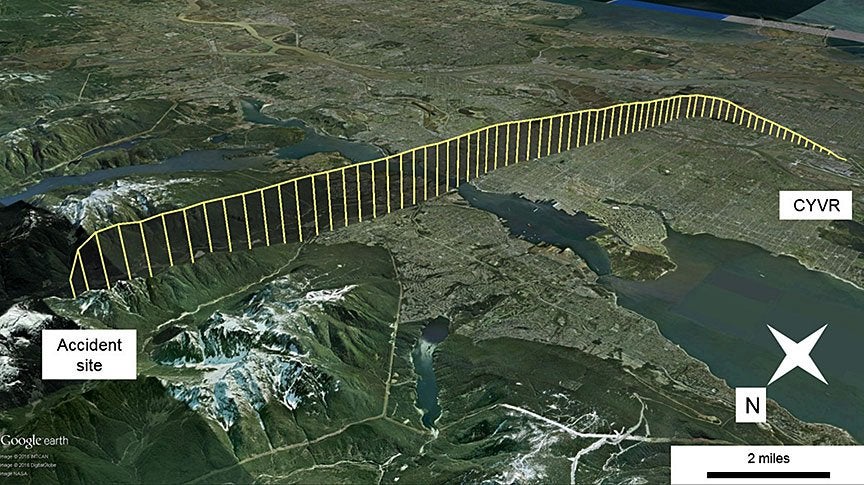
Copycat suicide is one of three scenarios being considered by Canada’s Transportation Safety Board in the 2015 crash of a cargo aircraft with a drunk pilot in the left seat.The TSB report on the April 13, 2015, crash of the Carson Air Metroliner in the mountains north of Vancouver says radar tracks show the aircraft climbed normally on its way to Prince George after a 7 a.m. takeoff. Six minutes into the flight the Metro suddenly went into a vertical dive and broke apart in the air. It killed Capt. Robert Brandt, 34, and his first officer, Andrew Wang, 32.
Brandt had a blood alcohol level of .24 but Wang was clear of intoxicating substances. The report says pilot incapacitation and pitot static icing are possible causes but it spends much more time explaining the relationship between chronic alcohol abuse and suicide. It also notes the crash occurred roughly three weeks after Brandt was turned down for promotion to chief pilot and a Germanwings first officer intentionally crashed an A320 into the French Alps in a chillingly similar scenario.
In a news release accompanying the report, TSB Chair Kathy Fox said mandatory testing and monitoring of aviation workers for substance abuse should be implemented by the government. Canada does not mandate random drug and alcohol testing for pilots. “In Canada, regulations and company rules prohibit flying while impaired, but they rely heavily on self-policing,” said Kathy Fox, chair of the TSB. “What is needed is a comprehensive substance abuse program that would include mandatory testing as well as complementary initiatives such as education, employee assistance, rehabilitation and peer support.”

