
















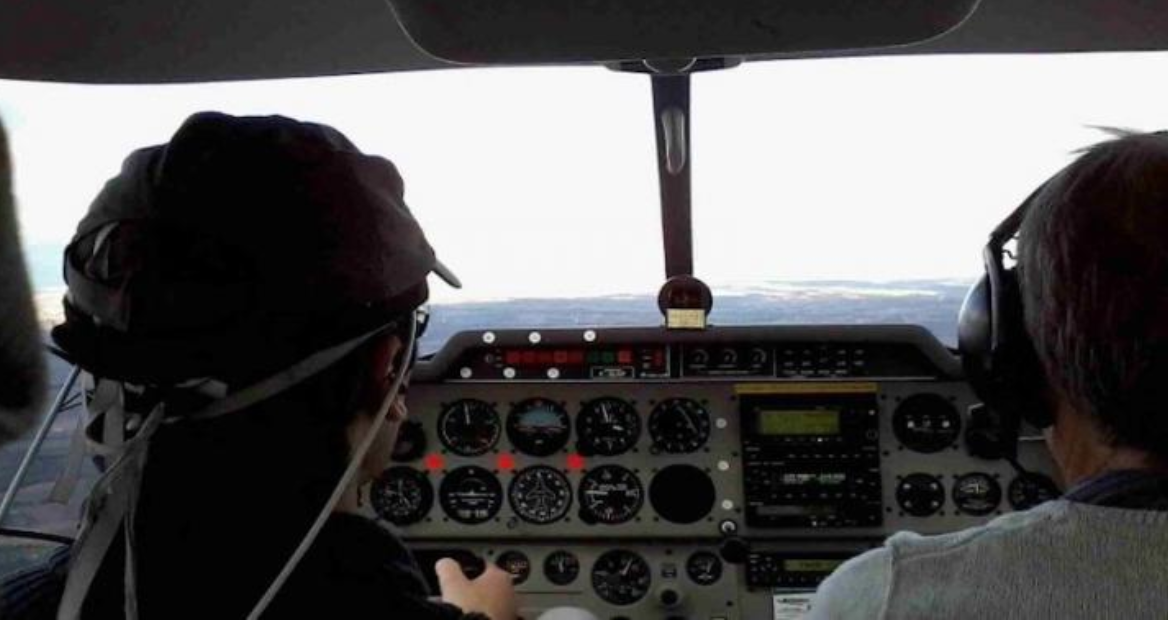
The design of today’s cockpits can lead to “cognitive overload,” especially when things go wrong and it’s not immediately clear to pilots what the problem is or how to fix it, according to recent research at Drexel University. “Unfortunately, many human-machine interfaces expose users to workload extremes, diminishing the operator’s attention and potentially leading to catastrophic consequences,” said Hasan Ayaz, a research professor in biomedical engineering at Drexel University, in Philadelphia. Ayaz and his colleagues have been studying pilots flying in both real airplanes and in simulators, and measuring their brain activity with a portable electronic device. Ayaz said he hopes the research will lead to developing smarter cockpits that take into account the pilot’s cognitive abilities and will do a better job of conveying essential information, especially in emergencies.
The researchers’ monitoring system measures the brain’s work intensity by recording blood oxygenation changes in the prefrontal cortex, which is involved in cognitive functions such as problem solving, memory, judgement, impulse control and split-second decision making. When first learning a new task, for instance, this area of the brain is highly activated. However, as you become more proficient, these tasks move to other brain areas, freeing up important resources in the prefrontal cortex. “The exciting thing is we can now quantify this,” Ayaz said. The research results were published this week inFrontiers in Human Neuroscience.

