
















The FAA’s push to normalize beyond visual line of sight (BVLOS) drone operations has reached a critical moment. And yes, while that’s technically drone news, it impacts the safety and operations of everyone else in the skies, too.
A new Government Accountability Office report published Tuesday essentially said that BVLOS operations are here to stay and are going to continue growing at a truly rapid pace. What it also said, though, is that the proper systems and regulations to do that safely are so far not keeping up with the pace.
There remain unresolved issues around how drones will communicate with and avoid other aircraft. The FAA is aware of this, of course, and these issues are central to the FAA’s proposed BVLOS framework now closing for public comment today (Wednesday), which you should go offer your thoughts to, if you haven’t already.
Even so, for pilots flying manned aircraft, particularly at low altitude, the overlap between the GAO’s findings and the FAA’s proposal shines a light on just how much of the integration effort still hinges on assumptions about technology, procedures and shared responsibility in the national airspace.
Detect-and-avoid remains the central safety hinge
The GAO’s report said it found that most BVLOS ops that currently have approvals rely heavily on ADS-B and related surveillance tools to identify nearby traffic. They also oftentimes suppliment the data from those tools with additional cameras, acoustic sensors or ground radar where aircraft are not electronically conspicuous. Stakeholders told the GAO that ADS-B is generally more effective than sensors alone, though combining technologies could improve safety while introducing operational challenges such as added weight and complexity.
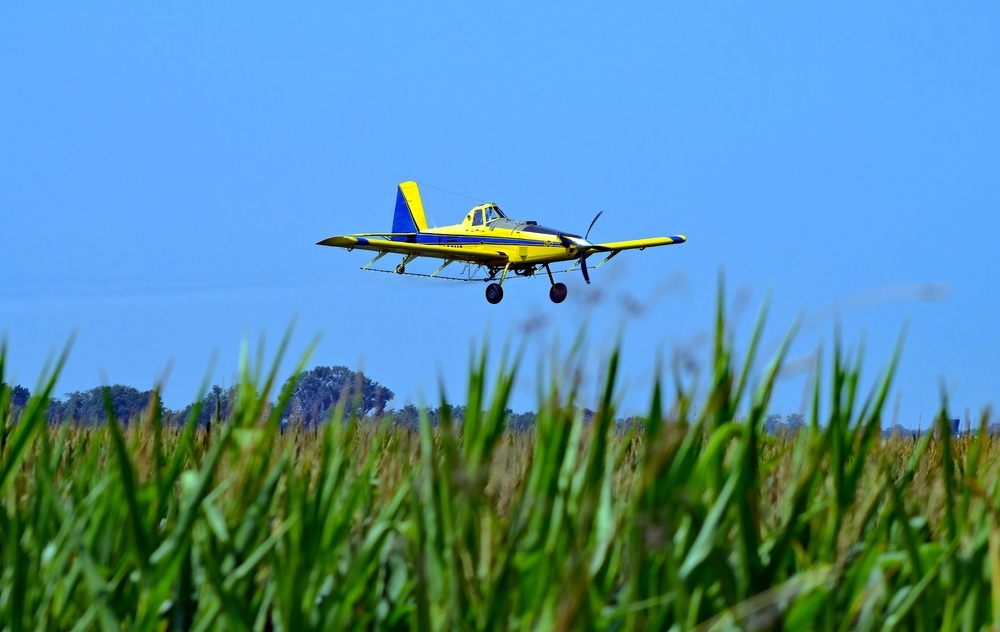
That reliance exposes perhaps one of the most obvious and long-standing concerns about this type of operation for manned pilots: not all aircraft are required to transmit ADS-B. This is particularly true in low-altitude operations such as agricultural work, glider activity and certain helicopter missions.
The GAO noted that drones may need to detect aircraft that are not broadcasting position data, a capability that remains dependent on developing technology and operational standards. As it stands, much of the developing technology for this type of detection is either too heavy, too costly, or too susceptible to interference to be truly realistic solutions across the board.
The FAA’s BVLOS proposal requires drones to detect and avoid other aircraft and incorporates strategic deconfliction and conformance monitoring concepts, while also outlining operating rules and equipment expectations for low-altitude operations.
But the GAO report concludes that FAA planning still lacks detailed steps for how these capabilities will mature into a fully integrated system.
Communication with other aircraft still unresolved
The GAO highlights a longer-term challenge: the FAA envisions an “information-centric” airspace in which drones and traditional aircraft share position data electronically. Current technologies, however, do not yet provide a universal two-way communication method between drones and other aircraft.
FAA officials said the agency intends to develop performance-based standards and safety requirements to support such communication, but the report says the agency has not identified specific actions, timelines or clearly defined roles to get there.
The proposed BVLOS rule anticipates automated data service providers and traffic management systems to support operations, but it largely leaves the technical path forward to industry and future standards development.
For manned operators, that distinction is a big deal. Integration depends not just on future capabilities but on how responsibilities are assigned in mixed-traffic environments right here and right now, today.
Performance-based rules, fewer pilot requirements
The BVLOS NPRM takes a performance-based approach, placing operational responsibility on companies and systems rather than on individual certificated airmen. Interestingly enough, the proposal’s language would not require all BVLOS personnel to gain traditional airman certification. Instead, these ops would rely on roles built into the organization, including things like operations supervisors and flight coordinators, along with automated systems to maintain separation and safety.
The FAA’s shift towards increasing the autonomy of unmanned aircraft inherantly reduces the role of a human pilot in ensuring safe flight. This shifts the burden of flight safety and aeronautical decision making ever more toward design requirements, operational controls and automated safeguards.
For manned aviation, this is a huge structural shift. Safety assurance would depend less on pilot judgment in the cockpit and more on technology, service providers and remote operators working outside traditional ATC frameworks.
Deadline arrives with open questions
The GAO ultimately recommended the FAA develop and begin implementing specific actions—such as defining federal and nonfederal roles and establishing technical milestones—to ensure drones can communicate with and avoid other aircraft as integration progresses.
The Part 108 BVLOS proposal reflects an attempt to move ahead with scalable operations anyway, while those long-term capabilities are still evolving. The rule aims to normalize low-altitude drone activity and expand commercial use, from delivery to aerial surveying and public safety operations.
For manned pilots, the GAO’s findings reinforce a familiar theme that we should find concerning: integration will occur in the same airspace where see-and-avoid and right-of-way rules are king, and where electronic conspicuity already varies widely by mission and aircraft type in most places.
Today (Wednesday) marks the final day to submit comments on the FAA’s proposed BVLOS rulemaking during its re-opened comment period. Pilots, operators and aviation organizations concerned about detect-and-avoid capability, low-altitude conflict risk, ADS-B interoperability, ATC interaction and operational accountability have a last opportunity to weigh in before the framework moves toward finalization.


Operators of BVLOS drones need to be registered airmen, and, perhaps the time has come, that ALL aircraft operating in US airspace, should be required to be equipped with ADS-B out. Until alternate technology is developed, current technology should provide manned and unmanned BVLOS drones to share the airspace.
strongly agree..
STRONGLY DISAGREE
Many aircraft flying are not equipped with electrical systems. They are VFR.
Nothing but a giant GOV induced mess in the making, all leading to more and more regulation of the Aviation industry…