















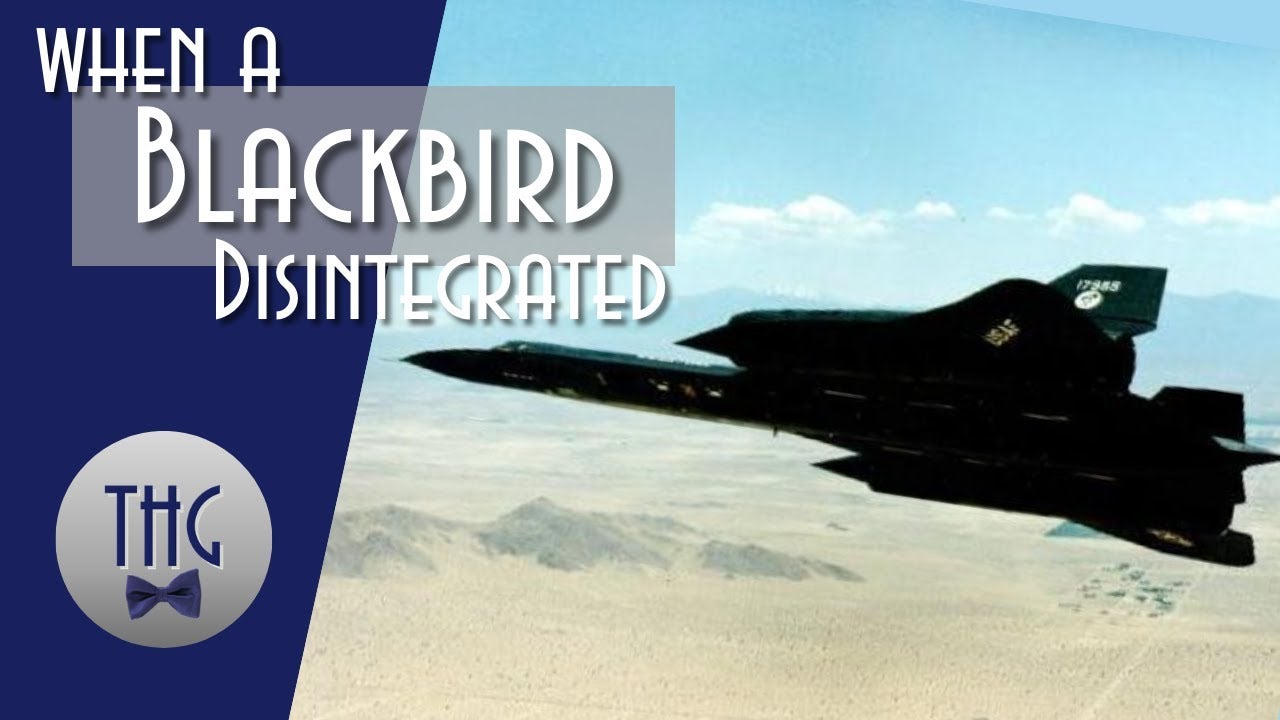

Although retired for a quarter century, Lockheed’s SR-71 remains the stuff of legend. It flew higher and faster than any other air-breathing aircraft of its era, and its performance has yet to be matched by any publicly acknowledged aircraft. It also suffered test and operational losses commensurate with its edge-of-technology design. Of the 32 SR-71s built, 12 airframes were lost in accidents, but none to enemy action.
One of the most spectacular hull losses occurred early in the program, on Jan. 25, 1966, as detailed in this engaging video from The History Guy YouTube channel. Lockheed test pilot Bill Weaver and Jim Zwayer, a company test navigation and systems specialist, were wringing the airplane out east of Edwards Air Force Base in a series of tests involving aft center of gravity. Just after tanking fuel from a KC-135, Weaver climbed the aircraft to 78,000 feet where it encountered a fault unique to supersonic flight: an inlet unstart. This snuffs one engine and imparts a high-rate, uncommanded yaw, which, in his account of the accident, Weaver compared to riding through a train wreck.

Thanks to the longitudinal instability of the aft CG, the SR-71 departed controlled flight at Mach 3.18 and forces became so high, the aircraft’s stability augmentation system couldn’t restore control. The G-forces built to point that Weaver and Zwayer were rendered unconscious and the aircraft broke up around them. Both were thrown clear of the wreckage, although neither had activated his ejection seat. Weaver regained consciousness in freefall with an iced-over faceplate and no idea of his altitude. His pressure suit was equipped with a bailout bottle that worked correctly, pressurizing his suit. His parachute automatic deployment device, including a high-altitude drogue, also worked correctly.
He landed in a New Mexico farm field and was picked up by a rancher who happened to be flying a helicopter. Sadly, Zwayer didn’t survive. Although his parachute functioned correctly, his neck was broken during the aircraft breakup. He was the only fatality associated with the program. Weaver was back to flying the SR-71 a week later. Lockheed dispensed with further aft-CG testing.

