















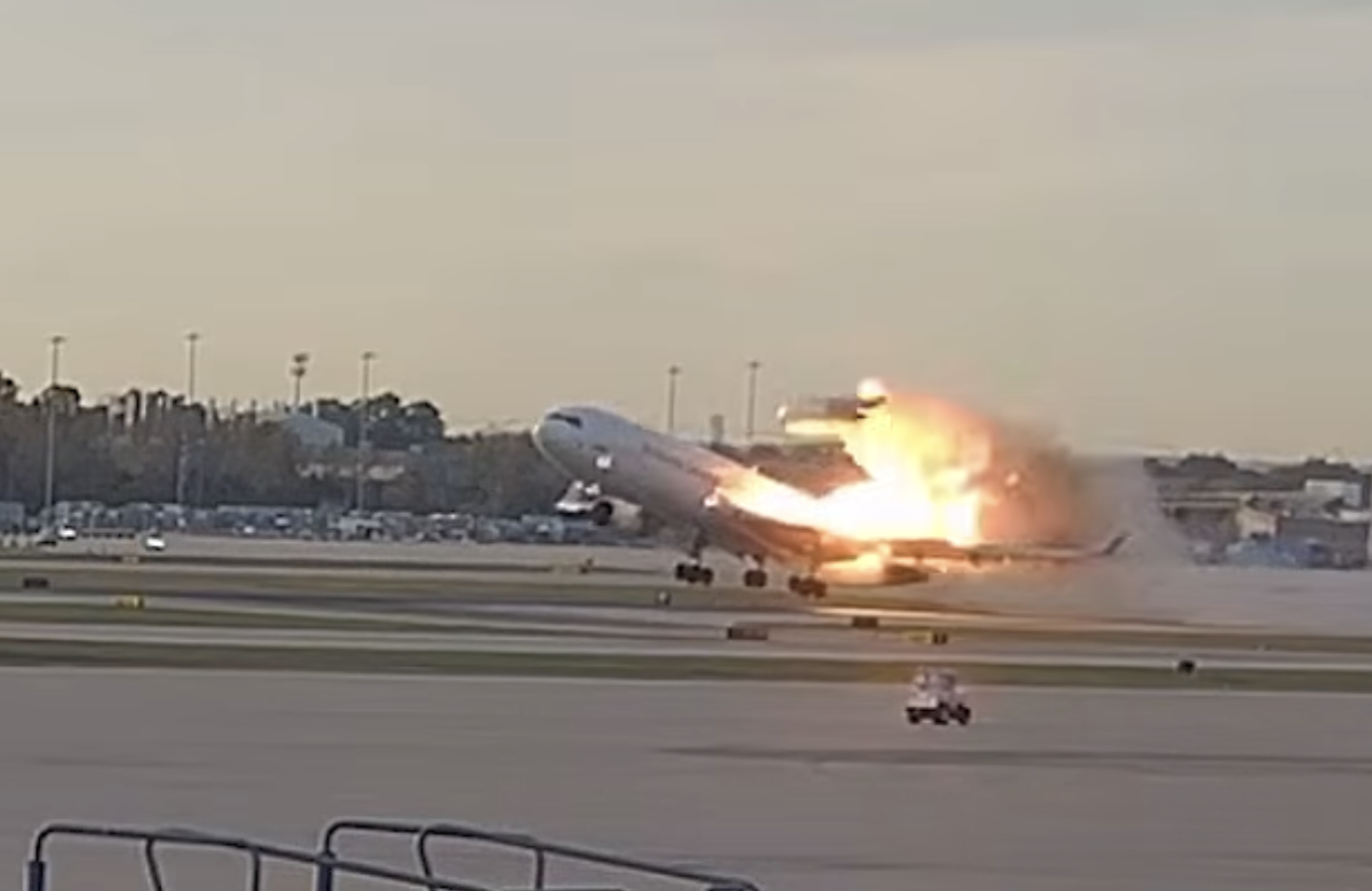

The NTSB opened a two-day investigative hearing Tuesday into the Nov. 4, 2025, crash of UPS Flight 2976, a Boeing MD-11F that went down shortly after takeoff from Louisville Muhammad Ali International Airport. The three crew members and 12 people on the ground died; 23 people on the ground were physically injured at the time, including one who later died, according to the NTSB.
Investigators Detail Pylon Failure
Airport surveillance video showed the aircraft’s left engine and pylon separated shortly after takeoff rotation. An NTSB animation described fatigue cracking in the outer race of a spherical bearing in the left pylon aft mount, followed by cracking and fracture of the mount lugs. The video concluded with the airport security footage showing the full detachment sequence. Although the aircraft climbed to about 30 feet AGL, it struck buildings and terrain south of the runway.
Investigators said UPS’s MD-11 maintenance program included 72-month general and detailed visual inspections of the pylon while installed on the wing. The last such inspections on the accident aircraft were completed in 2021 by ST Engineering San Antonio Aerospace, while a lubrication task was last completed in October 2025. NTSB staff said they identified nine prior operator reports involving 10 instances of fractured and migrated pylon aft mount bearing outer races on other MD-11 or MD-11F aircraft.
Reporting Processes Examined
The first day of testimony focused heavily on how structural anomalies are documented and shared among operators, maintenance providers, Boeing and the FAA. NTSB staff said investigators found records showing that only two of the earlier reports were formally reviewed through Boeing’s continued operational safety process, and Boeing concluded those two cases did not present a safety-of-flight issue. Witnesses also discussed service difficulty report requirements and data-quality issues, including inconsistent part names and coding that can make trend searches more difficult.
FAA, UPS, Boeing, Teamsters and ST Engineering witnesses described the paths by which defects are identified, reviewed and reported. UPS officials said structural findings can be captured through its maintenance information system and routed through engineering and quality processes, while FAA witnesses said SDR data is available for review but has limitations for trend analysis when reports are sparse or inconsistently entered.
The hearing also raised questions about how earlier bearing-related findings were understood before the accident. Following the crash, the FAA grounded MD-11, DC-10 and MD-10 aircraft, and NTSB staff said post-accident inspections found migrated bearing races on three UPS MD-11s and one DC-10.
UPS has retired its MD-11 fleet, while FedEx has resumed MD-11 operations after FAA-approved inspection and bearing replacement actions.


0 replies