
















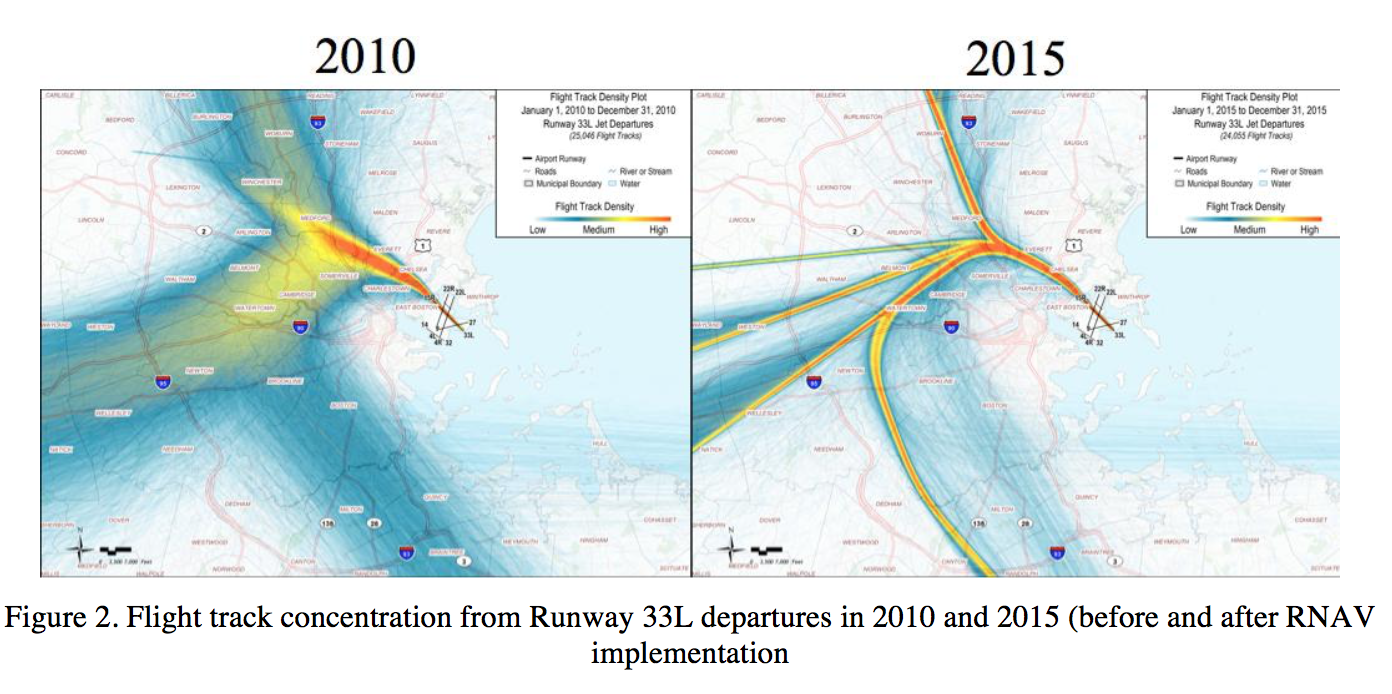
Researchers at the Massachusetts Institute of Technology have proposed a possible fix to relieve the increasing noise complaints from neighbors of Boston’s busy Logan Airport — if airplanes on departure just slowed down by about 30 knots, it would significantly reduce the noise at the surface. Logan is one of many airports nationwide where the concentration of flight paths, due to changes in navigation and ATC over the last few years, have increased the number of noise complaints from neighborhoods impacted by the routes. The researchers estimate that if jets would slow down, it would add about 30 seconds to the climb, and each airplane would burn about seven extra gallons of jet fuel.
The operational and safety benefits of the newer navigation procedures make it unlikely that airports will revert to the old, dispersed patterns, the researchers found. A reportin futurism.com noted that the MIT study didn’t consider the environmental impact of their options. If the 16,500 aircraft that depart from Logan every month slowed down as proposed, they would burn an extra 115,500 gallons of fuel every month. That would release an extra 1,100 tons of carbon dioxide into the atmosphere — every month, from just one airport. An FAA working group is evaluating the recommendations of the MIT study, according to futurism.com.

