















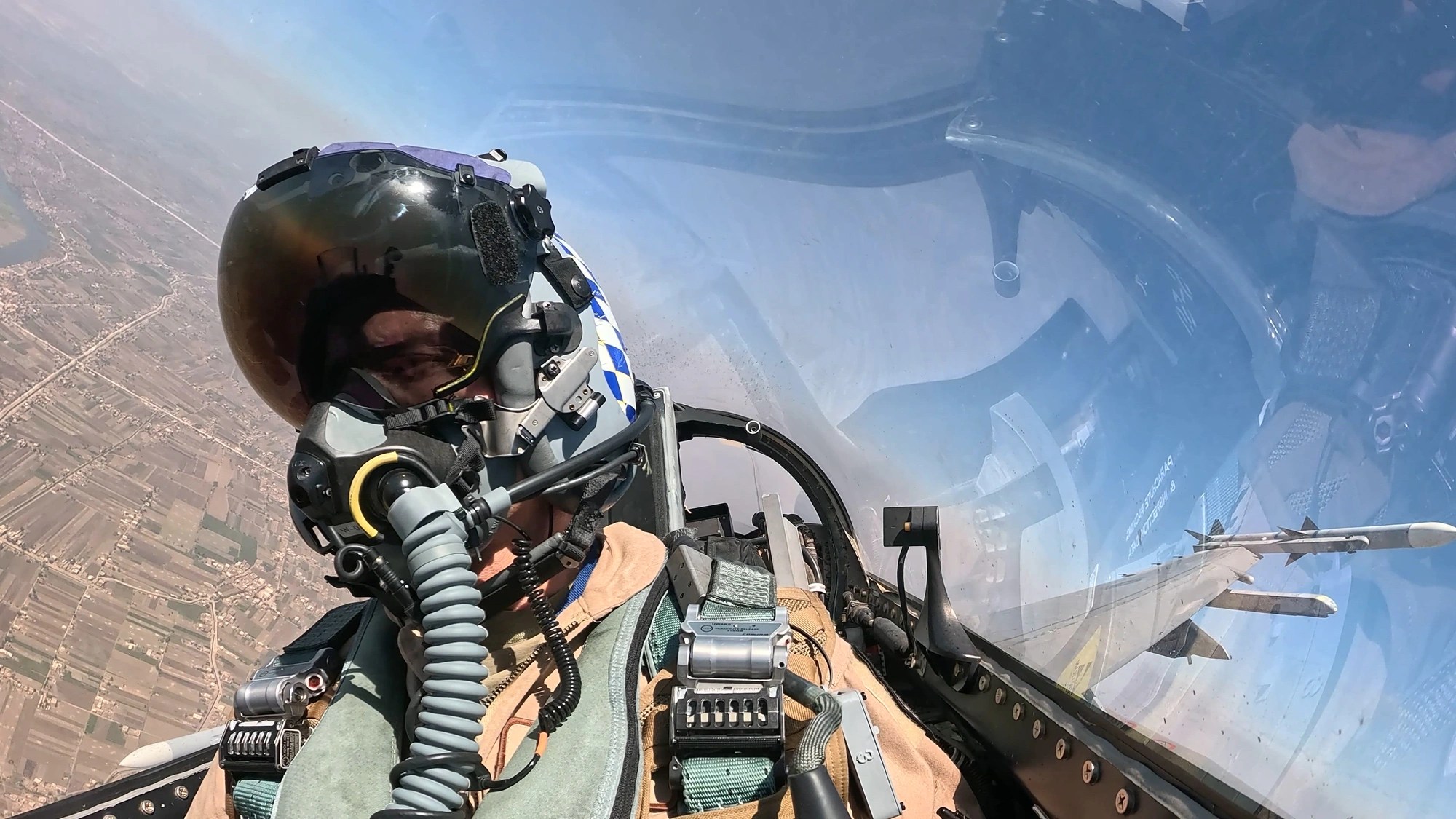

The U.S. Air Force says its pilot shortage could take as long as 15 to 20 years to fully address, even as the service reaches its longstanding goal of producing 1,500 pilots annually. Air Education and Training Command says the Air Force currently has a shortfall of nearly 2,407 pilots.
According to Breaking Defense, much of the current shortage involves staff positions that require pilots who are already well into their careers. Retention rates and economic conditions also make it difficult to determine exactly how quickly the deficit can be reduced.
Experienced Pilots Take Time
“I can’t erase that pilot deficit in a short period of time,” Lt. Gen. Clark Quinn, commander of Air Education and Training Command, told Breaking Defense. “It’s going to take 15 or 20 years to get those types of people. I can make them today, but those jobs won’t be filled for quite some time. I do know that if we don’t make 1,500, we’re never going to get that number down.”
The Air Force recently announced that it is on track to graduate 1,500 pilots this fiscal year under its Future of Undergraduate Pilot Training program (FUPT). The revised system sends students to FAA Part 141 civilian flight schools for initial training before they transition to military instruction in the T-6A Texan II. Students enter the military portion with about 120 flight hours under the new model, compared with roughly 30 hours under the previous system.
Training Pipeline Expands
“Reaching 1,500 pilots is a milestone, but it is not the finish line,” Quinn said in an Air Force release last week. “FUPT was built to overcome long-standing constraints including instructor shortages and aircraft availability to deliver the aviators our combatant commanders require.”


This is what happens when civilian leadership uses the military as a social engineering experiment.
Lt Gen. Quinn laments a shortage of IP’s but the training command excludes well qualified airmen who have vast backgrounds not as military aviators
The USAF needs to have a career pilot track that allows pilots just to be pilots. To advance in the Air Force pilots have to take on other jobs, duties, and assignments. Some of these have nothing to do with flying. I know an aircraft commander that was sent to run a ROTC unit because it looked good in the personel file.
As Gen Quinn stated that it’s going to take AETC and the rest of the Air Force another 15 to 20 years to make those kind of [experienced] pilots, let me ask you to consider what could be done if we focused basic military aviation skill development left of formal training instead of after they wing. The T-6 VMax program is doing just that. Redirecting...