















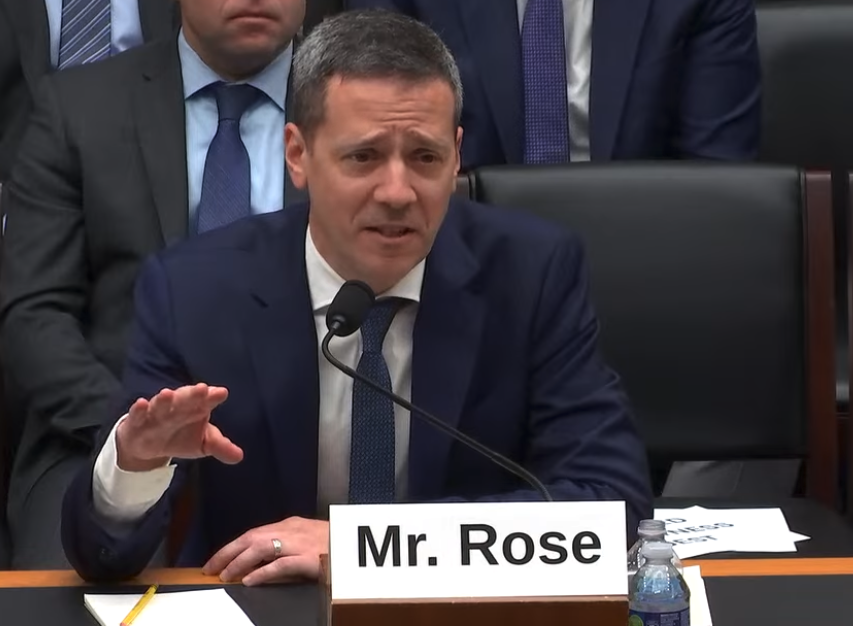

A House Aviation Subcommittee hearing on advanced air mobility last week gave lawmakers fresh opportunity to revisit long-running concerns about how ADS-B data is used. Reliable Robotics CEO Robert Rose told the panel that encouraging wider ADS-B Out adoption remains essential and pointed lawmakers to the Pilot and Aircraft Privacy Act (PAPA) as a key step. The measure, backed by AOPA, would restrict ADS-B use to safety functions and prohibit airports or other entities from using the data to identify aircraft for fee collection.
That provision would bar any person or government agency from using ADS-B to impose charges on aircraft owners or operators. This has been a point of heightened concern in recent months, particularly as several U.S. airports have considered charging landing fees. At the same time, ADS-B equipment is also becoming harder for many to avoid, particularly as the proposed text of Part 108 could make ADS-B equipment on manned aircraft critical for the safety of flight as autonomous operations expand.
“I don’t think it should be used for fee collections,” Rose said. “It should be used primarily for safety and collision avoidance and situational awareness in the cockpit. I think it’s very unfortunate the conversation has shifted more toward fee collections.”
During the hearing, Rep. Bob Onder (R-Mo.) noted that pilots are more likely to adopt and use ADS-B consistently when the system remains focused on air traffic safety. Rose agreed, telling lawmakers that ADS-B should be applied to collision avoidance, traffic awareness, and efficiency—not airport revenue systems. The bill also updates investigative authorities to clarify that federal, state, and local officials may not rely on ADS-B data for enforcement purposes outside aviation safety.
In addition to privacy protections, PAPA outlines new transparency requirements for airports that impose landing or takeoff fees on general aviation aircraft. Under the proposal, public-use airports would need to disclose how they have managed non-airside expenses, what alternative revenue sources they have pursued, and how any proposed fees would affect local pilots and aviation businesses.
AOPA President and CEO Darren Pleasance said in a statement that the legislation would set a clear national policy that would ensure ADS-B is used purely as a safety tool.
“Representative Onder’s legislation, the Pilot and Aircraft Privacy Act, would enhance safety and privacy by prohibiting the use of ADS-B collision avoidance technology for fee collection,” Pleasance said. “When the legislation becomes law, airports will still be able to collect fees—they just couldn’t use this safety technology to do so. States are also considering legislation to prohibit this practice, but Representative Onder’s bill would establish a national policy so as to avoid a patchwork of laws across the country.”
A Senate companion bill, introduced by Sen. Ted Budd (R-N.C.), mirrors those provisions as Congress weighs privacy, modernization, and community impacts alongside the growth of advanced air mobility.


This is absolutely needed. I installed a 1090ES xpdr early on because I had no IFR gps and my old narco was on its last tube. Intermittently, my airplane mysteriously goes from its Ohio valley base to California’s coast and central valley. Once while I was en route to the DC area. I’m pretty sure I didn’t suddenly transport to Sacramento and then back over Morgantown a half an hour later. I see this several times a year. ADSB is not spoof proof, it seems. And how do you prove you didn’t land there when your airplane is locked in a hangar while adsb says someone was flying it 2500 miles away?
GPS technology was initially invented for military use, and the internet invented to provide high-speed communication between computers. They both have been utilized for much more today. The ADSB technology is used for more than safe aircraft separation. Airports use it for aircraft counts to justify federal and state funding, noise mitigation (usually favoring the pilot), and law enforcement to prevent smuggling and human trafficking. Yes, it can also be used for tracking and invoicing aircraft owners for the necessary revenue to operate airports safely, securely and efficiently. This proposed legislation will only make it more difficult for airport operators to perform their obligated duties. Why limit the technology use and create unnecessary challenges? Mr. Pleasance is correct, without the technology airports may continue to charge user fees. It will just be less efficient and time-consuming, increasing costs. Costs that will be passed on to the user.
100% in agreement. Over the psdt several thousand hours I’ve read of and experienced very unwelcome NMAC events. Anything other than safety is not what the FAA sold to get ADSB in our GA aircraft.
That said, I’m VERY OK with the FAA charging pilots like Martha Lufkin who flew beneath a heavily trafficked bridge. Her hubris was severe, and she was intimately familiar with the rules. She also flew within 100’ of a crew working below the bridge… then bragged about it.
Getting rid of ADSB-based fees will NOT increase costs to the user. It will get rid of the middle-man that profits solely by billing pilots based on the publicly-available data. The ADSB airport fees have popped out of nowhere based on these middleman companies telling the airport managers that “they can charge additional fees” and “we will do all the work and keep a percentage”. Airports also generate revenue based on services provided (landing / handling fees, fuel flowage, etc.). There is no reason an airport should charge arbitrarily ridiculous fees for instrument approaches when you don’t even touch down at the airport. This practice of charging fees for low approaches is unsafe and unwise because it discourages instrument training.
Landing fees have been collected for many years. The middleman was typically the FBO who charges for these services. This technology makes it more cost efficient. There are NO charges for approaches or low passes. That is fake news, produce the data.
You are full of s$it and obviously have a vested interest in fee collection. Example: Provincetown Airport (PVC) recently increased their fees from zero to $100 for a “touch and go” in a twin Cessna (>6000 lbs) which I instruct in. Fees collected by Vector Airport Systems. I contend that their automated ADSB based software cannot tell the difference between a touch and go and a low approach. I similarly received fees in the past for a low approach at MVY. The difference between an FBO and a middleman like Vector is that the FBOs actually provide a service to the customer (i.e. the person paying the bill).
Touch and go’s are billable , not approaches. At our local airport, Vector has no equipment. A separate system, funded by our state DOT collects the info and provides it to airport management, who in turn provides it to Vector separating based and exempt aircraft from transient. Just the facts Mr weedon
Not sure how you can say that billing $100 per touch-and-go is going to reduce overall cost. Or how ADSB-based billing is going to tell the difference between TNG and low approach. Or why it should matter … again no service provided by the FBO or Vector in either situation. Bottom line: ADSB based fees discouraging training ops with exorbitant fees. Whether it is a touch and go, low approach, touching one wheel down, or skimming 6” above the runway is splitting hairs.
Bill, spend some time with the airport manager to understand the financial challenges and why they decided to implement the fees. More importantly, ask what the plan is to enhance airport revenue to assist in reducing or eliminating the fees in the future. Operating expenses for airports have dramatically increased and revenue sources are limited for general aviation airports. I’m sure the manager will greatly appreciate your financial support for the airport you are using. Thank you for the great dialog. Take care!
Not my problem. But whacking someone $100 for a flyby is not the answer and is hurting GA. ASDB was never meant for fee collection in fact we were promised it would only be used for enhancing safety.
I would hope EVERY plane would “be forced” to have adsb out! Do it for “the other guy”… if not for yourself!
Utter failure to respond to the core concerns. Probably a vector shill.
To be clear on my perspective on this, ShaunG is right when he quotes me as acknowledging that airports have the right to charge landing fees. That is true from a regulatory perspective. However, using ADS-B to do this creates a disincentive for pilots to install or use ADS-B, and that results in lower safety for all of us. If pilots had the choice of utilizing a technology to enable the automated collection of landing fees, just like a highway toll transponder, I’d be fully supportive of that, because it’s the pilot’s choice. If fees were lower when collected via technology, and higher if collected manually, that’s OK too. Today, however, the fees are collected without pilots knowing about it, and without any choice for an alternative.
Regarding landing fees themselves, while they’re legally allowed, I see them as the poorest form of revenue generation for an airport. They disincentivize the behaviors that make for safer pilots (landing practice) and they’re a disincentive for overall general aviation activity by adding yet one more “user fee” cost. I’d much rather see airports achieve their economic goals through hangar development, flight school activity, maintenance activity, fuel flowage fees, aircraft property taxes, compatible use development like light manufacturing and effective management of costs. Also, let’s stop states like California from siphoning money away from the Aviation Trust Fund to put into highways and other non-aviation infrastructure. Those dollars should remain with the aviation ecosystem that produced those dollars.
Lastly, our argument isn’t that ADS-B should ONLY be used for safety, since there are many other good uses that help GA to thrive, including enabling airport operations counts, letting your spouse know when you’ll be home for dinner, helping an FBO be aware of your pending arrival, helping with safety analysis following an accident and much more. This is all great. It’s using the technology to collect fees without any user approval that we’re against. That creates all the wrong incentives and lowers safety for everyone.