














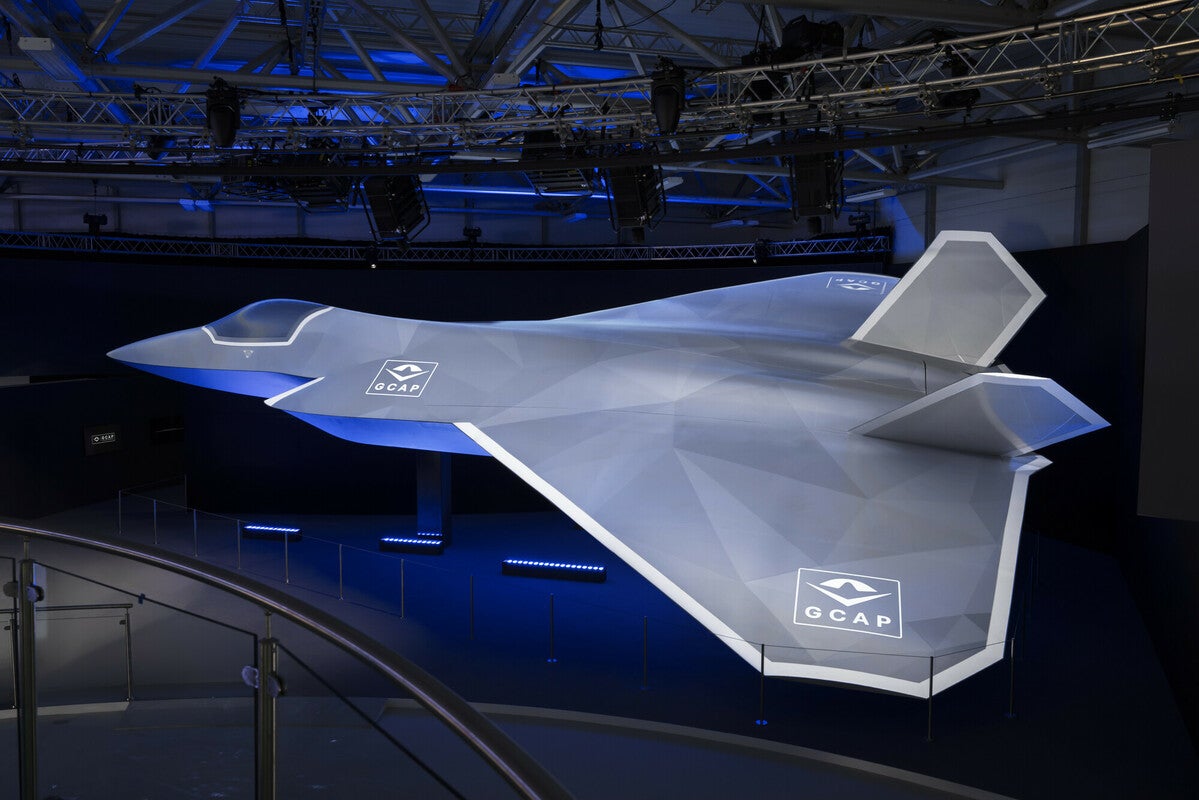

Saudi Arabia has become the latest country to show interest in a joint U.K., Italy and Japan effort to build a sixth-generation fighter within the next 10 years. The Global Combat Air Programme is a three-way split between BAE Systems in the U.K., Leonardo of Italy and Mitsubishi Heavy Industries to develop the plane. All would have an equal share and no single country would control the program. Last week, Canada was also mentioned as a potential participant in the program. Canada has said it’s reviewing its order for 88 F-35 fifth generation fighters given its suddenly fractured relationship with the U.S., and Saudi Arabia was not allowed to buy F-35s because they could potentially be used against Israel.
The airplane itself will be supersonic, stealthy and packed with gear needed to find and destroy targets and avoid getting targeted itself. It will also have the capability to act as a mother ship for a squadron of autonomous attack and defense drones, carry twice the payload of an F-35 and have three times the range. The three countries started working on the concept in 2022. The latest design to come out of that process is a twin-engine aircraft that looks similar to all the other advanced fighter designs because physics dictates the shapes for stealth and radar absorption. Another concept is to “atomize” the hulks of retired fighters to harvest the expensive materials they contain and use the elements in additive manufacturing. It’s hoping individual aircraft will be priced at far less than the $300 million price tag expected for the U.S.’s F-47 sixth-generation fighter.
