















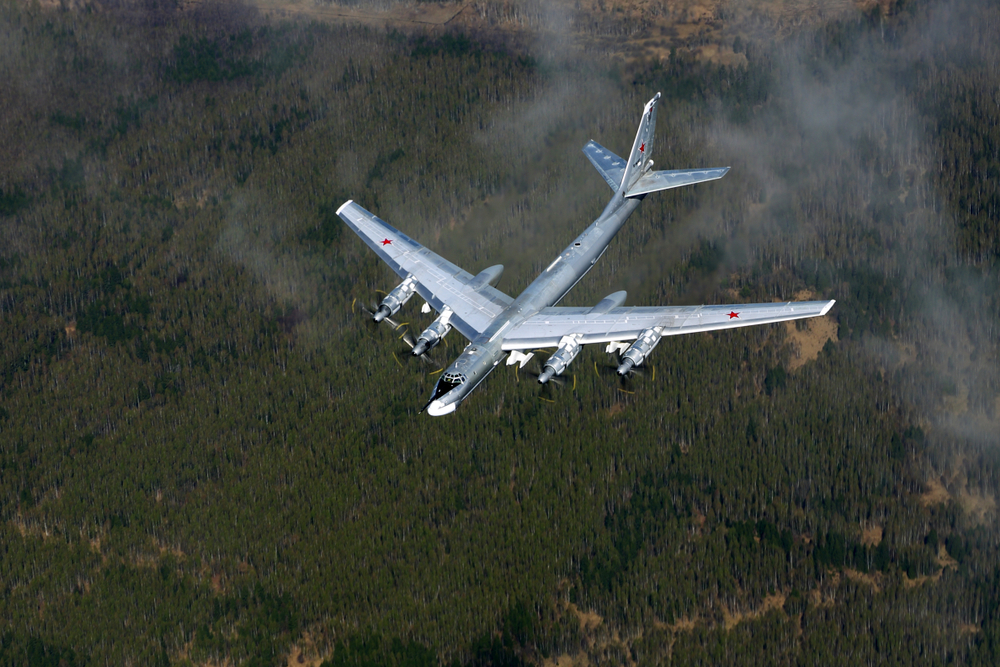

A Russian Tupolev Tu-95 strategic bomber was involved in an accident Tuesday during a training flight in the Amur region of Russia’s Far East, killing six crew members and injuring a seventh, according to the Russian Defense Ministry. The ministry said the aircraft was not carrying ammunition and came down in an uninhabited area near the village of Krasnoyarovo.
One Crew Member Survives
The surviving crew member was injured and hospitalized, according to regional reports. Rescue crews were dispatched to the accident site. Amur regional authorities said the crew had attempted to direct the aircraft away from populated areas before impact. No injuries or fatalities on the ground have been reported.
Russian authorities have not publicly identified a probable cause. Video circulating online appears to show the four-engine turboprop descending before ground impact, although the sequence of events leading to the accident has not been officially established.
Long-Serving Bomber
The Tu-95, known by its NATO reporting name “Bear,” first flew in the 1950s and remains part of Russia’s long-range strategic bomber fleet. The four-engine, counter-rotating turboprop has also periodically operated near North American airspace. U.S. and Canadian fighters intercepted two Tu-95 bombers and four other Russian military aircraft in the Alaska Air Defense Identification Zone in 2024.


Nice to see that there are still pilots out there who believe in, “ when you are going down, put the aircraft where you will do no harm to others even if it means you die”. I get frustrated reading about pilots putting distressed but flyable aircraft on busy highways and hurting innocents just to save themselves or worse to save their aircraft.
“Just to save themselves???” What’s the matter with you???
Your remark is exactly the problem. Flying is a privilege. Your moral obligation when exercising that privilege is to make sure that in the event of an incident that you do as little harm to innocents wherever they may be.
That means showing up for a flight in an airworthy aircraft. Being proficient in the operation of that aircraft. If you have to go down you put the aircraft in a place that there is the least chance of harming others.
If you are not willing to take on this level of responsibility then you should not be able to exercise the privilege of flying.
I want the Captain of the plane I’m flying in to do everything in his or her power to keep the passengers safe.
If that means the difference between drilling it in on a side of a mountain vs a highway, please choose the highway.
So you think that a pilot’s status is now elevated to God? The pilot saves the perhaps 2 or 3 passenger but lands on top of a school bus killing 40 children while there was an open field to try to get into?
Commenters on this thread seem to have an overinflated sense of self worth. It is sad.
Very nice strawman. I bet you worked hard on that one.
But no, not God, but at least cognizant of his or her surroundings and the best options for survivability.
Field or road matters not, what matters is which is more survivable.
The “sense of self worth” is well ingrained through several thousands of years of self preservation and I hold no ill will to those that wish to attempt to continue living.
Be sure to add your thoughts and intentions to your passenger brief. They have a right to know that their safety might not be your priority.
Been flying for 45 years. C150 to B747-400. Foremost on my mind has always been do no harm to innocents. If you do not understand that then you should never bein control of any aircraft. Best place to put a distressed aircraft down means exactly that. BEST! Not what is good for you but BEST!