














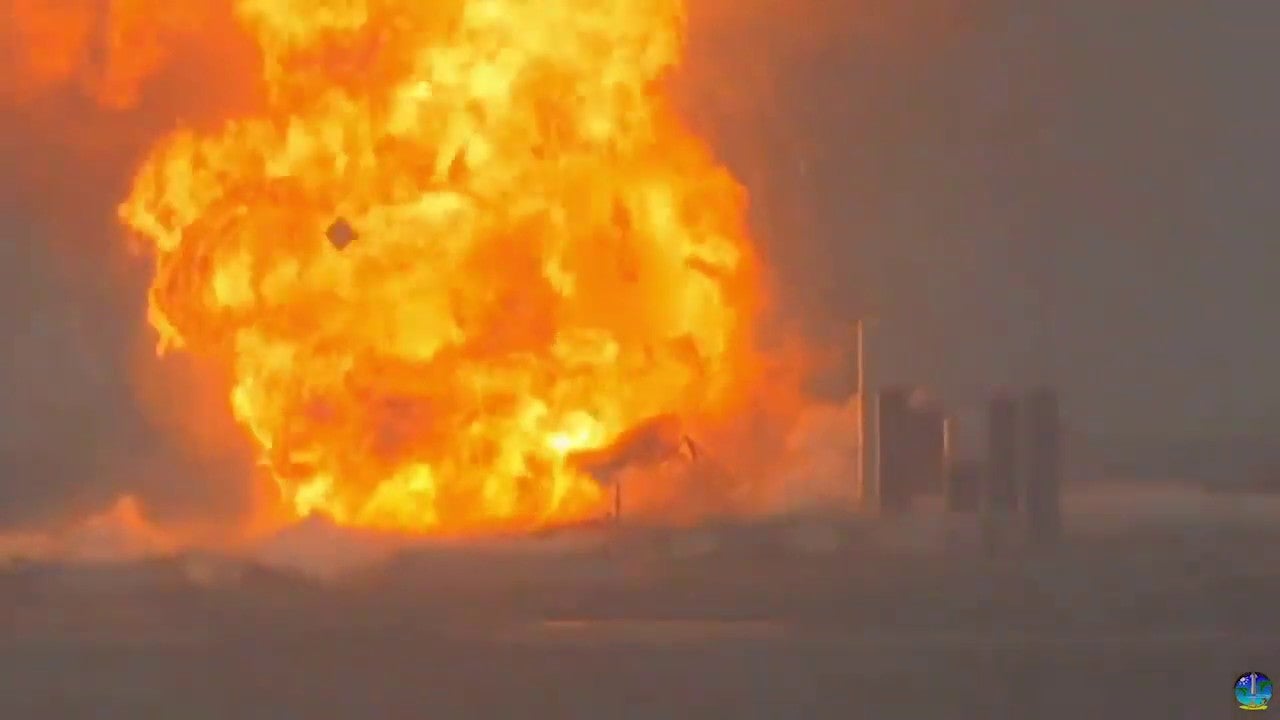

SpaceX is four for four on the loss of prototypes of its silo-like Starship interplanetary vehicle after Serial Number 4 (SN4) blew up on the test bed in Boca Chica, Texas, on Friday. The spectacular explosion came on the eve of SpaceX’s first manned launch of its Crew Dragon capsule at Cape Canaveral on Saturday. As impressive as the fireball was on Friday, the loss of SN4 marked progress of sorts in that the unlikely looking spacecraft had survived two previous static firing tests. Its three previous cousins have blown up on the first try. In fact, according to ArtsTechnica, the next step for the vehicle was a short 150-meter hover flight as early as Monday. As with the previous two successful tests, this was a short burn of the Raptor engine, which appeared to go normally. The fireworks began about a minute later.
It’s not clear whether the problem was with the spacecraft or the ground equipment but it left a mess and it might slow testing because the test stand might be damaged. A replacement for the other test stand is still being built. As for the vehicle itself, SN4’s demise is almost irrelevant. SpaceX has designed the test program with the expectation that it will destroy as many as 20 of the spaceships, learning from each event. They take about three weeks to build and SN5 is almost ready at the nearby assembly facility. Last Thursday, the FAA granted a launch license for the Starship test program allowing the spacecraft to leave the ground and land at the Boca Chica test site.
