
















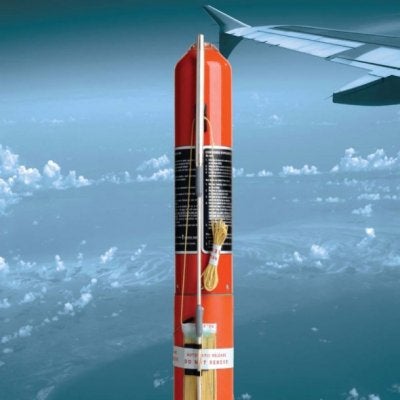
Investigators are now looking at the ELT aboard the Ethiopian Airlines Boeing 787 as a possible cause for the fire that heavily damaged the airliner at Heathrow Airport last week. The ELT is located in the area that was scorched by the fire. The ELT has a non-rechargeable lithium manganese battery made by Honeywell. The ELTs are in widespread use on airliners. On Monday, the U.K.’s Air Accidents Investigations Branch confirmed it had invited Honeywell to take part in the investigation, noting it’s far too early in the investigation to determine the cause.
Honeywell echoed that sentiment in a statement and noted its ELTs have a flawless record.”Our ELT products have been certified by the FAA since 2005, are used on a number of aircraft models, and we’ve not seen nor experienced a single reported issue on this product line,” the company said. The British investigators have ruled out any involvement of the large lithium ion rechargeable batteries. Two fires involving those batteries resulted in the grounding of the Boeing 787 fleet earlier this year while Boeing worked out a fix.

