
















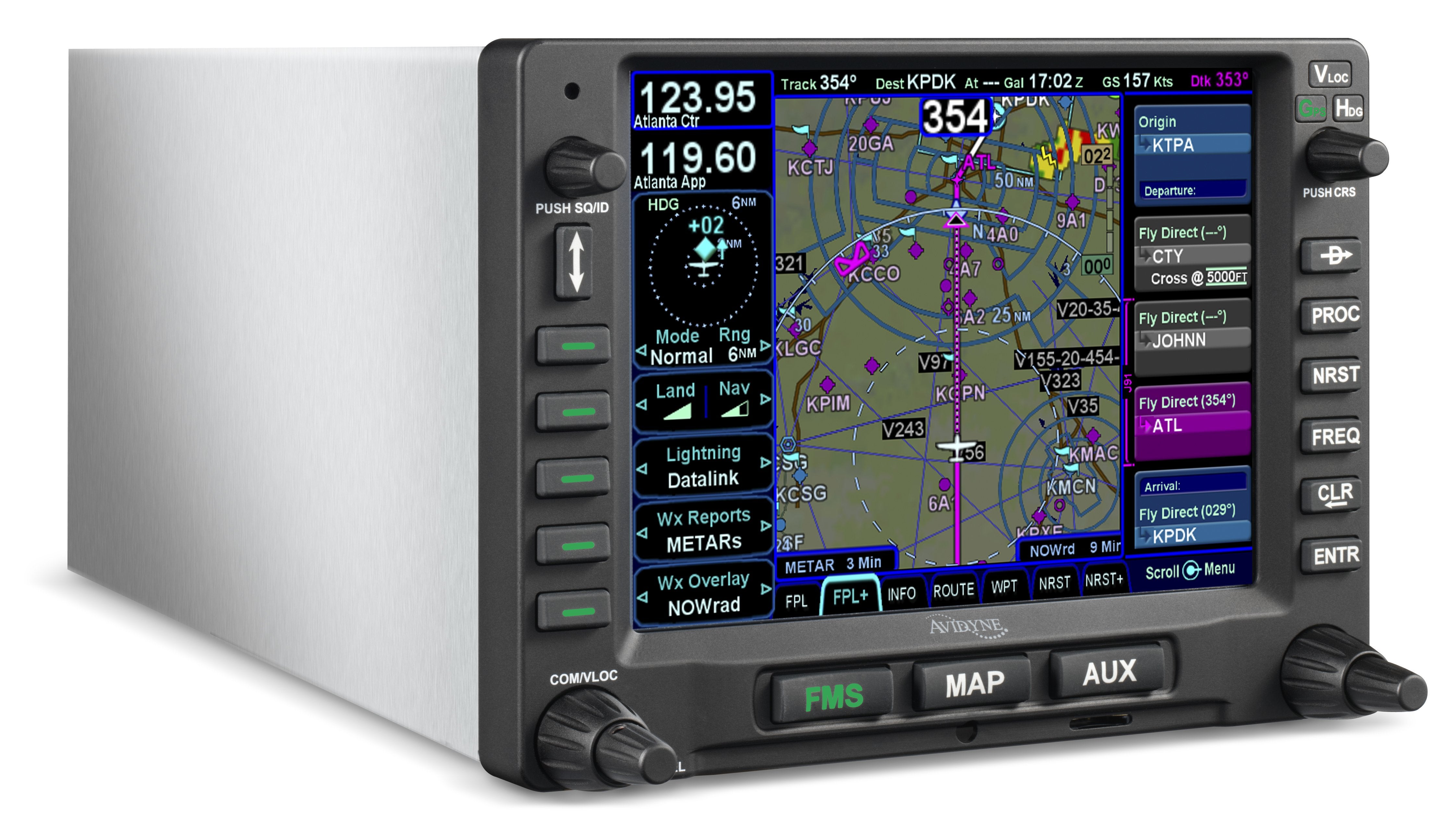
The FAA this week issued an Emergency Airworthiness Directive for Avidyne Integrated Flight Display units due to cases of incorrect course indications during RNAV approaches where the final fix is not aligned with the final approach course. The AD (PDF)affects some software versions of 10- and 12-inch R9 displays and the IFD540. It requires adding to the Limitations Section of the airplane flight manual or flight manual supplement to state:“Flying a full procedure (non Vector-to-Final) GPS approach, with a course change at the Final Approach Fix (FAF), is prohibited,” and“Flying a GPS approach, with a Direct-To or with an Omni-Bearing Selector (OBS) leg to the FAF, is prohibited.”
The issue shows up as anincorrect course deviation indication during GPS approacheswhen the leg to the Final Approach Fix is active, and the leg to the final fix is not aligned with the final approach course, requiring an angled entry to the final fix. “This could result in the pilot making flight decisions that put the aircraft in unsafe flight conditions, flying into airspace that was, by the GPS approach design, to be avoided (terrain, obstacle, traffic, restricted),” the AD states.
In an email to AVweb Thursday, Avidyne said a software fix has been submitted to the FAA and will be part of Release 10.1, due out in a couple of weeks. Avidyne said 306 approaches are affected, and “all but 106 of these approaches are 1 degree or less different from the final approach course, and therefore not an issue.” The software has been in the R9 systems since 2009. Acustomer recently reported the problem to Avidyne, the company said. When flying a coupled approach, “we found that the GPSS signal does not exhibit this offset so unless you were hand flying, like the customer who first identified this problem during a training flight, this behavior would not necessarily present itself.”

