
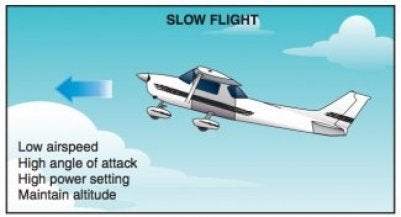
The task definition for slow flight in the Airmen Certification Standards (ACS) is changing, again. When the private pilot ACS were finalized in June 2016, the FAA changed the definition of slow flight to maintenance of “an airspeed, approximately 5-10 knots above the 1G stall speed, at which the airplane is capable of maintaining controlled flight without activating a stall warning.” This was a marked change from the definition long found in the now superseded Practical Test Standards (PTS). Pilots, for many years, had demonstrated slow flight by maintaining “an airspeed at which any further increase in angle of attack, increase in load factor, or reduction in power, would result in an immediate stall.” The FAA said the reason for the change was to discourage teaching pilots to disregard a stall warning indication. Under the PTS standards, typically the entire maneuver was performed with the stall warning horn sounding.
The current ACS standards have been roundly criticized by flight instructors and others in the general aviation community for both failing to require demonstration of flight at minimum controllable airspeed, which many felt was a core skill of light aircraft airmanship, as well as for the contradictory nature of the definition. Many aircraft will, within weight and balance limits, have a stall warning sounding more than 5 knots above the 1G stall speed. Some older aircraft lack stall warning devices.
The newest version of the slow flight definition, announced in an FAA Safety Alert for Operators, and to be incorporated in the ACS starting next week, will require maintenance of an airspeed “at which any further increase in angle of attack, increase in load factor, or reduction in power, would result in a stall warning (e.g., aircraft buffet, stall horn, etc.).” The new definition will not satisfy those seeking reintroduction of flight at minimum controllable airspeed into the ACS, but does remove the ambiguity between maintenance of a target airspeed versus avoidance of a stall warning activation. The new definition also more adequately covers aircraft without a stall warning system by referring to any indication of stall, rather than activation of a stall warning device.