
















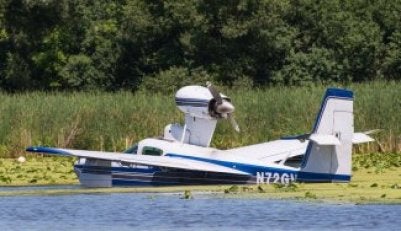
The Lake Renegade that crashed during takeoff from the AirVenture 2017 seaplane base in rough water had its flaps up, according to the NTSB’s preliminary report. The 84-year old pilot and one of his passengers was killed in the accident. A second passenger survived with minor injuries. According to the NTSB, persons at the seaplane base expressed concern to the pilot regarding the rough water departure. The pilot had asked to be taken out on a boat to survey the water conditions prior to takeoff. A witness on the boat said waves were 1.5 to 2 feet. Maximum wave height recommended by the manufacturer is 18 inches.
The NTSB described the events leading up to the crash this way: “The pilot told the harbor master he was going to start the engine as the plane was being towed through the cut, and the harbor master held up a finger to indicated not yet and to wait a minute. The pilot reportedly asked him to start the engines several more times as the airplane was still under tow before the tow rope had been disconnected, and the harbor master indicted to him to wait each time. Once the tow ropes were disconnected and the harbor master moved out of the way to the side, the pilot started the airplane engine and the airplane went to full power within two seconds.”
Video of the takeoff shows the plane porpoising two to three times before the plane rolled off to the left and the wing struck the water. According to the NTSB, “Review of video and photo evidence documenting the takeoff revealed the airplane’s wing flaps were in the up position during takeoff. The flaps and flap lever were found in the ‘up’ position during examination of the wreckage.” According to Max Trescott, a Lake owner, CFI and host of the Aviation News Talk Podcast, “all takeoffs are made with flaps down” in the Lake.

