
















Image: NASA
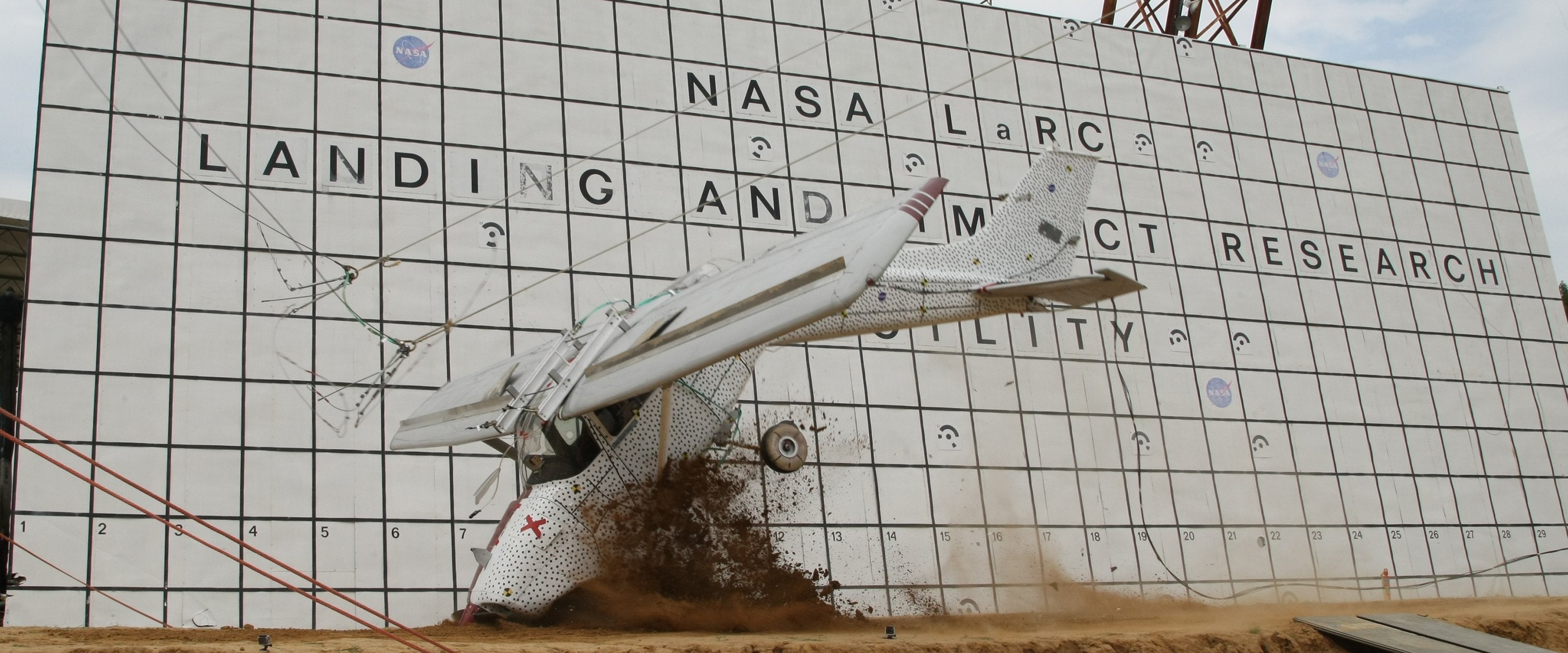
NASA’s orchestrated crash of a Cessna 172 on Wednesday, the last in a series of impact tests, completed the data-gathering phase of research aimed at improving the performance of ELTs. The agency’s Search and Rescue Mission Office completed the last of the three drops from NASA’s Langley Research Center in Virginia to simulate severe but survivable impacts in which ELTs would operate. Wednesday’s guinea pig, a 1974 Cessna, was equipped with five ELTs, two crash test dummies, cameras and sensors. Pilot Bill Corbett, who donated the airplane to science after flying it for years as a fish spotter, was on hand to watch.
The Cessna was released from 100 feet and hit the soil in a slightly tail-down attitude. Upon impact, the airplane flipped over onto its back, nearly breaking the tail off – an unanticipated result based on the exclamations from inside the test room. While the purpose of the crashes is to test ELTs, curious GA pilots will take interest in NASA’s video showing various camera views of the crash, including a slow-motion take. In the previous tests, one Cessna was dropped in a level attitude onto concrete and another nose-down into soil. “NASA research is designed to find practical ways to improve ELT system performance and robustness, giving rescue workers the best chance of saving lives,” the agency said on its website.

