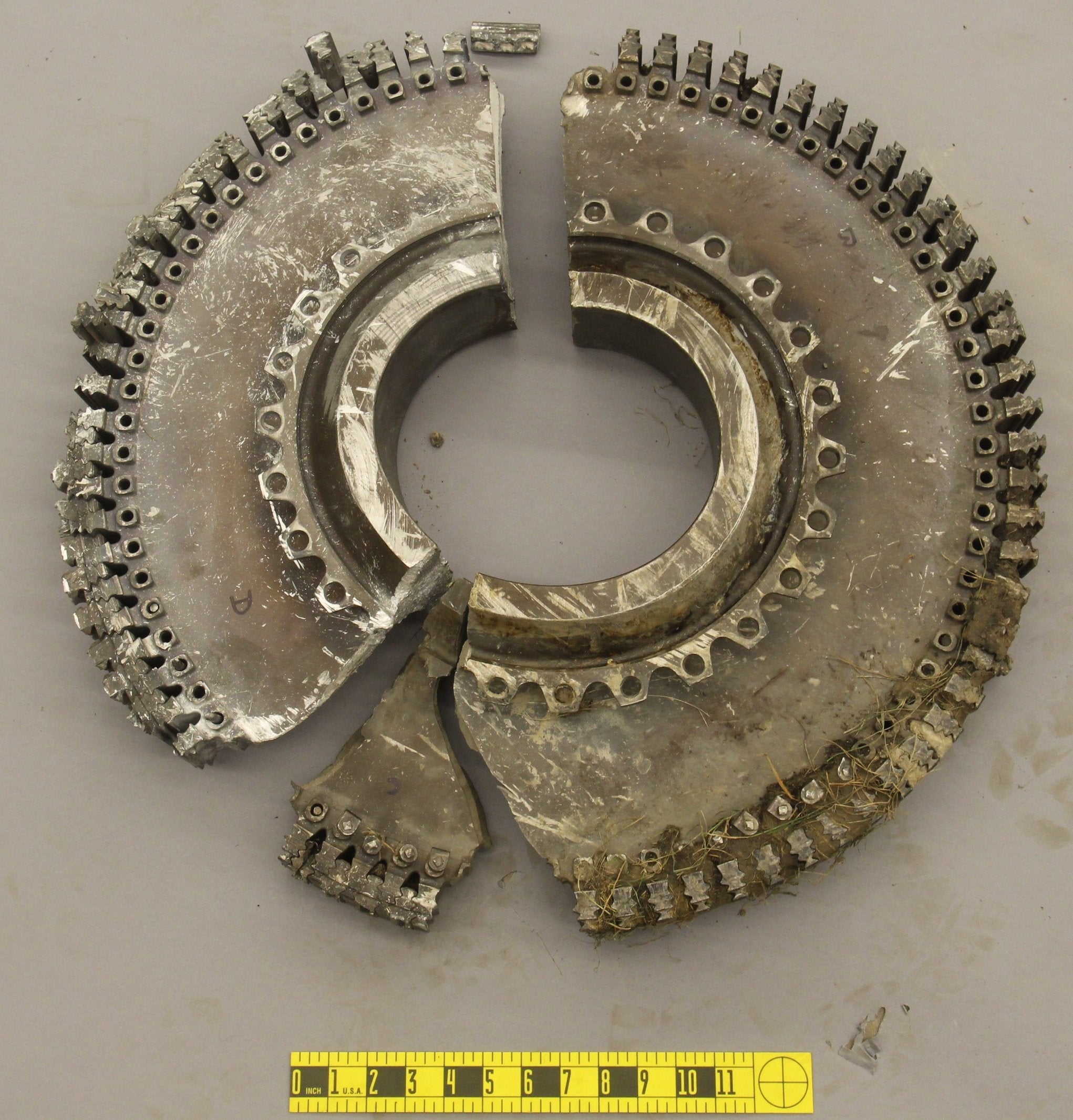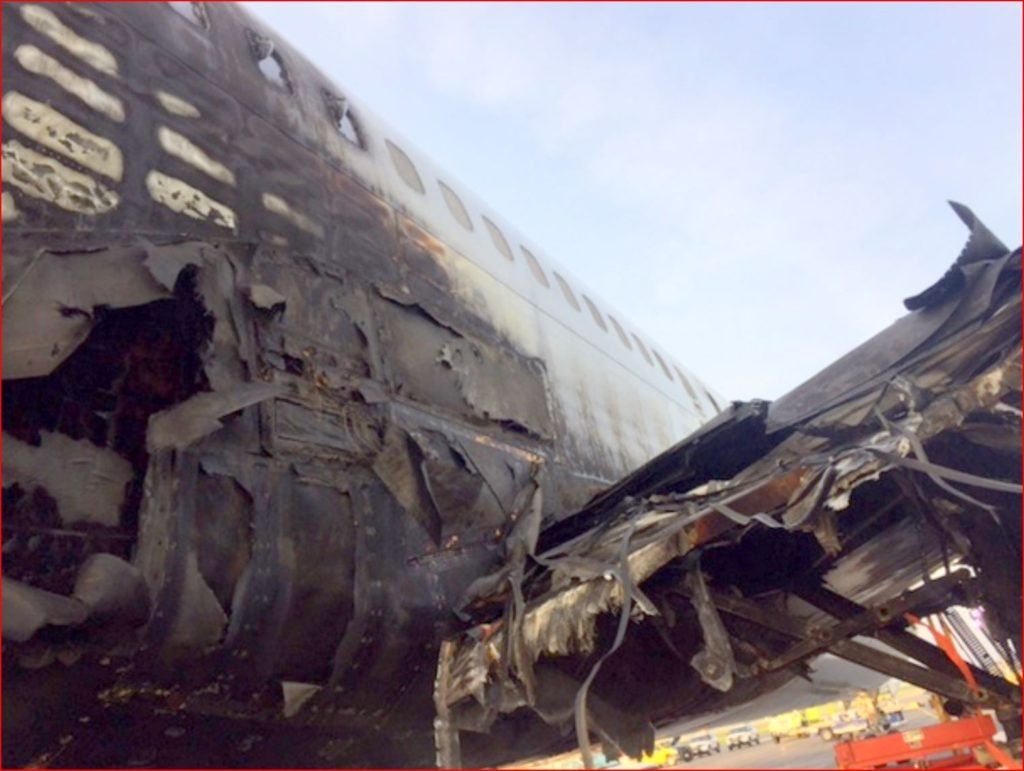
The NTSB says the American Airlines B-767 that caught fire during takeoff from Chicago O’Hare on Oct. 28 had an “uncontained failure” of the right engine. A turbine disk in the GE-CF6 engine broke into “at least 4 pieces,” the board found in an investigative update issued Friday. One piece shot through the right wing, across the fuselage and into a UPS warehouse a half-mile away, the NTSB said. This led to a pool of fuel beneath the right wing and the fire. The jet quickly stopped on the runway seconds after the failure occurred. As flames and black smoke spewed from the right side of the jet, all 170 passengers and crew evacuated from the aircraft via emergency slides. About 20 people, including at least one flight attendant, were treated and released from local hospitals following the evacuation.
Investigators found fragments of the engine in the area and on the runway. Most of the disk pieces were collected and are undergoing analysis while the NTSB also looks at the CF6’s maintenance and manufacturing. The component that broke had 10,984 cycles out of a life limit of 15,000 cycles, the report said, and there’s evidence of fatigue cracking within the engine. The flight data recorder indicates the engine failure occurred while achieving takeoff power, with the airspeed at about 128 knots, according to the NTSB’s findings. About two seconds later, at about 134 knots, power to both engines decreased while autobrakes and speedbrakes engaged.