
















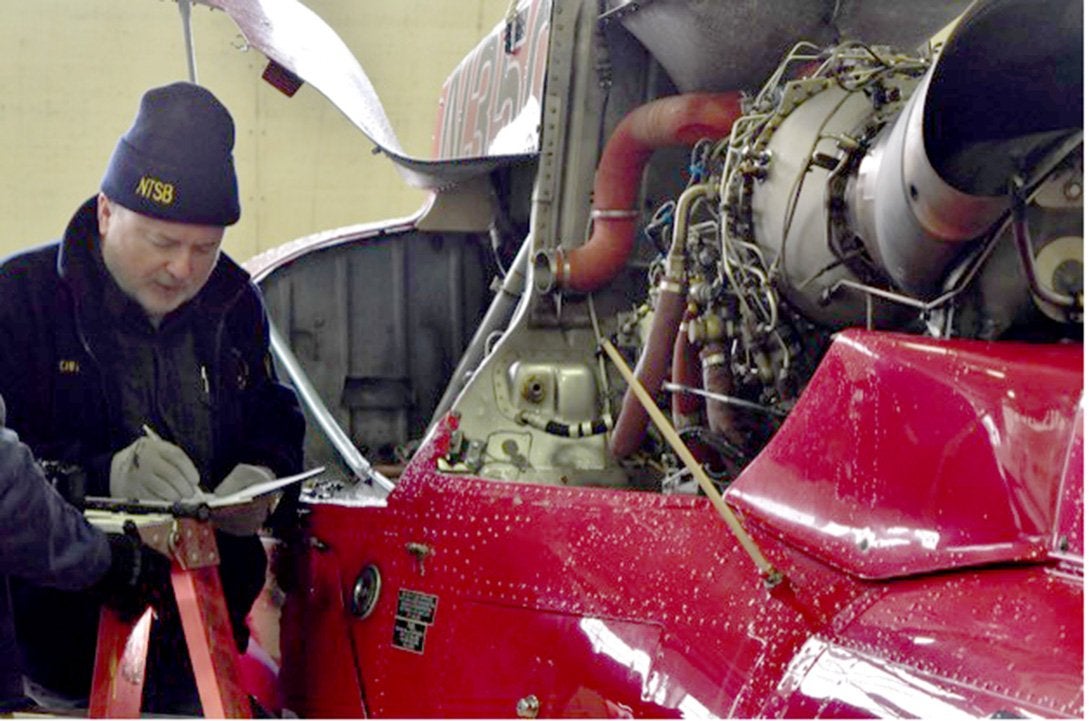
The NTSB Monday called on the FAA to prohibit commercial flights of all kinds that secure passengers without quick-release mechanisms. The agency’s urgent safety recommendation followed the FAA’s announcement on Friday to prohibit so-called doors-off helicopter tour flights unless quick-release harnesses are available for passenger restraint.
Both recommendations come in the wake of fatal crash of a Airbus AS350B2 helicopter into the East River on March 11. Five passengers died in that accident because they were reportedly equipped with safety tethers that couldn’t be self-released quickly. The passengers were flying on a so-called doors-off tour, which allows them to shoot photographs and videos through the open doors of a helicopter. The AS350’s engine failed for unknown reasons and although the aircraft autorotated into the East River and had skid floats, it rolled inverted after touchdown.
“While we applaud the FAA’s intention to move forward on banning these types of doors-off flights, the FAA has not outlined how or when they plan to take action,” said NTSB chairman Robert Sumwalt.
As AVweb explained in previous coverage of this accident, the passengers were equipped with a parachute-type harness secured to a tether in the aircraft via a singlecarabinerwhich could only be released by the helicopter crew or tour personnel.
“Despite being given a briefing on how to remove these additional harnesses using a provided cutting tool, none of the passengers were able to escape after the helicopter rolled over into the water,” the NTSB’s statement said. FAR 27, the NTSB noted, requires that “each occupant’s seat must have a combined safety belt and shoulder harness with a single-point release.” The harness system the tour operator used was not reviewed by the FAA.
The NTSB says it has had a long-standing concern with safe egress for passengers involved in helicopter accidents. The agency mentioned a 2008 accident in which three surviving passenger reported difficulty in releasing restraints, significantly delaying their post-crash evacuation.

