
















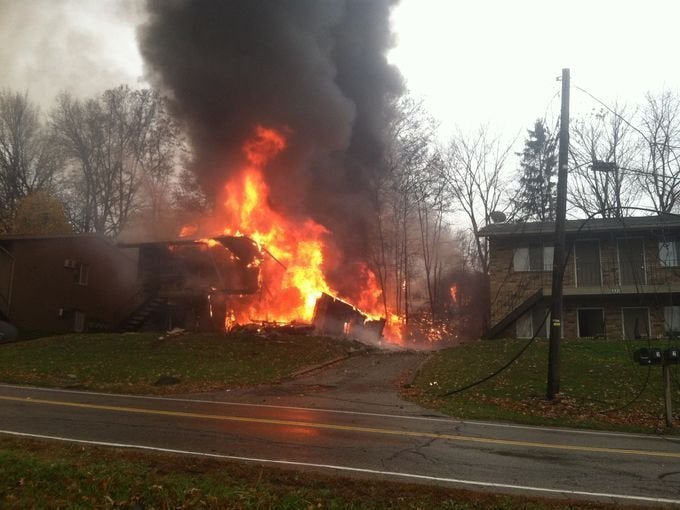
The Hawker jet that crashed in Akron, Ohio, in November, killing all nine aboard, was not flying a stabilized approach, as indicated by the cockpit conversation just before the accident. The NTSB released its investigation records this week as the probe into the cause of the crash continues. The voice recorder indicates the copilot was flying the Execuflight charter jet and had discussed with the captain that the weather at Akron Fulton International going to be at minimums for the Localizer 25 approach. They were also waiting for a piston aircraft arriving before them to cancel its flight plan when the captain seemed concerned about the airspeed indicating 140 knots. About a minute later, he said, “You’re going 120. You can’t keep decreasing your speed, because (we’re) gonna stall.” There were seven passengers from a Florida real estate company on board.
A couple of minutes later on the localizer, the pilot said, “You’re diving. You’re diving. Don’t dive” and repeated “two thousand feet per minute” before telling the copilot to “level off.” Radar returns confirmed the descent rate, according to the NTSB reports. A sound similar to the aircraft stick shaker was heard twice, followed by the ground proximity warning system alert to pull up. The jet clipped power lines and hit structures and an embankment, its left wing striking the ground first, as shown on a surveillance video from a nearby business. Investigators also found that the jet had full flaps on the approach, although pilots in the aircraft were trained to use partial flaps on non-precision approaches until a landing was assured. The NTSB’s documents also show that both pilots had been fired from their previous jobs for not attending training sessions. The copilot’s former employer said he had struggled with ground and simulator training for the Boeing 737 before being terminated.

