
Update: On Feb. 7, the FAA announced that it has appealed the dismissal of its civil penalty action against commercial drone operator Raphael Pirker to the full National Transportation Safety Board. The appeal has the effect of staying the law judge’s decision until the full Board rules.
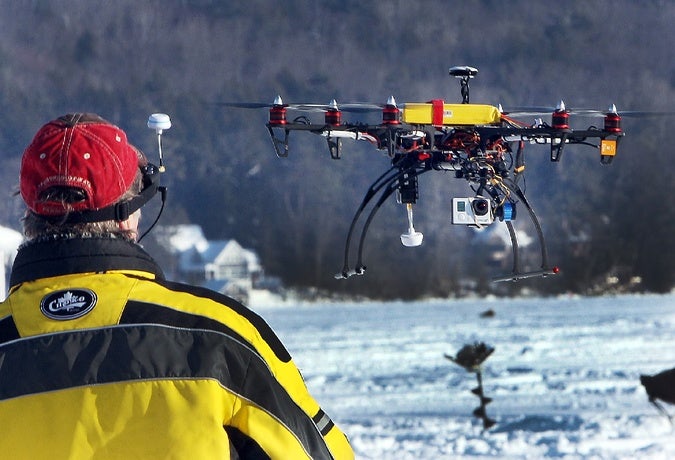
NBC Newsreported that a National Transportation Safety Board law judge dismissed a civil penalty action brought by the Federal Aviation Administration against a commercial drone operator. In 2011, photographer and reported skilled hobbyist Raphael Pirker flew his Zephyr II drone over the University of Virginia campus, recording photos and videos, which he sold to the university. In 2012 the FAA brought a civil penalty action against Pirker, fining him $10,000 for a number of violations of the Federal Aviation Regulations, including what attorneys refer to as the FAA’s standard complaint: operating an aircraft in a careless and reckless manner. Following a motion by Pirker’s attorney, Brendan Schulman, to dismiss the penalty based on questions regarding the FAA’s authority to regulate drones, the NTSB ruled in Pirker’s favor.Civil penalty actions of this sort are brought by the FAA and heard through an administrative law process before an NTSB administrative law judge with appeal rights to the full Board of the NTSB and a portion of the U.S. federal court system.
The order dismissing the penalty action included the statement that “at the time of Respondent’s model aircraft operation, as alleged herein, there was no enforceable FAA rule or FAR Regulation, applicable to model aircraft or for classifying model aircraft as an [Unmanned Aircraft System].” The NTSB’s ruling “mean[s] that if you have this kind of aircraft [the FAA] is not going to be in a position to fine you,” Ryan Calo, professor of law at the University of Washington, told NBC News. He expects the FAA will act to close the gap in their regulation ability, or file an appeal. “I don’t think it’s time to let a thousand drones fly, it’s time to watch and see how the FAA reacts,” he said. On Feb. 26, the FAA placed a strongly worded posting on its website asserting that it does currently regulate commercial UAS operations and that they are prohibited without FAA approval. Unless reversed on appeal, the NTSB ruling overcomes that assertion, at least until the FAA enacts new regulations. Congress has directed the FAA to come up with a plan for “safe integration” of UAS into the national airspace system by Sept. 30, 2015. The FAA has said that such integration will be incremental.