
















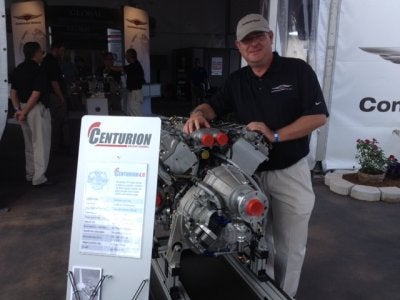
Continental Motors is apparently wasting little time in investing in improvements to increase TBRs and gearbox replacement intervals on the Centurion diesel line. With its deal to acquire the former assets of Thielert Aircraft Engines not even two weeks old, Continental said this week at AirVenture that it will field an improved gearbox for the Centurion line that will extend inspection/replacement cycles from 300 to 600 hours.
Continentals Rhett Ross said on Monday that the new gearbox uses a dual mass flywheel design that eliminates traditional friction-plate parts in favor of massive metal parts. Austrian diesel maker Austro uses similar technology for its engines. Ross said Thielert had actually developed the new gearboxes some time ago but simply never had the resources to file for the appropriate approvals.
I give great credit to the employees and management who kept the company together and supported fielded engines, but there was no extra money for development to do the engineering work and regulatory filings that are required. Basically, we were frozen in time for five years, Ross said.
With a major injection of capital from the China-based AVIC International, such approvals are on the front burner, as is extending the engine TBRs from a maximum of 1500 hours to at least 2000 or 2400 hours.
I think the data is there to do that, but we want to increase the pace were going to do this at, so were going to add to the field data by also lining up units in our test cells so we can run them 24/7 and just move this along a little bit faster, Ross said.
Continental is also getting busy with potential partners and diesel customers. Earlier in the week, Redbird Simulations announced the Redhawk diesel conversion project that will use a Centurion 2.0 and an Italian company called Vulcanair revealed a strategic partnership with Continental to develop a four-seat, high-wing aircraft using one of Continentals diesels. Ross said Vulcanair has the kind of global experience its looking for developing aircraft specifically suited for diesel technology.

