
















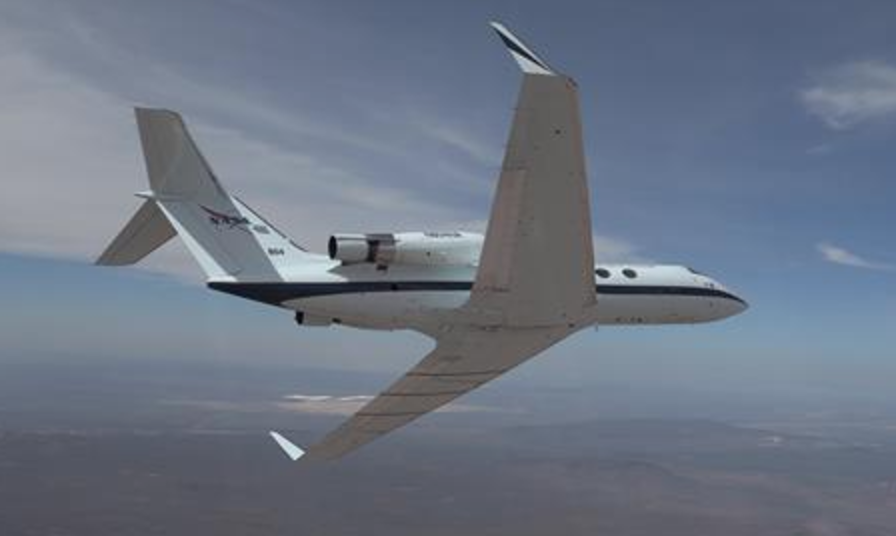
Flexible, twistable wing flaps that may improve flight efficiency were tested by NASA researchers in a recent series of flights. The Adaptive Compliant Trailing Edge tests were flown at NASA’s Armstrong Flight Research Center in Edwards, California, based on knowledge gained from the project’s prior flight tests in 2014 and 2015. “We’re twisting the inboard and outboard sides of the flaps in order to show that we can move the center of lift inboard or outboard,” said Ethan Baumann, chief engineer for the project. “You can use a technique like this for gust-load alleviation.Wing structure is designed for a worst-case gust-loading condition, so if you can quickly change the curve of your wing and respond to a gust, then you can theoretically get away with designing lighter wings.”
In the recent test series, flying NASA’s Gulfstream-III Subsonic Research Aircraft Testbed, the flaps were arranged so the inboard section was deflected 2.5 degrees down, while the outboard edge was deflected 2.5 degrees up. Earlier flights with the flaps in a twisted configuration were limited to a maximum speed of 250 knots and 20,000 feet.The recent tests allowed researchers to observe the ability of the technology to safely fly at speeds more accurately representing those of a commercial airliner. The tests were flown at Mach .85, which is the maximum cruise speed of the G-III.
“With these flights, we were able to measure the flow of fuel through the engine, and we’ll be able to analyze that data to get accurate estimates on the drag of the aircraft at various speeds, altitudes and weights,” said project manager Kevin Weinert. NASA researchers will now begin data analysis on the fuel burn, which will provide better understanding of how twistable wing flaps may affect fuel efficiency. The technology will potentially make airplanes “more efficient, quieter, and lighter weight,” Weinert said.

