















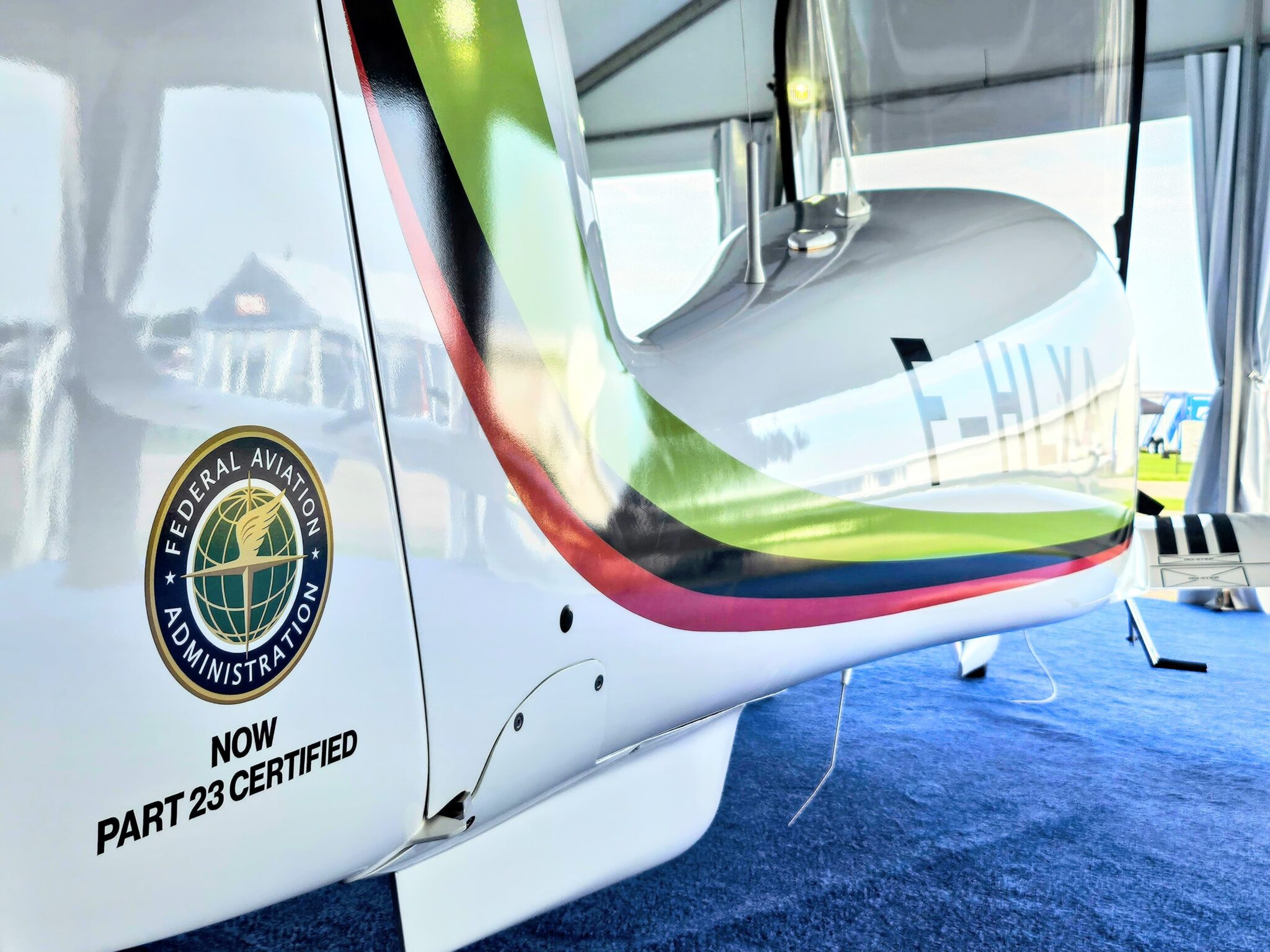

French manufacturer Elixir Aircraft announced late last month that its first deliveries to the U.S. market are underway to customers in Florida and Arizona. The first aircraft will go to Cirrus Aviation, a Florida-based flight school and the company’s first U.S. customer, which has ordered 10 aircraft. Scottsdale, Arizona-based Sierra Charlie Aviation is also expected to receive its first Elixir as part of a pre-order for 100 aircraft.
“The start of our deliveries to the United States marks a decisive milestone for Elixir Aircraft,” Arthur Léopold-Léger, president and co-founder of Elixir Aircraft, said. “It is the culmination of ten years of work and the realization of the trust placed in us by leading partners such as Cirrus Aviation and Sierra Charlie Aviation. Seeing our aircraft soon flying in the American sky, and then arriving at Oshkosh by air, is a great source of pride for our entire team.”
Elixir said its first three U.S.-based aircraft will be displayed at AirVenture, marking the company’s fifth appearance at the event and the first time its aircraft on display there will have arrived by air.
The two-seat trainer, certified under EASA CS-23 in 2020 and FAA FAR Part 23 in July 2025, uses a one-piece carbon structure the company says is intended to reduce parts count and maintenance needs.
Elixir Aircraft, which began operations in 2015, says 50 of its aircraft are currently in operation worldwide, with more than 300 aircraft in its order book through firm orders, pre-orders and letters of intent.


Rotax for high scheduled maintenance downtime AND parts prices PLUS a T-tail for reduced pitch control effectiveness at low speed? No thank you.
For decades, I’ve been reading here on AvWeb why T-tails make no sense for piston singles. In addition to SteveR’s comment about pitch control, they are more difficult to examine effectively during preflight, and the stresses go through a more convoluted load path.
When I look at all the small dents on the training fleets I used then I consider a carbon reinforced OML i tend to be skeptical. Unlike aluminum a dent in CRGf does not carry load but the loads do affect the damages are making it grow, the damage are is always larger than what is visible sometime much larger. The repairs are expensive requiring methods and equipment few shop are familiar with and if not fixed quickly ca lead to water incursions which if into a honey comb or rohacel structure can lead to catastrophic loss due to delamination w freezing temps.
A good film rather than paint OML helps but does not eliminate the problem.