















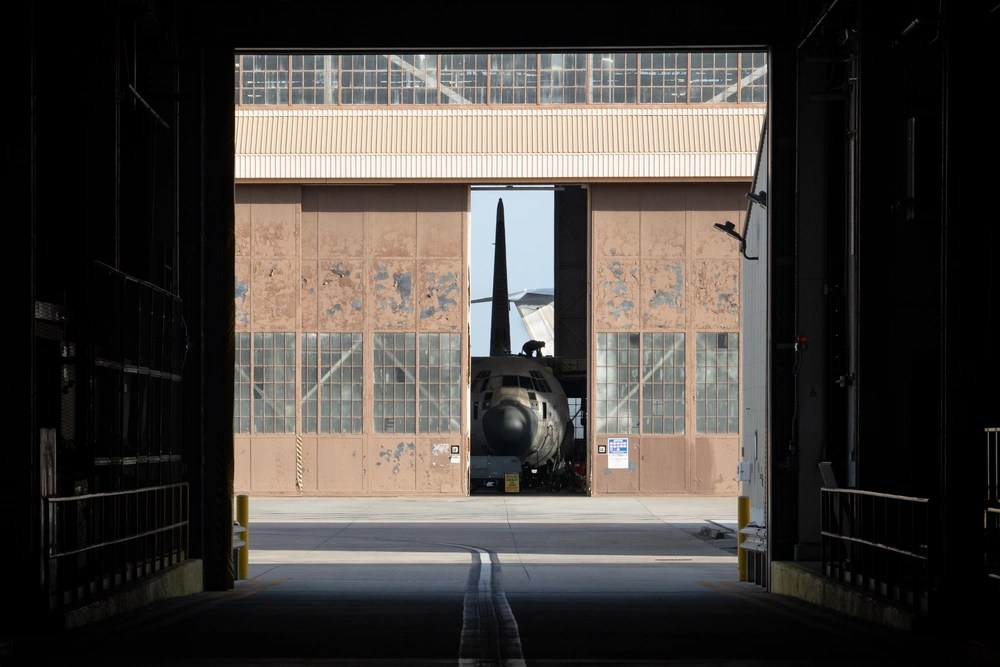

Exyn Technologies says it has secured an agreement to support autonomous aircraft inspection and digital twin work at the U.S. Air Force’s Warner Robins Air Logistics Complex in Georgia. The company said in a shareholder letter Monday that an initial demonstration is planned for October, followed by operational activities beginning in January 2027.
GPS-Denied Autonomy
Exyn develops autonomous mapping technology designed to operate in GPS- and communications-denied environments without continuous human control. Its systems use onboard artificial intelligence to navigate, collect data and build three-dimensional maps as they move. The company did not identify which aircraft would be involved in the Warner Robins project or specify which inspections the system will perform.
“We secured an agreement supporting autonomous aircraft inspection and digital twin initiatives at the U.S. Air Force’s Warner Robins Air Logistics Complex, our entry into defense sustainment, where operating and support costs account for roughly 70% of a weapon system’s lifecycle cost according to the U.S. Government Accountability Office,” interim CEO Ben Williams wrote in the letter.
Inspection Work At Robins
Warner Robins conducts programmed depot maintenance and inspection work on several Air Force aircraft fleets. In May, the Air Force described how its inspection teams use nondestructive inspection methods, including ultrasonic testing, to detect structural problems that may not be visible on the surface. The complex has also evaluated digital inspection tools intended to reduce inspection time and move results directly into computerized aircraft records.
Autonomous aircraft inspection has also been tested in commercial aviation. Austrian Airlines previously used autonomous drones supervised by aircraft technicians to inspect Airbus aircraft for structural and paint damage, cutting inspections that normally required four to 10 hours to less than two hours during a 2019 trial.


0 replies