
















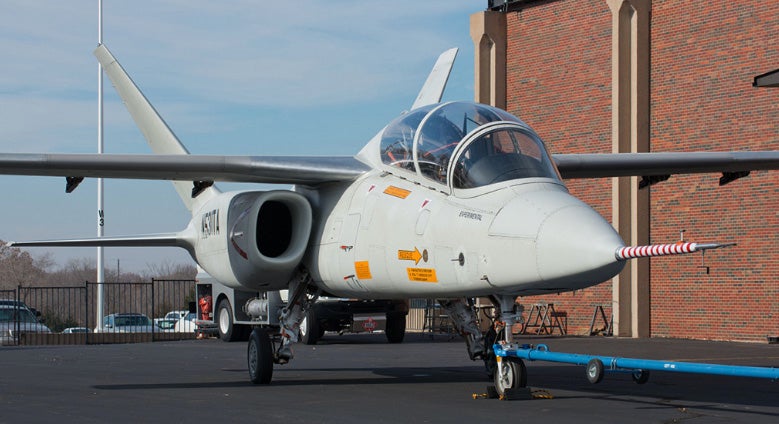
Textron is aiming for first flight of the Scorpion jet on Tuesday at Cessnas facility in Wichita, with a follow-up flight Thursday if all goes well, and weather permitting, DefenseNews.com reported Friday. The jet sports a two-seat tandem cockpit and turns twin turbofan engines. It supports six hard points capable of holding anything from drop tanks to Hellfire missiles. For surveillance and reconnaissance missions, the design offers more than 80 cubic feed of internal space for electronic warfare and intelligence components. Textron hopes to eventually demonstrate that the aircraft can be operated for roughly $3,000 per hour and that it will prove to be a viable alternative for a wide range of missions and operators. The first flight is expected to last 90 minutes.
Textron believes a successful production run of the aircraft would see it deployed in second-tier militaries around the world, including Africa and Latin America. In the U.S. it may serve a role in emergency response and counter-narcotics operations and is reportedly being eyed as an alternative to top-tier fighter jets operated by Air National Guard bureaus. Textron officials say the jet may be modified and enter the competition to replace the T-38 trainers that have long served the Air Force, according to DefenseNews. The first flight test card is designed to gather baseline data during the 90-minute flight. That information and more gathered on subsequent flights will then be used to refine the airplanes design and capabilities, leading to modifications incorporated into future prototypes. Even if testing goes as planned, the aircraft is not expected to enter service of any kind until at least 18 months after the first order is placed.

