
















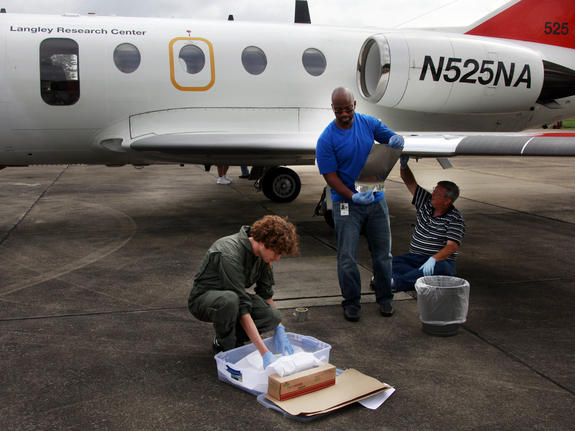
For aircraft, increases in aerodynamic efficiency often translate to increases in economic efficiency, and NASAs bug team has recently concluded tests on eight different coatings designed to reduce bug accumulation for that very purpose. The team flew NASA Langleys HU-25C Falcon jet through low-altitude flight this past summer in Virginia. The flights included multiple departures and landings in order to subject the aircraft to maximum bug densities (generally observed below 1000 feet). And for each test, researchers affixed coated surfaces to the aircrafts wings along with uncoated panels, allowing them to make direct comparisons regarding their efficacy.
While bug splatter can be an aesthetic concern for some pilots, the researchers focus was on drag reduction. Large amounts of bug carcasses stuck to aircraft disrupt airflow and add drag. Cumulatively across a fleet of aircraft, that drag adds up to increases in fuel burn and decreases in speed for a given power setting. NASAs team is, in effect, seeking the ultimate no-stick surface when it comes to aircraft and bug guts for the purpose of lowering flight costs for airlines, but their findings may also benefit aesthetically minded aircraft owner/operators, too. To be cost-effective for airlines, NASA hopes to create coatings that will survive for years through the extreme environmental conditions experienced daily by the skin of an airliner. The agency is currently testing the most promising coatings to determine if any will live up to the challenges of the airliner environment while remaining accessible at low cost.

