
















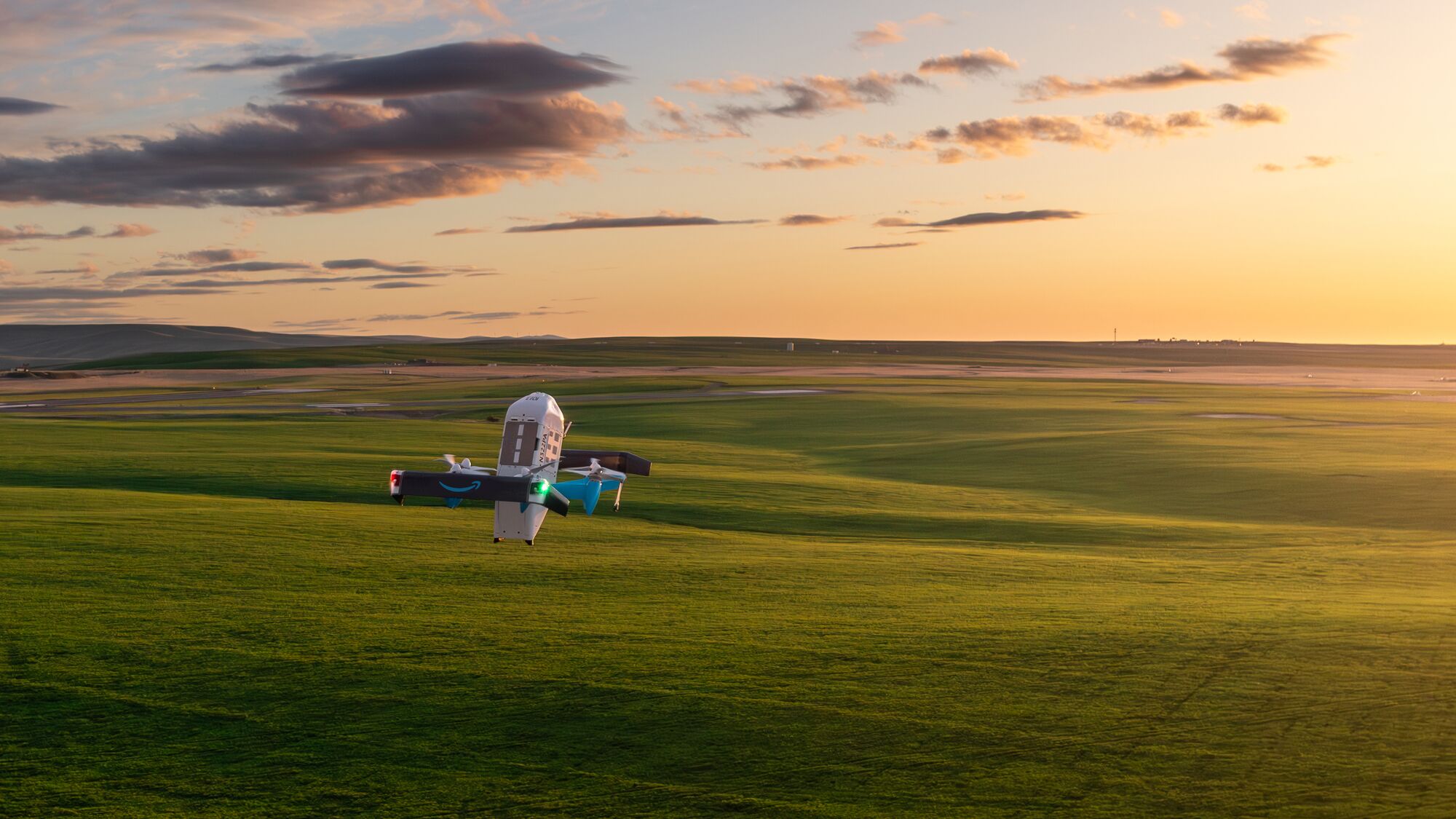

Amazon is planning a major expansion of its Prime Air drone delivery service, with the company targeting nearly 500 U.S. cities and towns by the end of 2026.
The expansion would represent roughly a sixfold increase from Prime Air’s current footprint. Amazon currently operates from 11 delivery sites serving 10 metropolitan areas across Arizona, Florida, Kansas, Louisiana, Michigan, Nebraska and Texas.
The company said it expects the expanded network to reach tens of millions of customers. New markets expected to come online soon include Chicago, Atlanta, Cleveland, Syracuse, New York, and Boise, Idaho, with additional communities planned later this year.
Amazon said it has already delivered hundreds of thousands of packages by drone in 2026, with its most active sites handling thousands of deliveries each day.
Prime Air uses Amazon’s MK30 autonomous delivery drone to carry packages weighing up to 5 pounds. The company says more than 60% of the items customers most frequently purchase are eligible for drone delivery. Orders can arrive in as little as 30 minutes, although most deliveries currently take about an hour.
The MK30 is designed to fly without a pilot onboard. Amazon’s Detect-and-Avoid system allows the aircraft to monitor its surroundings and make real-time decisions about other aircraft and obstacles. Cameras and other onboard sensors are used for navigation and delivery, with the system determining whether the designated drop area is clear before releasing a package.
Each Prime Air site covers an area of approximately 175 square miles. Customers in eligible areas see the drone option during the normal Amazon checkout process, where they can select an approved delivery location on their property.
Amazon Vice President of Prime Air David Carbon said the company has already seen customers use the service for everything from everyday household items to groceries and medications.
Amazon’s goal is to make drone delivery a much more significant part of its logistics network, rather than a limited pilot program. The company said Prime Air will continue expanding throughout the remainder of 2026.


According to a University of Southampton study, ground delivery is about 12.7 times safer than drone delivery. However, ground traffic congestion in urban and metro areas has increased by 18% over the last 5 years, which is why companies like Amazon are taking to drone deliveries. As Amazon, Google Wing, other drone delivery companies, police departments and other public safety agencies take to the air more and more with beyond-visual-line-of-sight operations, we can expect more accidents like the five that occurred in 2025 and 2026. Obstacle detection and aircraft avoidance technology is improving quickly but there are lots of hard-to-detect obstacles like wires below 400 AGL and low altitude drone traffic in that airspace is increasing rapidly. How eVTOL Uber-like air taxi operations in urban areas will mix with low altitude drone-congested airspace is anyone’s guess.
Andrew I agree w some of your pints . There however is a lack of clarity on your understanding of where wires like power and radio towers come into play . While yes they are hard to see w the human eye they show up very clearly on cheap q and w band radar ( very common and used in most cars cruise control now) . Plus these are all mapped . That mapping is easy to include in flight algorithms as my last employer has show in many pilotless products .
Personally I think I’m usbam areas this is a terrible idea. Life is loud enough having more drones which have a much more irritating sound footprint than electric truck ( Amazon baseline) is just one more avoidable thing. We really are becoming way too spoiled for immediate gratification. One hour delivery ?? WTF? One day is amazing.
Guess they’ll learn to bomb swimming pools as an added bonus.