
















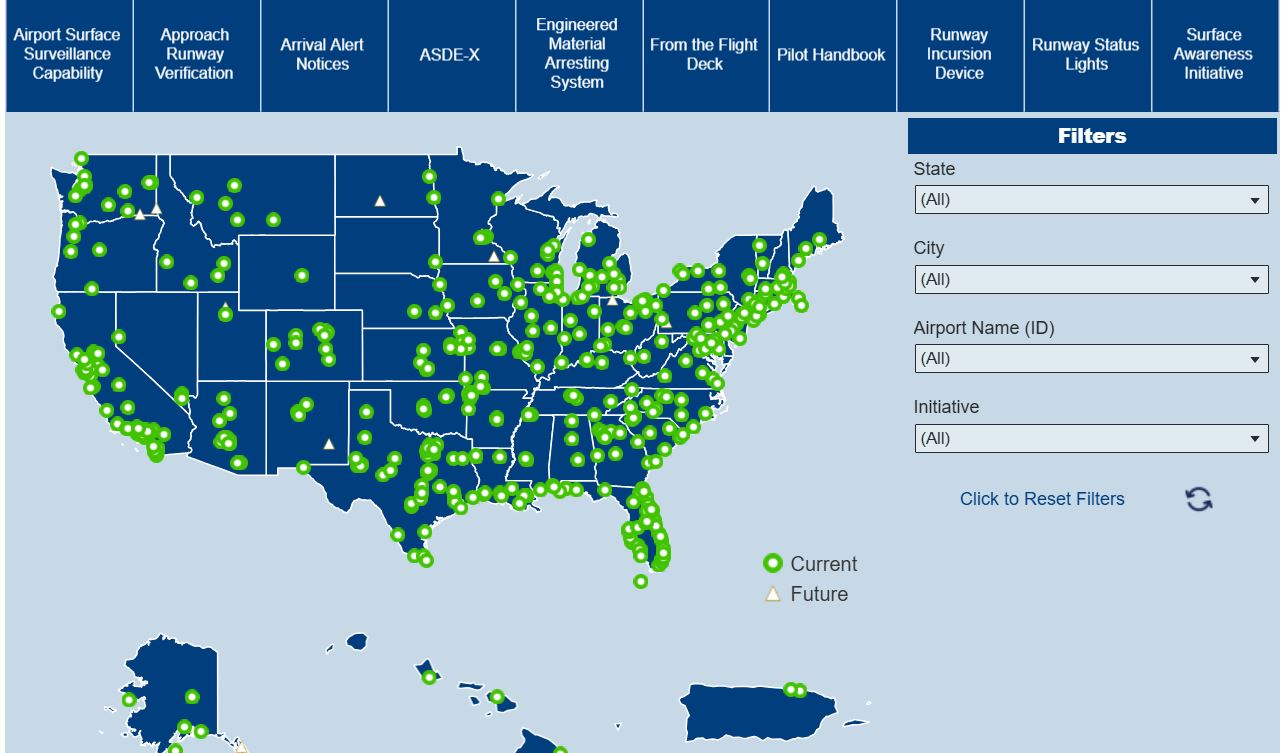

The Federal Aviation Administration (FAA) installed its 100th Surface Awareness Initiative (SAI) system, reaching nearly half of the 220 airports targeted for the technology as the agency accelerates its air traffic control modernization effort.
Transportation Secretary Sean Duffy announced the milestone Wednesday, saying the FAA has doubled the pace of SAI installations. The agency plans to add the system at another 44 airports before the end of 2026.
SAI uses Automatic Dependent Surveillance-Broadcast (ADS-B) information from aircraft and vehicles to give controllers a real-time picture of activity on an airport’s surface. The system is particularly useful when visibility is reduced or aircraft and vehicles are outside the tower’s direct line of sight.
The FAA says the technology is intended to improve both runway efficiency and surface safety by giving controllers better awareness of aircraft and vehicle movements.
Among the airports that have recently received SAI are Ann Arbor Municipal Airport, Billings-Logan International Airport, Gulfport-Biloxi International Airport, Greenville-Spartanburg International Airport and Corpus Christi International Airport. SAI is now operational at 100 control towers nationwide.
The deployment is part of a broader effort to expand surface surveillance capabilities at FAA facilities. The agency also said it has tripled the pace of its Approach Runway Verification deployments, which are now operational at more than 260 air traffic facilities. The Runway Incursion Device, another surface-safety system, is operating at more than 56 towers.
FAA Administrator Bryan Bedford said SAI gives controllers a more complete view of airport surface activity, complementing their existing skills with additional technology.
The FAA’s goal is eventually to equip all 220 towers identified as lacking surface surveillance capabilities with the new system.


0 replies