
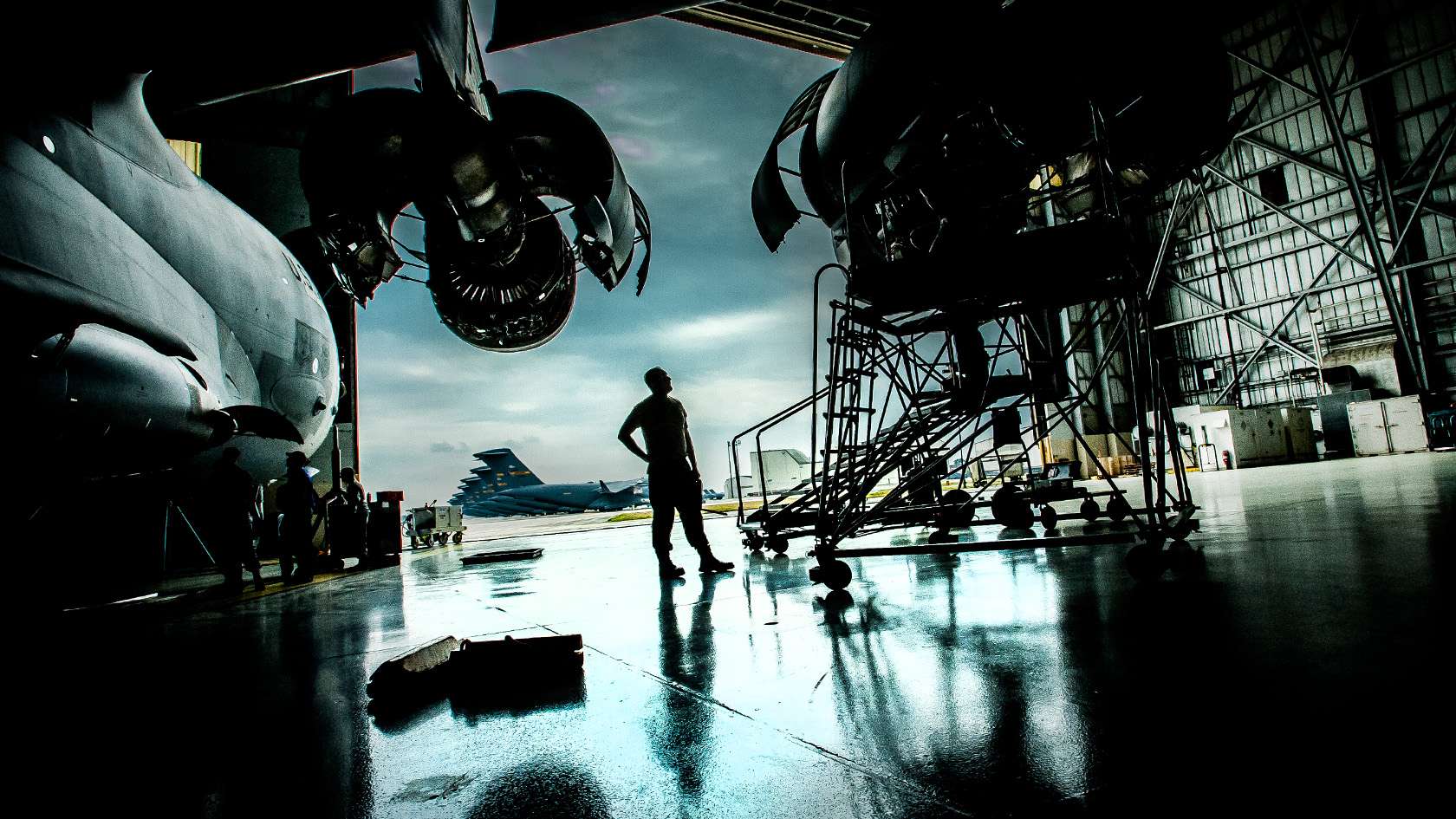

According to the U.S. Air Force Air Education and Training Command, maintenance-related mishaps have cost taxpayers more than $50 million since 2018. A big reason for the service’s maintenance woes could be antiquated management procedures.
Col. Nathan Stuckey is the military deputy program executive officer of the USAF Rapid Sustainment Office. He said that the big reason for dangerous inefficiency is the “primary way that we manage our aircraft is through paper forms and binders. And you can imagine the inefficiencies and things that come from that.” He added that the systems that do use digital technology require centralized computers, so maintainers need to leave the aircraft to access the data at a central location. And further, existing digital maintenance tracking systems use a patchwork of multiple data platforms that do not necessarily coordinate.
The Air Force recently announced a new program, teamed with Google, to enable remote access to maintenance data so technicians don’t have to leave the aircraft while it is undergoing maintenance. Officially named the Google Distributed Cloud Air-Gapped Appliance, the device is described as “cloud in a box” enabling deployment and “bringing the same capabilities of Google Cloud down to a form factor that’s man-portable,” according to Russell Kole, services executive at Google.
The device weighs about 100 pounds and incorporates 144 central processing units with multiple terabytes of memory and storage capability. Kole said, “We can take the entire digital ecosystem that runs in [the] cloud and bring it into this device.” He added, “Anything that you would need to do to be able to maintain aircraft forward you’d be able to do with this device.” Still in the prototype format, the system is earmarked for initial entry into service at Minot Air Force Base in North Dakota and Nellis AFB outside of Las Vegas, Nevada.