















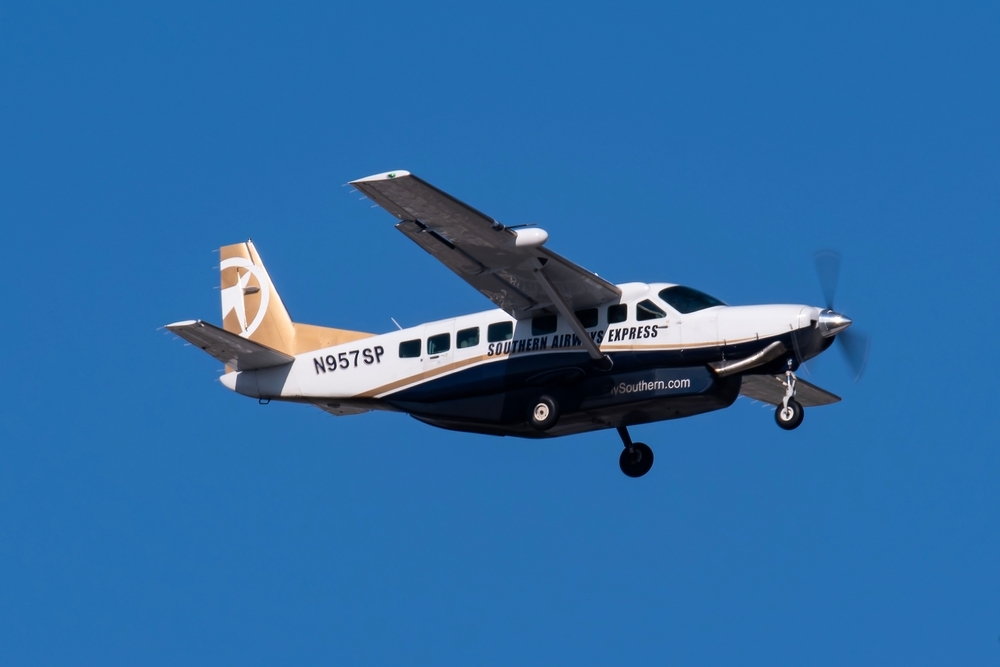

The U.S. Government Accountability Office (GAO) said Thursday that scheduled passenger air service to small communities continues to face pressure, particularly at nonhub airports. In testimony prepared for the House aviation subcommittee, GAO said nonhub airports that were not receiving subsidized Essential Air Service saw average daily departures per route fall 19% from 2018 to 2024. More than 70% of those airports saw declines during the period, according to GAO.
Departures Down, Seats Up
GAO reported that small communities, on average, had fewer total departures and fewer daily departures per route from 2018 to 2023. At the same time, flights from small communities generally had more seats, indicating airlines were using larger aircraft. GAO said connectivity, a measure of access to the national aviation system, also declined slightly for small communities over the same period.
The biggest differentiator in service was between airports receiving Essential Air Service support and those not receiving it. From 2018 to 2024, average daily departures per route at non-EAS nonhub airports fell 21%, while EAS nonhub airports saw a 5% decline. GAO also found that the mean connectivity index score at non-EAS nonhub airports dropped 8.9%, compared to a 2.6% decline at EAS nonhub airports.
Federal Programs Face Pressure
GAO said stakeholders cited pilot and maintenance workforce supply challenges, higher airline operating costs and increased airline expectations for revenue guarantees as factors affecting small community air service.
GAO also pointed to added pressure on the federal programs that support small community air service. The Essential Air Service program pays subsidies to airlines serving certain eligible communities that might otherwise have limited or no scheduled passenger service. As of November 2025, DOT said EAS supported service at 108 airports in the contiguous U.S., along with 70 communities in Alaska, four in Hawaii and one in Puerto Rico.
The costs for these programs have continued to rise. GAO said total EAS subsidies for communities in the lower 48 states increased 31% from 2018 through 2023, adjusted to 2023 dollars. DOT cited higher aviation labor and fuel costs, inflation and the increased use of regional jets as factors in the increase.
A separate DOT program, the Small Community Air Service Development Program (SCASDP), provides grants to underserved communities that are trying to attract or improve service. Communities receiving EAS-subsidized service are not eligible for SCASDP funds. The grants are often used for marketing or minimum revenue guarantees, which are intended to reduce an airline’s financial risk when starting service.
GAO said rising airline operating costs have reduced the effect of those grants. In fiscal year 2023, 40 eligible communities requested more than $31 million through SCASDP, while DOT only awarded around $12 million to 14 communities.
GAO said stakeholders and recent studies identified several options for improving service, including changes to EAS and SCASDP, increasing aviation workforce supply, supporting bus links to larger airports and examining electric aircraft for some smaller markets.


0 replies