
















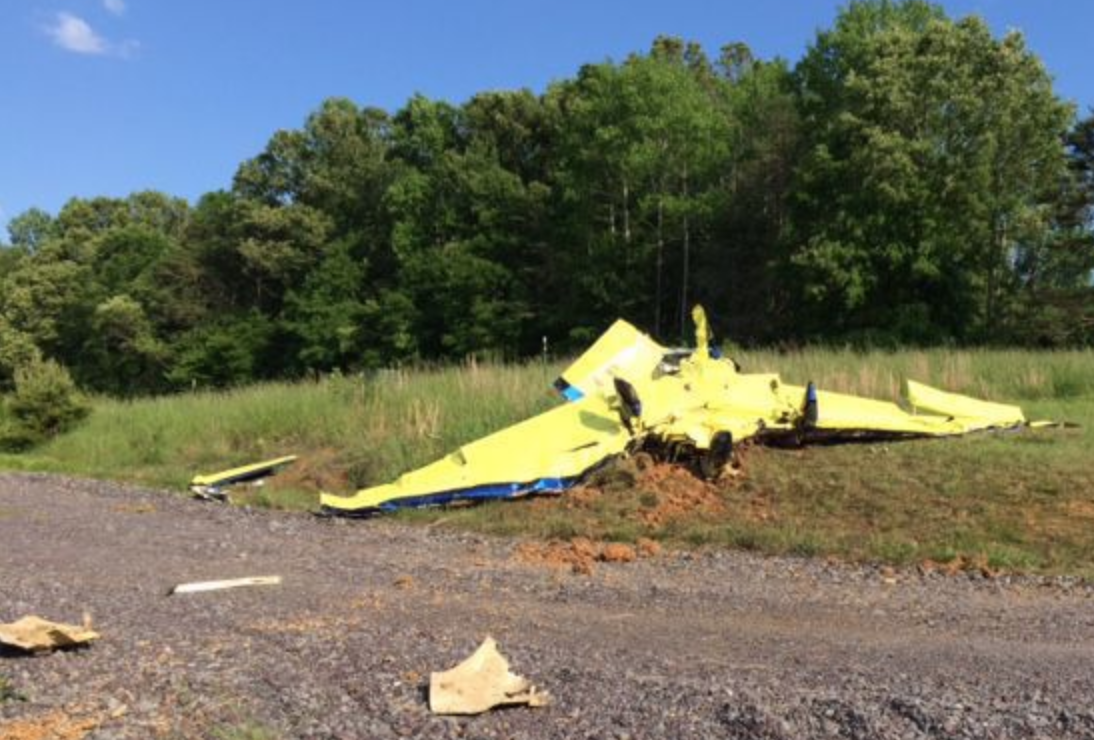
Two men who died in the crash of a Czech-built light-sport aircraft in Rhoadesville, Virginia, in May 2016 had deployed a parachute recovery system, but it failed when the single front attachment point detached, according to a recent NTSB report. According to the NTSB, the pilot had recently purchased the Jihlavan KP 5 ASA (Skyleader 500), an all-metal, two-seat low-wing aircraft,with a chute supplied by Galaxy Rescue Systems, and was taking instruction in it to satisfy insurance requirements. Radar data indicated that, during the flight, the airplane’s groundspeed decreased from 94 to 62 knots, consistent with airwork such as slow flight and stall practice. Subsequently, several witnesses saw the airplane descending nose-down with the parachute deployed and still attached, but with the canopy only partially inflated, before the airplane impacted terrain.
The owner likely activated the parachute due to inadvertent spin entry, according to the NTSB. The previous owner of the airplane told the safety board he had to be vigilant during stall practice because “the airplane always seemed to yaw abruptly to the right and into a spin, more so than any other airplane he had flown.” The NTSB said Galaxy Rescue Systems told them the accident was the first time one of the chutes had been deployed in flight. During certification, one test deployment was performed on the ground. The current design includes two front anchors instead of one. The accident airplane was about 50 pounds over its maximum takeoff weight at the time of the parachute deployment, the NTSB said. The NTSB completed its report in September, but it was just reported by the local Freelance Star in Fredericksburg, Virginia, this week.

