















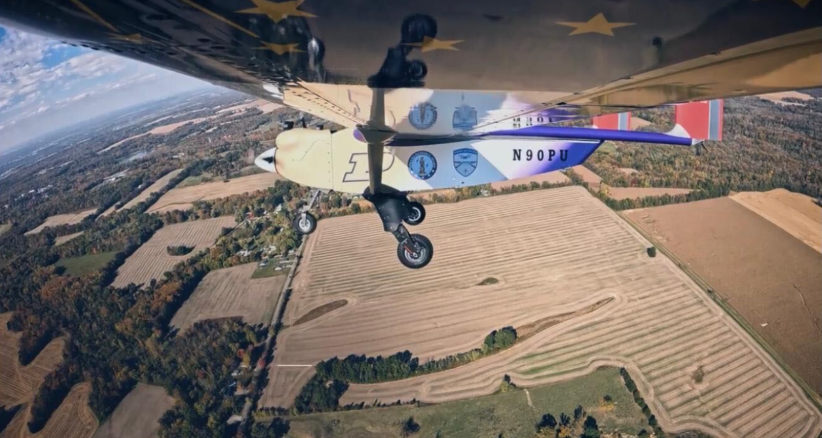

A Purdue University-owned Windracers ULTRA drone completed a flight of more than 50 miles beyond visual line of sight (BVLOS) during the opening of Indiana’s new unmanned aircraft test site on Oct. 29.
The flight took place at Terre Haute Regional Airport and was the first BVLOS operation within the state’s 200-plus-mile drone corridor, according to Windracers. The aircraft also demonstrated a parachute cargo drop during the event, which attracted state and federal officials, including FAA Administrator Bryan Bedford.
Testing Across Southern Indiana
The Midwest UAS Test Site is one of two new facilities the FAA designated in January, bringing the national total to nine. Unlike conventional test ranges, the Indiana range encompasses multiple facilities and airspaces across the state. According to the FAA, the corridor has received preliminary approval and includes access to military ranges, along with Purdue University’s indoor drone research facilities. Terre Haute Regional Airport serves as an initial operational hub, although additional locations are expected to follow.
“We are partnered with the National Guard and we are going to be able to use the special use airspace over Camp Atterbury to be able to do kinetic testing as well as counter-UAS testing in combination with our test site,” site director Dale Lyles told WTHI. “That will make us completely different from any other test site in the United States.”
Emergency Deliveries and BVLOS Operations
The ULTRA is a twin-engine autonomous aircraft featuring a 33-foot wingspan and a payload capacity of up to 441 pounds. Its cargo compartment can release supplies through three independently operated drop bays. Purdue intends to evaluate the aircraft for emergency resupply missions, particularly in communities affected by seasonal flooding. Windracers previously conducted a 670-mile BVLOS flight in Alaska in August as part of a study examining the transportation of anti-doping blood samples.
The Indiana operation also comes as the FAA continues developing its proposed Part 108 rules, which would establish a broader regulatory framework for routine BVLOS flights. Among the issues under consideration are detect-and-avoid requirements and right-of-way provisions affecting how drones and crewed aircraft share low-altitude airspace. The Indiana test site is intended to help evaluate such operations before they become more widely available.


0 replies