
















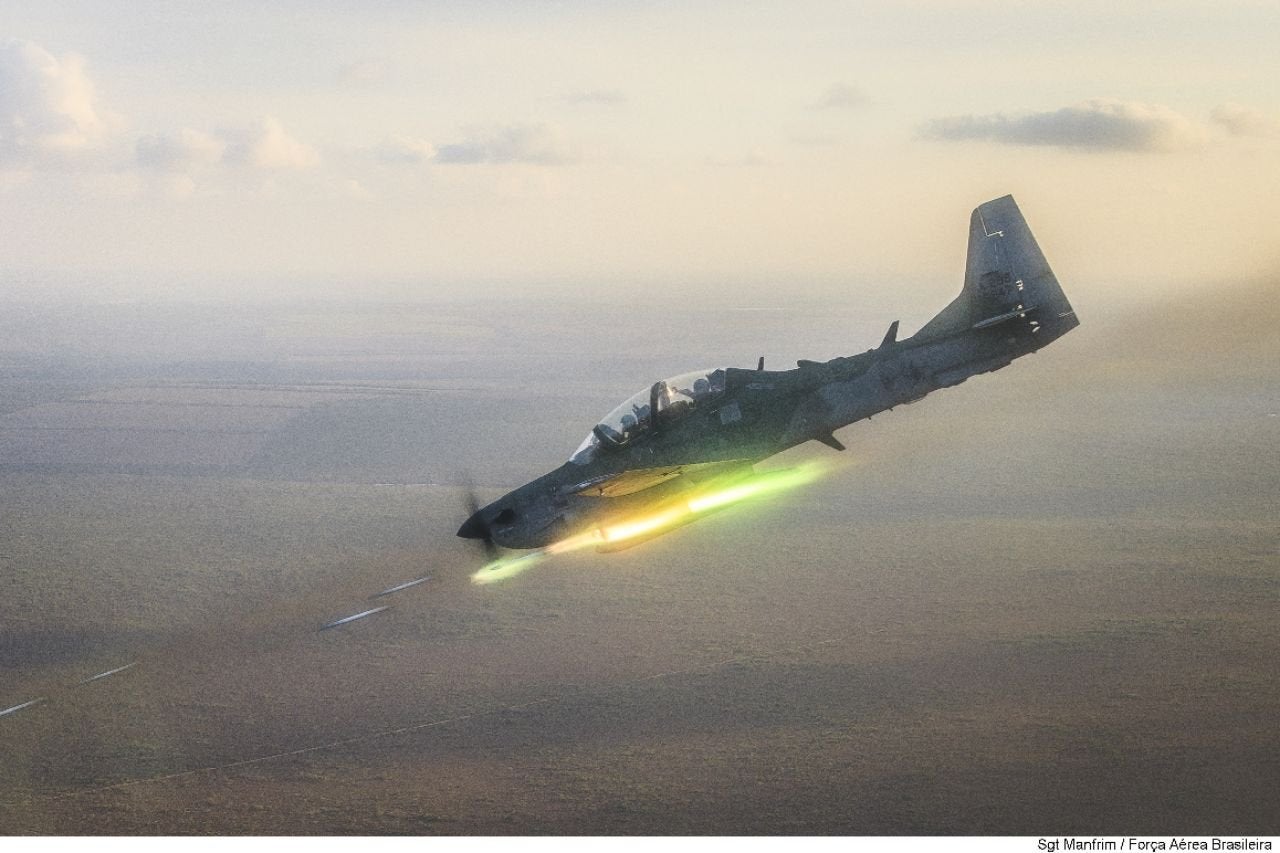
The Air Force has suspended flight evaluations in its light attack aircraft experiment after the death of one of the program’s pilots in late June. Lt. Christopher Carey Short, a naval aviator, died in the crash of an A-29 Super Tucano at the Red Rio Bombing Range in the White Sands Missile Range in New Mexico. Another pilot in the aircraft was hospitalized with minor injuries. Details of the accident have not been released but all flying stopped after the June 22 crash.
The Air Force has narrowed the competition for a plane it may or may not buy to the Embraer Super Tucano and the attack version of the Beech T-6 trainer. Since May an A-29 and two AT-6s have been flying up to three times a day as the Air Force gathers data on whether the low-cost, off-the-shelf aircraft can help out in low-risk counterinsurgency operations, particularly in the war on terrorism. The idea is to free up expensive front-line fighters for the more sophisticated missions for which they were designed. The Air Force said it will wait for the outcome of the crash investigation to decide when and if to resume the testing.

