
















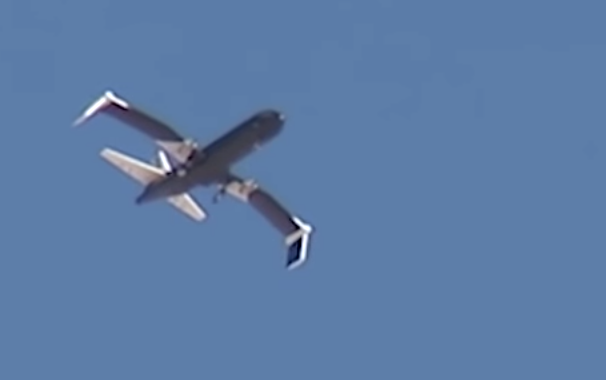
Engineers from NASA and Boeing have successfully used “shape memory alloys” to fold a full-sized wing section from an F/A-18 Hornet jet, NASA has reported. The technology enabled the team to fold the wing section in the lab 90 degrees, with very precise control enabling them to select any position within that sweep. The ability to reshape wings for different phases of flight could boost aircraft performance by reducing weight and drag, while improving aircraft control and stability, NASA said. The technology had been previously demonstrated on a sub-scale drone. NASA now plans to conduct full-scale flight testing with an F/A-18.
The advantages of reshaping the wing in flight have long been known, says NASA researcher Othmane Benafan. “We are not the first ones doing this research,” he said. “This dates back to the early 1960s.” The current research is focused on using the new “shape-memory alloy” materials as actuators. The alloys can be “trained” to return to a previous form when heated, and NASA engineers have developed efficient and reliable new training procedures. The next step will be full-scale flight testing of the technology with an F/A-18, NASA said.

