














Proficiency

Your Checkout: An Instructor’s Perspective

When the vast majority of American pilots want to go flying they rent an airplane from their local FBO, flight school or flying club. That means they have to go through some sort of a checkout with the aircraft provider before they can take the aircraft on their own. Whether the checkout is in a […]

Read More »

Rusty Pilot: Back From the Dead

The phrase “rusty pilot” seems to be a thing now. Since we can’t find many new pilots, we’re stirring up the walking wounded, clearing out the ambulatory wards, perhaps enticing them with AOPA logo walkers and a discount on the early-bird special at the airport cafe. I get it. It’s as good a plan as […]

Read More »

Flying IFR in Older Aircraft

A reader recently questioned the wisdom of flying IFR in “old” aircraft with traditional flight displays that lack modern accouterments—GPS in particular. It’s a fair question and one that deserves some thought. I have to admit that growing up in an earlier age, and having flown IFR for almost a decade before I had the […]

Read More »

Turbulence V-Speeds

Structural failure accidents, often from getting too friendly with thunderstorms, kill both people and what little good press GA is able to garner. In the last decade, 50 accidents—about 10 per cent of all accidents—were due to in-flight structural failure. Worse, even with better weather data in flight, these accidents aren’t going away. Turbulence, Not […]

Read More »

Short and Soft-Field Takeoffs

Short-field landings are all about using excellent technique to get your airplane into a tight spot. That same technique, however, can put you in an even tighter spot when it’s time to leave. Most general aviation aircraft land shorter than they leave. This performance disparity can be subtle at sea level, where the two numbers […]

Read More »

Aviation Innovators: Rod Rakic

As part of AVweb’s Features, we’re starting an occasional series on innovators who are making a difference in general aviation—the young guns of GA, so to speak. We’ll be doing interviews with them where they can talk about what they’ve done and their vision for the future of the area of general aviation where they […]

Read More »

Instrument Proficiency

According to FAR 61.57 (c), instrument currency means the need to execute six approaches, intercept and track courses, and perform a hold within the last six calendar months. If that requirement is not met, you have another six months to fly with a safety pilot and complete the requirements. There is no requirement that those […]

Read More »

Video: Seaplane Ratings at Jack Brown’s

Perhaps one of the most popular flight schools in the U.S. to earn a single-engine seaplane rating, Jack Brown’s Seaplane Base in Winter Haven, Florida, has trained nearly 20,000 pilots. To find out what the draw is all about, Aviation Consumer editor Larry Anglisano recently enrolled in Brown’s $1,400 SES course and had his cameras […]

Read More »

What AoA Indicators Don’t Do That They Should

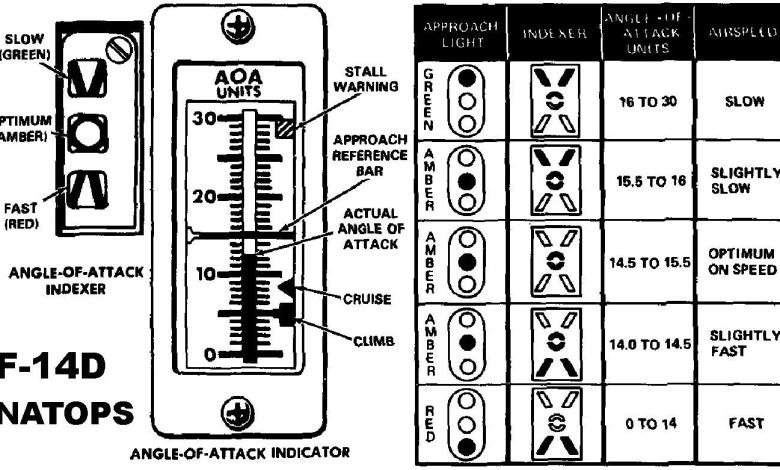
With the exception of tiny squiggles up and down, the general aviation fatal accident rate remains stubbornly at about 1.0/100,000 hours. That’s down a little from a decade ago, when it was 1.28 and down a lot from the early to mid-1970s, when it was more than 2.0. In GA, we tend to resist the […]

Read More »

Steam Gauges Are Safer

Technically advanced aircraft (TAA)—those with a primary flight display (PFD), multi-function display (MFD), and GPS—are sexy. Pilots are drawn to them like Pooh Bear to honey. Besides being eye-catching, TAA attempt to address some of the biggest problems in aviation by providing pilots with a lot of supplementary safety information. Moving maps designed to improve […]

Read More »
Sign-up for newsletters & special offers!

Get the latest stories & special offers delivered directly to your inbox

SUBSCRIBE

Please support AVweb.

It looks like you’re using an ad blocker. Ads keep AVweb free and fund our reporting.
Please whitelist AVweb or continue with ads enabled.