














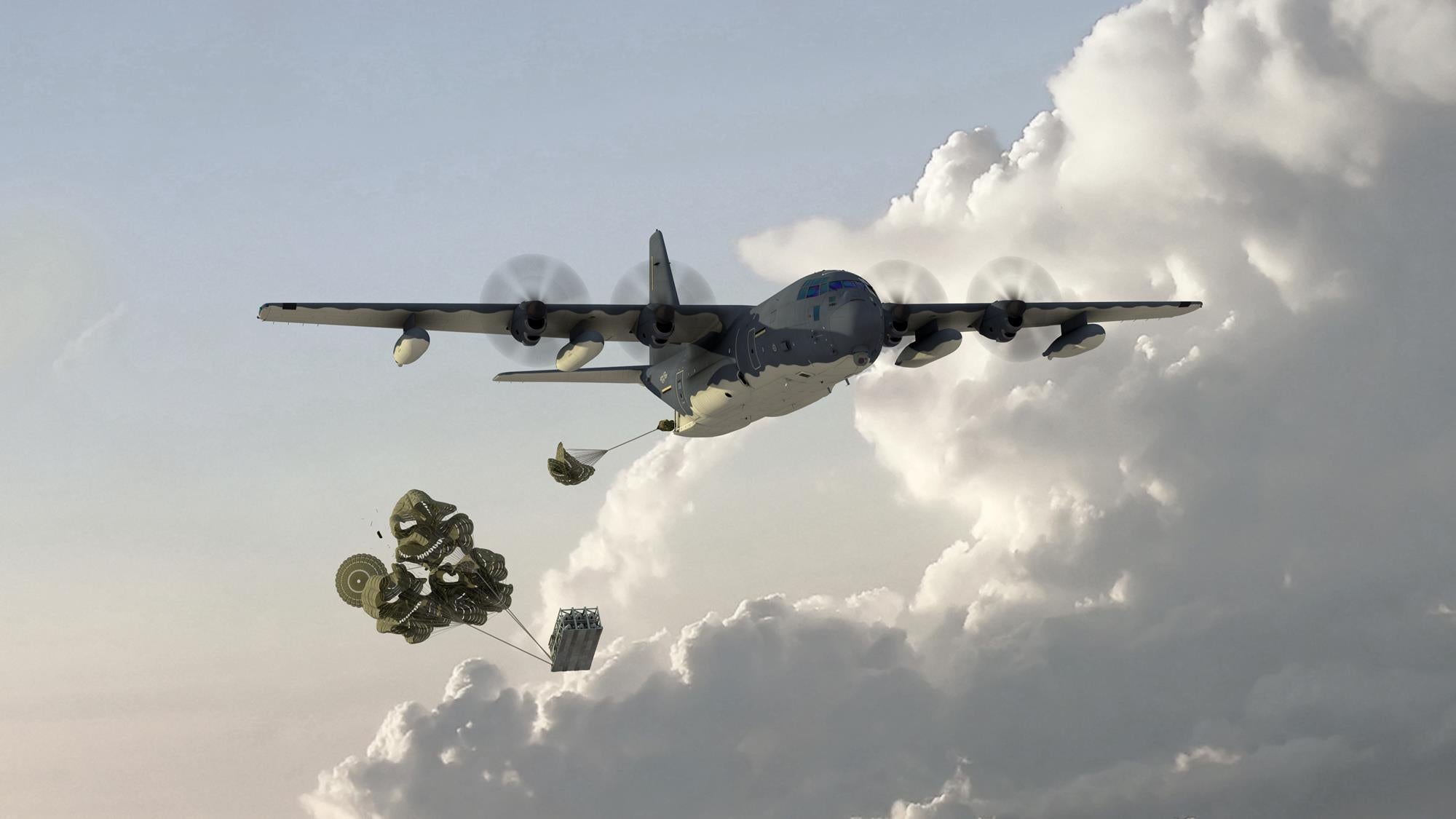

The Air Force has tested a system that could eventually allow it to instantly convert any of hundreds of its cargo aircraft into strategic attack platforms. On Dec. 16 a C-130J Commando II special forces aircraft dropped a live cruise missile out the back that went on to destroy a target in the Gulf of Mexico. The Rapid Dragon “palletized munitions system” is designed to be loaded through the back door of C-130 variants and the C-17 like normal cargo except it carries four cruise missiles that can each attack its own target.
Thursday’s test involved one missile and ballast to mimic the other three that would normally be in the pallet. After clearing the rear door a parachute stabilized the system and the live missile, along with the three dummy missiles dropped vertically from the carrier a few seconds apart. On the live weapon, the wings deployed, the engine lit and target information was first sent to the aircraft and relayed to the missile. It was the first time that had ever been done. They’re now working on deploying different kinds of weapons for use in the system and expanding the list of aircraft that can carry it.
Air Force brass say the system was developed from conception to live fire in less than a year thanks to a collaborative process between the military and industry. “This type of experimentation campaign, that address[es] capability gaps and demonstrates transformative efforts, helps us shape future requirements and reduces timeline to fielding,” Air Force Research Lab Commander Maj. Gen. Heather Pringle said in the release. “This approach ultimately enables a rapid fielding alternative to traditional lengthy acquisition timelines.”
