
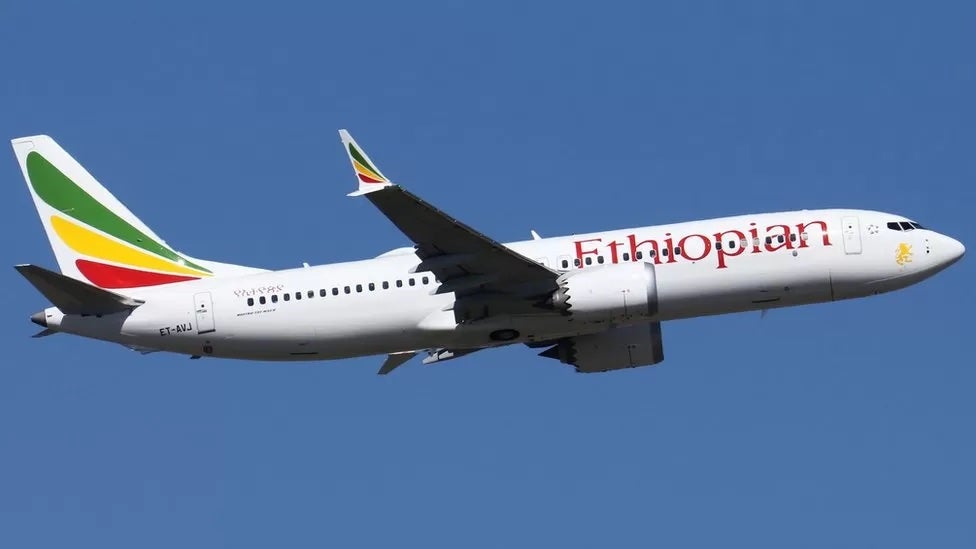

France’s aviation accident investigation entity, the Bureau d’Enquêtes et d’Analyses (BEA), has joined the U.S. National Transportation Safety Board (NTSB) in critiquing Ethiopia’s final report on the infamous 2019 fatal crash of a Boeing Max 8 airliner operated by Ethiopian Airlines. The official accident report was filed last week by Ethiopia’s [Aircraft] Accident Investigation Bureau (EAIB).
The BEA had been called in by the EAIB to analyze data from the twinjet’s flight data recorder and the cockpit voice recorder, and submitted comments that it judged were underplayed by the Ethiopians.
As did the NTSB, the BEA said its comments regarding human factors were not included in the final EAIB report, which was filed last week, and which focused on the failure of the Boeing’s Maneuvering Characteristics Augmentation System (MCAS). The French investigators wrote, “From January 2021, the NTSB and the BEA were consulted on a draft of the final report. The NTSB and the BEA requested in particular that the aspects related to the performance of the crew be better exposed and analyzed. These exchanges did not result in satisfying amendments to the final report and led the NTSB and the BEA to request that their comments be appended to the final report.”
The French authority further criticized, “BEA’s comments are mainly related to the analysis of the crew’s performance and its contribution to the accident scenario, in particular, during the first part of the flight (between the rupture of the angle of attack vane and the activation of the MCAS system). The BEA considers that this analysis would make it possible to draw safety lessons beyond those related to the MCAS system.”