















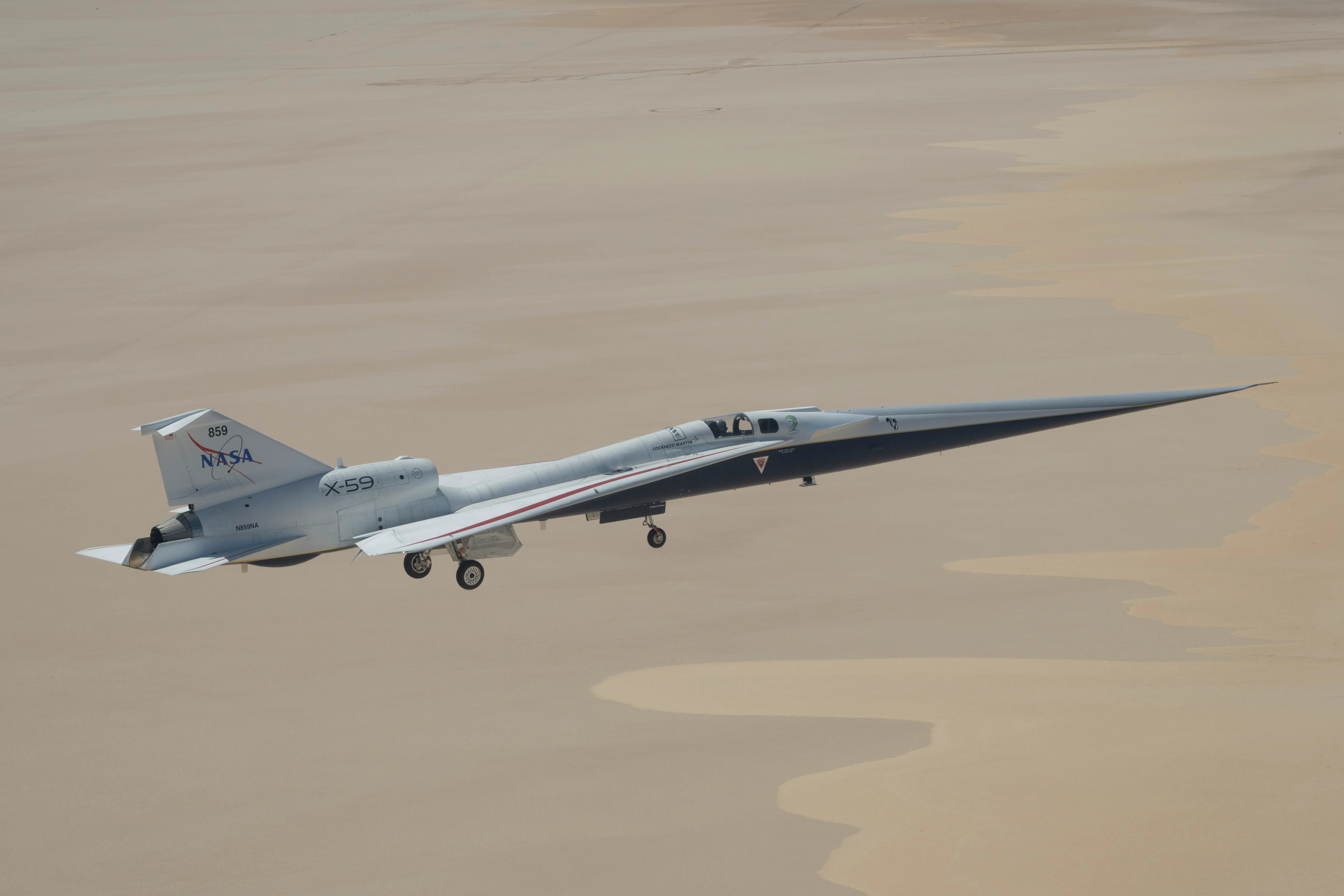

NASA’s X-59 quiet supersonic research aircraft is expected to move into its first supersonic test flights sometime this month. NASA said on Thursday that the aircraft, based at NASA’s Armstrong Flight Research Center in Edwards, California, is expected to first exceed the speed of sound at about 43,000 feet before later flying at Mach 1.4 at approximately 55,000 feet.
NASA said these speed and altitude conditions will be an important step toward later community overflight tests under its Quesst mission.
“What comes next is the first time this one-of-a-kind aircraft will fly supersonic,” said Cathy Bahm, project manager for NASA’s Low Boom Flight Demonstrator. “We are starting toward the mission conditions test point that X-59 was designed for.”
The X-59 first flew in October 2025 and returned to flight testing in March following a maintenance period. NASA said the aircraft has since completed 14 additional flights, reaching 43,000 feet and Mach 0.95 while testing systems including fuel, hydraulics, environmental controls and its eXternal Vision System, which replaces a forward windshield with camera-fed cockpit displays.
The next block of testing is also expected to include flights to Mach 1.6 and 60,000 feet.
NASA said the upcoming supersonic flights will not yet evaluate the aircraft’s reduced-boom profile because a conventional supersonic chase aircraft will accompany the X-59, though the chase aircraft will carry equipment to begin measuring the X-59’s shock waves.


0 replies