
















Helicopters are more than twice as likely as airplanes to be involved in accidents involving a loss of visual reference, according to research by the Transportation Safety Board of Canada (TSB).
The TSB says loss-of-visual-reference accidents accounted for 3.38% of helicopter accidents in Canada between 2000 and 2021, compared with 1.55% of airplane accidents. The disparity has continued in more recent data, according to the Board.
The problem can develop without the kind of weather pilots traditionally associate with instrument conditions. Flat light, whiteout, blowing snow, haze and other conditions can eliminate the visual cues needed to maintain attitude and orientation while still leaving pilots technically in VFR conditions.
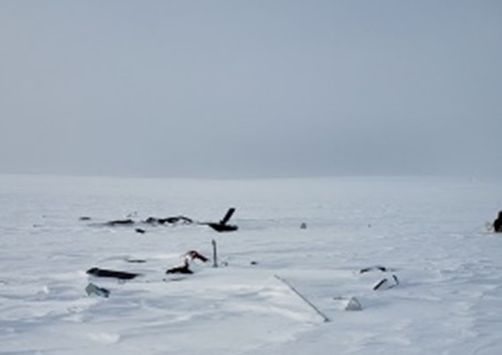
That vulnerability was highlighted by the TSB’s investigation of a fatal 2021 crash involving an Airbus AS350 B2 operated by Great Slave Helicopters in Nunavut. The helicopter was flying VFR when it encountered snow-covered, featureless terrain, an overcast sky and snow squalls. Investigators concluded that the conditions likely produced flat light and whiteout, causing the pilot to lose visual references and subsequently lose control.
The TSB argues that the traditional approach of simply avoiding inadvertent instrument meteorological conditions (IIMC) is not enough. Once visual references disappear unexpectedly, pilots need to be able to transition to instruments and recover before spatial disorientation and loss of control occur.
That is particularly important for helicopter operations, which frequently take place at low altitudes and in environments where visual references can disappear rapidly. The TSB has noted that current Canadian regulations do not require commercial helicopter operators to ensure pilots have the skills and technology needed to avoid or recover from IIMC.
The Board has recommended requiring commercial helicopter operators to provide IIMC recovery training and appropriate technology, along with standard operating procedures for single-pilot operations.

0 replies