















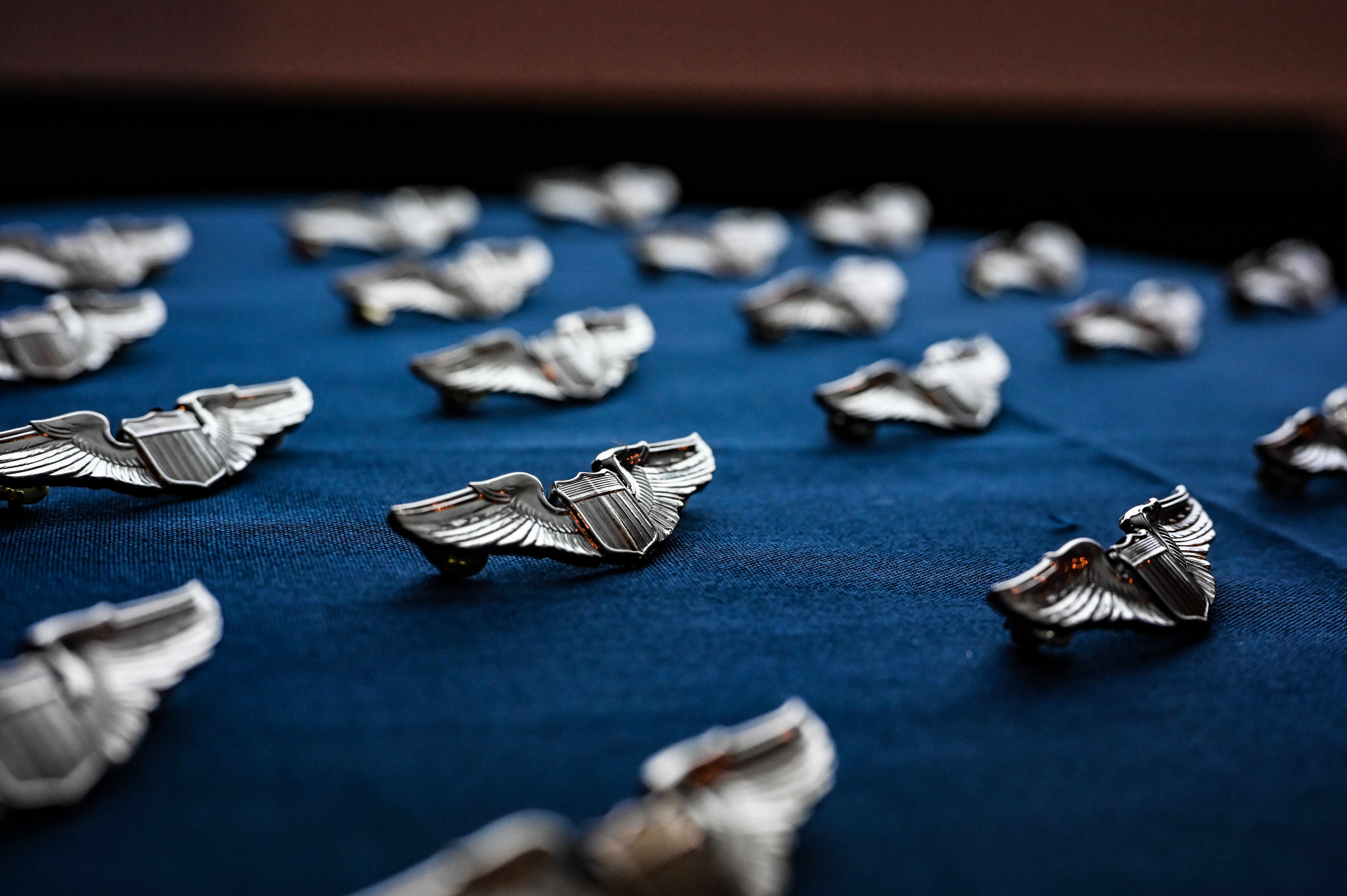

The U.S. Air Force is on track to graduate 1,500 pilots this fiscal year, marking a major milestone for its revamped approach to undergraduate flight training.
The Air Education and Training Command (AETC) began restructuring pilot training more than a year ago as part of its Future of Undergraduate Pilot Training initiative. The program was designed in part to address instructor shortages, limited aircraft availability and an overall pilot shortfall that AETC puts at nearly 2,407 aviators.
Under the new system, some of the foundational flight training has moved to civilian flight schools. AETC has partnered with FAA Part 141 schools in Texas, Arizona, Florida and Georgia.
Students complete their private pilot, instrument and multiengine training before entering the military portion of the program. They arrive with about 120 hours of flight time, compared with roughly 30 hours under the previous Initial Flight Training program.
The change allows the Air Force to reserve its aircraft, instructors and flying hours for military-specific training.
After completing the civilian phase, students move into military training centered on the T-6A Texan II and simulation. The 19th Air Force also redesigned the T-6 syllabus around competency-based training tied to operational requirements.
According to AETC, the revised syllabus has cut the number of T-6 training days by 31%. The command says the changes have helped increase the number of students moving through the training system without adding another military flying-training wing.
“Reaching 1,500 pilots is a milestone, but it is not the finish line,” Lt. Gen. Clark J. Quinn, AETC commander, said in the announcement.
AETC says the new model will continue to be refined as the Air Force works to maintain pilot production while ensuring graduates are prepared for operational assignments.

0 replies